

Iran demands yuan payments for oil to transit Strait of Hormuz
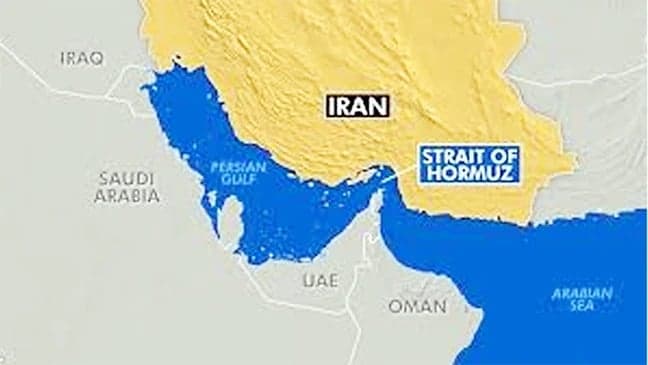

Iran has indicated it may allow a limited number of oil tankers to pass through the strategic Strait of Hormuz in exchange for oil transactions being settled in Chinese currency, yuan.
A senior Iranian official told CNN that Tehran is considering permitting a limited number of oil tankers to navigate the Strait of Hormuz, with the condition that oil payments must be made in Chinese yuan.
The report suggests that amid the context of potential Israeli and US attacks on Iran, Tehran is working on a larger plan to control oil tanker movements through this strategic waterway, and this proposal is part of that plan. However, Qatar-based media Al Jazeera reported that this claim could not be independently verified.
Currently, most global oil transactions are conducted in US dollars. However, recently sanctioned Russian crude oil is increasingly being sold in Russian rubles or Chinese yuan. In this context, Iran's proposal could create new dynamics in international trade.
Meanwhile, the potential for war in the Middle East following possible attacks on Iran has begun to adversely impact oil prices. Market data indicates that due to ongoing tensions, Brent crude oil prices have already surged by more than 42 per cent per barrel, with fears of further increases.
While global oil trade typically occurs in dollars, Russian oil transactions are being conducted in rubles or yuan due to Western sanctions.
The instability surrounding the Strait of Hormuz, known as one of the world's main arteries for energy trade, has driven oil prices sky-high, surpassing levels last seen in July 2022.
On the other hand, the United Nations has warned that obstructing shipping in the Strait of Hormuz would severely impact relief and humanitarian aid efforts. UN Under-Secretary-General for Humanitarian Affairs Tom Fletcher said, "If shipping through this strait comes to a halt, the consequences will be far-reaching. The supply of essential goods like food, medicine and fertiliser will become difficult, and transport costs will also increase."
Leave A Comment
You need login first to leave a comment