
Iran has learned to survive despite adversities
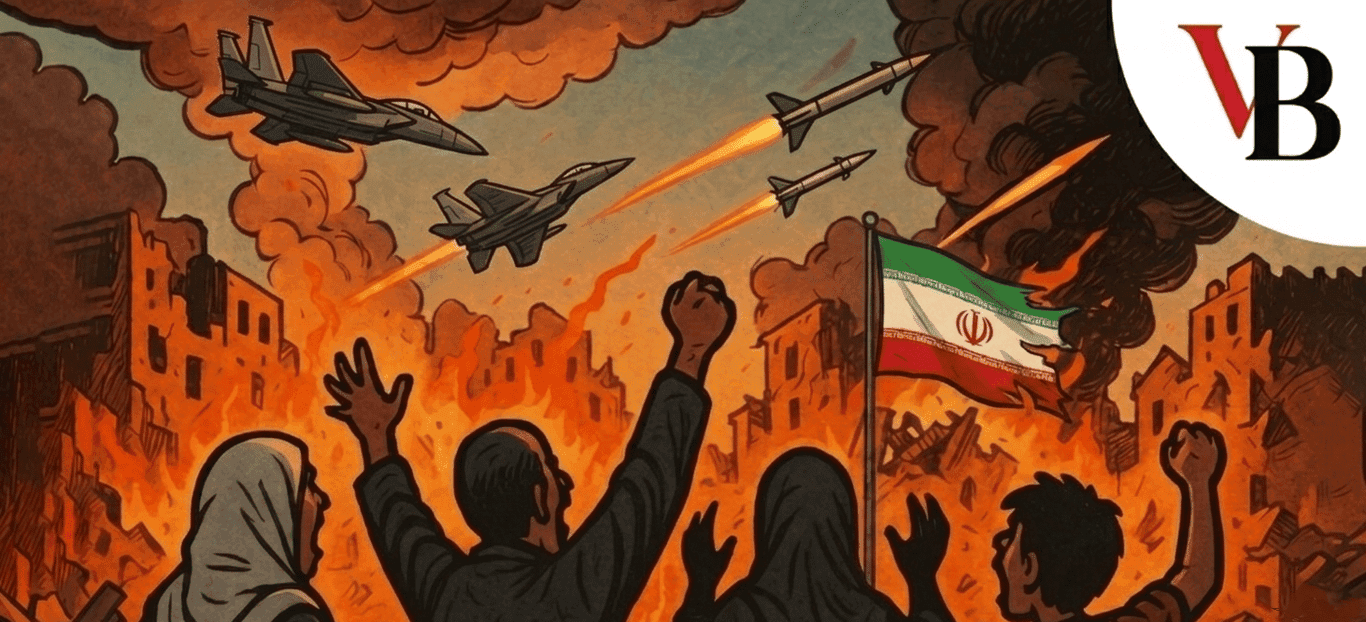

Since the dawn of the Persian Empire, Iran has carried a long history of surviving against adversity. Through invasions, political turmoil, and wars over time, this resilient mindset has been forged. The Iran-Iraq war, in particular, taught the country how to build resistance with limited resources and sustain a prolonged battle. Today, as Tehran finds itself in direct confrontation with a world power like the United States, the question arises: is this stance merely the result of modern technology and military capability, or is it a lesson in self-reliance drawn from harsh historical experience? Or is it a resolute expression of determination to hold its head high and endure while preserving Persia's ancient heritage?
Throughout its long history, Iran's statecraft and strategic mindset have been shaped through wars, the fall of empires, revolution, and international pressure. From the time of the Persian Empire to the modern Islamic Republic, one characteristic remains clear: an unyielding ability to survive despite adversities. However, behind this strength lies not just history or military capability, but Iran's strategic geographic location, which has played an equally important role. A mountainous terrain, vast plateaus, harsh deserts, and a strategic waterway like the Strait of Hormuz—together have naturally turned Iran into a resilient state.
Following the 1979 Islamic Revolution, when Iran was reeling from political instability, its geographical features provided some protection. The Zagros and Alborz mountain ranges in the north and west act as natural defensive walls, making enemy advancement difficult. The Persian Gulf to the south and the Strait of Hormuz at its mouth are among the most vital routes for global energy trade. Iran's control or influence over this strait provides a strategic advantage that is extremely sensitive for world powers.
When Saddam Hussein invaded Iran in 1980, he believed Iran would quickly collapse due to its weak state structure. However, Iran's geographical diversity—mountains, deserts, and vast plateaus—slowed the advance of Iraqi forces. This terrain became a major strategic advantage for Iran during the eight-year-long war, enabling it to build resistance with limited resources.
The war taught Iran how to leverage its geographical position to develop defence strategies. In the post-war period, Iran moved its military installations deep into mountains and underground, protecting them from enemy airstrikes. Such infrastructure remains a vital part of Iran's defence system today.
Iran's vast plateaus and desert regions also play a crucial role in its defence strategy. Fighting on this difficult terrain is challenging for external powers but relatively advantageous for local forces. Thus, Iran gains a natural advantage in any potential ground war. Additionally, these regions make it easier to position missile bases and military installations that can be operated undetected by enemies.
Another important aspect of Iran's military power is its missile and drone capability. The vast territory and mountainous areas help in the deployment and concealment of these weapons. Missile bases scattered across various locations make it difficult for enemies to identify targets. Moreover, thousands of drones and an advanced missile system have turned Iran into a strong, resilient state. The IRGC (Islamic Revolutionary Guard Corps) remains the central hub of this entire strategic framework, playing a crucial role not only in ground forces but also in naval and air defence. Iran's influence in the Strait of Hormuz further enhances its strategic importance, potentially affecting the global economy.
Iran's enriched uranium stockpile and nuclear programme have also strengthened its strategic position. Although a matter of international debate, this has helped establish Iran as a deterrent power, providing additional leverage in negotiations with world powers.
In the context of current US-Israel tensions, the combination of Iran's geographical and military strength becomes even more apparent. Instead of direct confrontation, it follows a strategy that uses its territory, regional influence, and technological capability to pressure its adversaries. The Strait of Hormuz, the Persian Gulf, and mountainous borders together create a multi-layered defence ring for Iran.
Ultimately, the secret to Iran's survival is not limited to its history or military power; its geographical reality is deeply intertwined. Mountains, plateaus, deserts, and strategic positions like the Strait of Hormuz—everything together has made Iran a complex but resilient state, reminiscent of the glorious history of the Persian Empire: a nation that knows how to hold its head high and survive even in the most hostile circumstances.
Leave A Comment