
Iranian women increasingly unveil in public
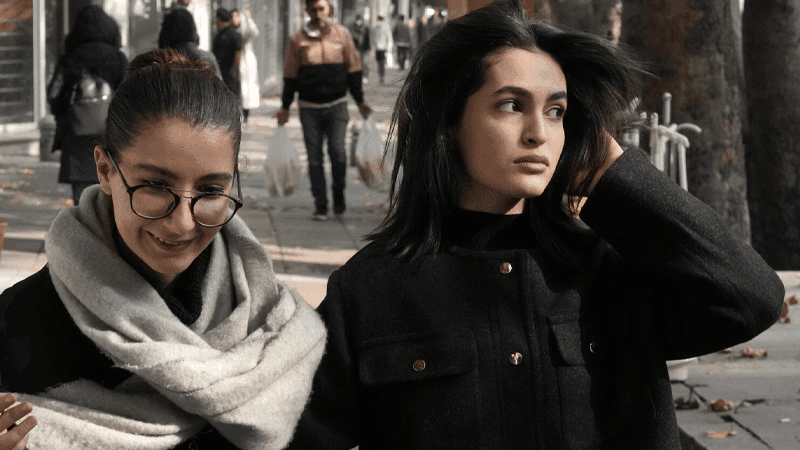

Amid war, economic crisis, and political instability in Iran, a growing number of women are refraining from wearing the mandatory hijab in public. Women walking with uncovered hair are now significantly more visible on the streets of Tehran as well as various other cities across the country, placing renewed pressure on the Iranian government regarding the strict enforcement of compulsory hijab laws.
Analyses suggest that managing potential conflict with the United States and addressing internal security restructuring have caused the strict enforcement of women's dress codes to fall somewhat lower on the government's priority list. However, hardline religious leaders and politicians in the country are once again demanding the rigorous enforcement of the mandatory hijab law.
Videos circulating on social media show women moving through Tehran and several other Iranian cities without headscarves. Many women are walking the streets with uncovered hair, and some are even riding scooters. Unveiled women were also spotted at several pro-government events held during wartime.
The death of Mahsa Amini is considered the pivotal catalyst behind this shift concerning Iran's mandatory hijab laws. On September 13, 2022, 22-year-old Kurdish-Iranian Mahsa Amini was detained by the morality police in Tehran for allegedly violating the hijab rules. She died in police custody three days later. Her death triggered nationwide "Woman, Life, Freedom" protests.
Thousands were detained during the demonstrations, and a United Nations investigation highlighted the use of lethal force by security forces. Although the movement was eventually violently suppressed, the open resistance of women against the mandatory hijab could not be fully quelled.
Following the 1979 Islamic Revolution, mandatory Islamic attire for women was gradually introduced in Iran. By the 2000s, the morality police had become a primary mechanism for enforcing these rules. However, following the 2022 protests, changes emerged in how authorities enforce street dress codes.
In 2024, a law introducing stricter penalties and surveillance for dress code violations was approved, but its implementation was suspended following intervention by the Supreme National Security Council. While hardliners are currently advocating for the execution of that law, the government remains cautious about launching major direct crackdowns against women.
A key reason for this caution is that enforcing hijab laws stringently risks sparking major new public protests. For an Iran already navigating war and economic hardship, renewed domestic instability could further complicate the situation.
Iranian President Masoud Pezeshkian has also questioned the effectiveness of attempting to alter public behavior by force, stating that behavioral change is a matter of culture and belief, and that faith cannot be instilled in people's minds through coercion.
Hardliners, however, maintain a contrasting stance, arguing that enforcing the hijab law is not merely a legal obligation, but a religious duty. Furthermore, several cafes and restaurants have already been shut down due to non-compliance with dress code regulations.
As a result, the Iranian government now faces dual pressures: demands from hardliners for strict enforcement of hijab laws on one side, and widespread public defiance by women on the other, coupled with the fear of fresh protests if it attempts a crackdown. Mindful of how the movement following Mahsa Amini's death severely challenged the ruling establishment, Tehran is eager to avoid facing the same situation again.
Leave A Comment