
Israel gives Hamas 60 days to disarm or face renewed war in Gaza
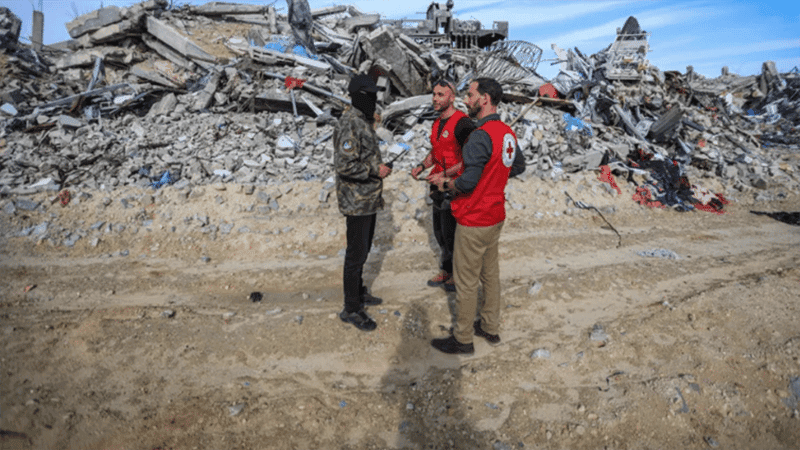

Israel will grant Hamas a 60-day deadline to surrender all its weapons or face a renewed military offensive in the Gaza Strip, a senior Israeli official said on Monday, escalating pressure on the Palestinian group as ceasefire violations and deadly air strikes threaten to unravel fragile truce arrangements.
Israeli Cabinet Secretary Yossi Fuchs said the timeline was requested by US President Donald Trump’s administration and would form part of broader diplomatic efforts to stabilise Gaza following months of devastating war.
“The Trump Administration asked for a 60-day period, and we are respecting that,” Fuchs said during a conference in Jerusalem. He added that during this period Hamas “will have to give up all of its weapons,” including rifles such as AK-47s, which Israeli leaders view as central to the group’s military capability.
“If it works, great. If not, then the IDF will have to complete the mission,” he said, in a clear reference to the possibility of resuming large-scale military operations.
Fuchs did not specify exactly when the countdown would begin but indicated it could follow a meeting of the US-led “Board of Peace,” expected in Washington later this week. He suggested that by Israel’s next elections, scheduled for later this year, either Hamas would have disarmed or Israeli forces would be engaged in an intensified military campaign in Gaza.
The ultimatum comes as violence continues despite a ceasefire agreement that took effect in October. Gaza’s civil defence agency said at least 12 Palestinians were killed in Israeli air strikes since Sunday morning, underscoring the volatility of the situation.
The Israeli military said its operations targeted Hamas fighters who had allegedly violated the ceasefire by emerging from tunnel infrastructure and approaching Israeli troops near the so-called Yellow Line, a buffer zone separating Israeli and Palestinian forces. An Israeli military official described such movements as “a blatant violation of the ceasefire” and evidence that Hamas was systematically attempting to harm Israeli troops.
Israeli forces have conducted repeated operations against tunnel networks in southern Gaza, particularly near Rafah, where the army said dozens of Hamas fighters had remained hidden for months. The military has reported killing or capturing around 50 operatives in recent months as part of ongoing efforts to dismantle Hamas’s underground infrastructure.
Israeli Prime Minister Benjamin Netanyahu has made disarmament a central condition for Gaza’s future, insisting reconstruction cannot proceed while Hamas retains weapons. He has argued that even small arms, such as assault rifles, pose a serious threat and must be surrendered completely.
The disarmament demand forms part of the second phase of a US-backed plan launched in January to reshape Gaza’s governance and security landscape after the war. The plan includes further Israeli withdrawals, expanded humanitarian aid, reconstruction efforts, and the establishment of new administrative bodies to govern the territory, including an international stabilisation force and a Palestinian administrative committee.
Washington announced earlier this year the creation of several transitional structures, including the Board of Peace, the Gaza Executive Council, and a National Committee for Gaza’s administration. While the committee began work in Cairo shortly after its formation, its ability to operate inside Gaza has been delayed by security and logistical hurdles linked to Israeli control over border crossings.
Hamas, meanwhile, has accused Israel of repeatedly violating ceasefire provisions, particularly at the Rafah crossing with Egypt. The group said Israel had imposed severe restrictions on movement and failed to allow the agreed number of Palestinians to leave and return to Gaza, including patients requiring urgent medical treatment abroad.
In a statement, Hamas described Israel’s actions as a “blatant breach” of the ceasefire and accused Israeli forces of subjecting returning Palestinians to harsh interrogations, intimidation, and restrictions on bringing personal belongings into the territory.
According to Gaza authorities, only around 811 Palestinians have crossed Rafah since its partial reopening in early February, out of approximately 2,800 expected travellers, representing compliance of less than one-third of the agreed level.
Hamas warned that thousands of wounded and seriously ill patients remain at risk due to delays in medical evacuations and called on mediators and international guarantors to intervene and enforce the ceasefire terms.
The escalating tensions highlight the fragility of the current truce and the immense challenges facing diplomatic efforts to stabilise Gaza. While the US-backed disarmament proposal aims to create conditions for reconstruction and long-term governance reform, the threat of renewed war looms large, with both sides accusing each other of violations and preparing for possible escalation if negotiations fail.
Leave A Comment
You need login first to leave a comment