

Khaleda Zia: From homemaker to country's first female prime minister
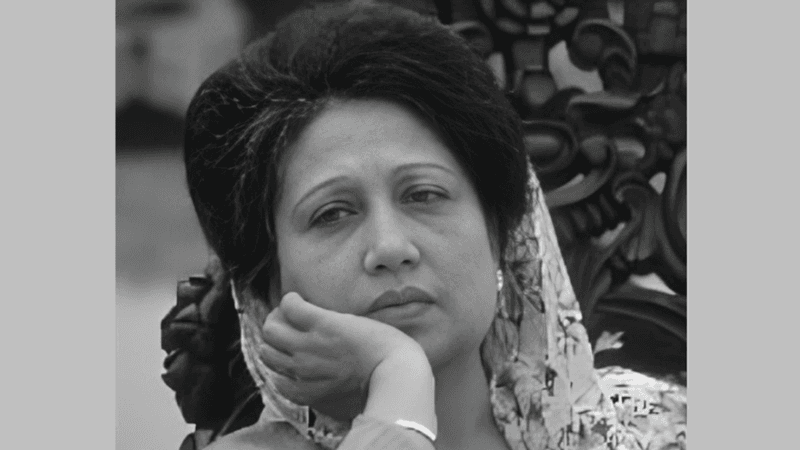

BNP Chairperson Khaleda Zia is a unique and legendary name in the country’s politics. When BNP founder and then President Ziaur Rahman was brutally assassinated in May 1981, Khaleda Zia was just a homemaker. She had no public interest in politics, and was rarely seen at political events. But over time, that reclusive housewife became the country's three-time Prime Minister. She has covered this long and difficult path by facing various conspiracies and ups and downs at home and abroad. Amid the grief of losing her husband, she had to take charge of the party and face numerous obstacles. From there, her struggle on the road began. She united the entire nation by leading the anti-dictatorship movement for eight consecutive years. Due to her strong character and uncompromising attitude, she gained the reputation of an 'uncompromising leader'.
Birth and family Life
Khaleda Zia was born on August 15, 1945. She was the third of three sisters and two brothers. In childhood, her nickname was 'Putul'. Her father, Iskander Majumdar, was a resident of Sreepur village in Parshuram upazila of Feni and a successful businessman. Due to business needs, he shifted to Dinajpur and settled there after the partition in 1947. In 1937, she married Taiba Majumdar, a resident of Chandanbari in Boda upazila of Panchagarh district. This family was known as the 'T-Family'. Khaleda Zia's mother Taiba Majumdar was a dedicated social worker.
Marriage and conjugal life
Khaleda Zia married young Captain Ziaur Rahman on August 5, 1960 in a family ceremony in Mudipara of Dinajpur. At the time of marriage, Ziaur Rahman was serving in the army. Zia's mother died a year before the wedding and her father was in Karachi at the time of the wedding so he could not attend the ceremony. Khaleda and Zia have two sons - Tarique Rahman and Arafat Rahman Koko. For a long time, she lived like an ordinary Bangladeshi housewife. Even after Ziaur Rahman became President in 1977, Khaleda Zia did not involve herself in state or political activities, only performing formalities as the First Lady.
Zia's successor and joining BNP
After Zia's death in 1981, the BNP fell into a deep crisis. When HM Ershad overthrew the elected government and seized power on March 24, 1982, the party faced an even greater existential crisis. In the face of internal conflicts and external pressure, a reliable leader was needed as a worthy successor to Zia's ideology. Although Khaleda Zia did not have much political exposure at that time, the senior leaders of the party realized that she could be the only one to keep the party united. Finally, on January 3, 1982, Khaleda Zia joined the BNP and made her debut.
Leadership and the title of 'uncompromising'
In 1983, she became the party's senior vice chairman and gave her first political speech on April 1. She became the acting chairperson of the party due to Justice Sattar's illness and was formally elected chairperson on May 10, 1984. She formed a 7-party unity alliance and started a movement against Ershad's military rule. Even though the Awami League went to the elections under Ershad in 1986, Khaleda Zia remained steadfast in her decision to boycott. From 1987, she accelerated the struggle to end dictatorship through the 'one-point' movement. After a long eight-year struggle, Ershad was forced to resign on December 6, 1990. Due to this intransigent position on the streets, she received the title of 'uncompromising leader' from the countrymen.
Government formation and electoral record
When the BNP won a single majority in the 1991 parliamentary elections, Khaleda Zia made history as the first female Prime Minister of Bangladesh and one of the first in the Muslim world. She introduced a parliamentary system of government in 1991. Later, in 2001, she also won a landslide victory and formed a government.
The biggest feature of Khaleda Zia's political career is her incredible popularity. She has won every seat she has contested in her political career (23 parliamentary seats from 1991 to 2008) by a huge margin. No other leader in the subcontinent has achieved such a rare feat.
Struggle with two adversities
From 1983 to 1990, she struggled with two types of adversities - one was the internal problems of the party, such as internal conflicts, and the other was the autocratic Ershad. During her leadership years, she established a single and effective control over the party. She emphasized three things - protecting national independence and sovereignty and taking the unity and politics of the Bangladesh Nationalist Party to the grassroots; upholding the honor and dignity of the late President Ziaur Rahman and having a correct view of the Awami League.
In the 1990 elections, she came to power and introduced a parliamentary system of government from the presidential system. In the face of the movement demanding elections under the caretaker government of the Awami League and Jamaat, she elected the sixth National Parliament on February 15, 1996, brought amendments to the constitution, introduced a caretaker government system and resigned. In the seventh National Parliament election of that year, she became the leader of the opposition party in the National Parliament by winning 116 seats. And the Awami League formed the government with the support of the Jatiya Party and JSD by winning 147 seats.
The change of direction of the 'One-Eleven' and loss of power
On October 1, 2001, the BNP won the eighth parliamentary election by a huge margin and formed the government. However, after the completion of the term of the eighth parliament, the political situation heated up due to the dispute over the caretaker government, the 'one-eleven' political scenario changed; she was ousted from power. At that time, there were attempts to send her abroad. But she did not leave the country even in the face of oppression and torture. She was arrested on September 3, 2007. After spending a year in prison, she was released on September 11, 2008. Earlier, she was arrested on November 28, 1983, May 3, 1984, and November 11, 1987 during the anti-Ershad movement. The year after the controversial election on January 5, 2014, she was surrounded by law enforcement forces at the party office in Gulshan for 93 days in a row while agitating for the people's right to vote. She had to remain under the same siege the following year as well.
Forced to live a lonely and uncommunicative life
In her 35-year active political life, Khaleda Zia has always been vocal and fighting for the democratic rights of the people. She has had to suffer for her promises. She was imprisoned, her meetings and motorcades were subjected to fierce attacks by opponents. She was forced to live a solitary and uncommunicative life. She is the only politician not only in Bangladesh but also in the world who contested 23 parliamentary seats from 1991 to 2008 and did not lose any of them.
In the 2018 elections, Khaleda Zia wanted to contest from three seats. These seats are Feni-1. Bogra-6 and Bogura-7. But she was disqualified from the elections due to being convicted in corruption cases. Reviewing Khaleda Zia's past elections, it can be seen that she has contested more from the seats of Bogura, Feni, Lakshmipur and Chattogram. Besides, she contested from one seat in Dhaka in 1991 and one seat in Khulna in 2001. Not only did she win the polls, but also the margin of votes between Khaleda Zia and her rival candidates was large.
Addressed as ‘Deshneti’
She is the country’s unique popular leader. She has visited almost every part of the country. She was capable of undertaking long and arduous journeys. In December 2008, she travelled nearly 14,000 kilometres across the country in 14 days before the national elections. When she participated in an election campaign, she was energised with indomitable vitality. She did not keep any schedule for breakfast, lunch or dinner. She addressed election meetings at 3 am. She was determined to implement her decisions and once she made a decision, she strictly adhered to it. Forbes magazine ranked Khaleda Zia 14th in 2004, 29th in 2005 and 33rd in 2006 in the list of 100 most powerful women in the world. On May 24, 2011, she was honoured as a Fighter for Democracy in the New Jersey Senate of the United States. Her party workers and supporters affectionately address her as ‘Deshneti’.
Leave A Comment
You need login first to leave a comment