
Khaleda Zia’s demise: A new political reality for BNP and Bangladesh
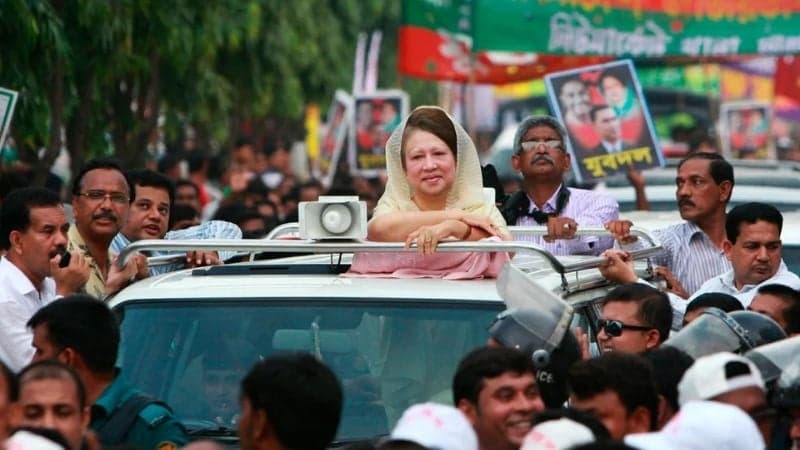

The death of BNP Chairperson and former Prime Minister Begum Khaleda Zia marks the end of a long, influential and contentious chapter in Bangladesh’s political history. Her demise on the morning of December 30 has created a profound void—not only within the Bangladesh Nationalist Party (BNP) but across nearly five decades of the country’s political landscape.
A three-time prime minister, Khaleda Zia was a leader who remained at the centre of politics both in power and in prolonged opposition. Known for her uncompromising stance, movement-driven politics and enduring influence, her departure signals the close of an era.
Her rise to politics was neither planned nor conventional. Once a homemaker, Khaleda Zia entered public life following the assassination of her husband, President Ziaur Rahman, in 1981. What initially appeared to many as a temporary or reluctant role gradually transformed into the emergence of a distinct political force. Over time, she moved beyond the identity of a political successor to establish herself as an independent and formidable leader.
Khaleda Zia played a pivotal role in Bangladesh’s return to democratic governance in 1991 after years of military rule. As the country’s first woman prime minister, her leadership became symbolic of both democratic restoration and female political empowerment. The reintroduction of parliamentary democracy and the institutionalisation of the electoral process under her government remain defining milestones.
Her political journey, however, was far from smooth. It was shaped by intense rivalry, confrontation and division—most notably her long-standing political feud with Awami League President Sheikh Hasina. This rivalry entrenched Bangladesh’s politics into a rigid two-pole structure, often described as the era of “Begums’ politics.” While it kept political competition alive, it also contributed to repeated deadlock and instability.
Uncompromising leadership was the hallmark of Khaleda Zia’s politics. Election boycotts, street-based movements and sustained political pressure were integral to her strategy. Supporters viewed this as a struggle to safeguard democracy; critics saw it as inflexibility that deepened political polarization.
Returning to power for a third term in 2001, she led a strong government during which economic growth, infrastructure development and social-sector progress were widely highlighted. After leaving office, her political life entered a prolonged phase of adversity marked by legal cases, imprisonment and deteriorating health. Although she gradually withdrew from active politics, her symbolic authority within the BNP remained intact.
Illness and incarceration pushed her away from public appearances, yet politics continued in her name rather than through her voice. Even in silence, she remained a source of loyalty and inspiration for party leaders and activists—a rare phenomenon in Bangladesh’s political culture.
With her death, the BNP enters an uncertain, guardian-less phase. At the same time, Bangladesh loses a leader who had become an institution in herself. History will judge Khaleda Zia from multiple perspectives—some will remember her as a restorer of democracy, others as the embodiment of rigid political confrontation. Her decisions, successes and failures will remain subjects of long-term analysis.
What cannot be denied is her deep and lasting impact on Bangladesh’s political language, structure and balance of power. As a woman navigating a male-dominated political arena, oscillating between power and marginalisation, and ultimately becoming part of history, Khaleda Zia’s life mirrored the complexities of Bangladesh’s own political journey.
Her passing leaves a critical question behind: will this vacuum pave the way for a new political trajectory, or will old rivalries simply take new forms?
Begum Khaleda Zia is gone, but she leaves behind a long, resilient and unforgettable political legacy. With her death, Bangladesh has not merely lost a name—it has witnessed the closing of a political era.
Leave A Comment
You need login first to leave a comment