
Late Messi magic sinks England as Argentina cruise into the final
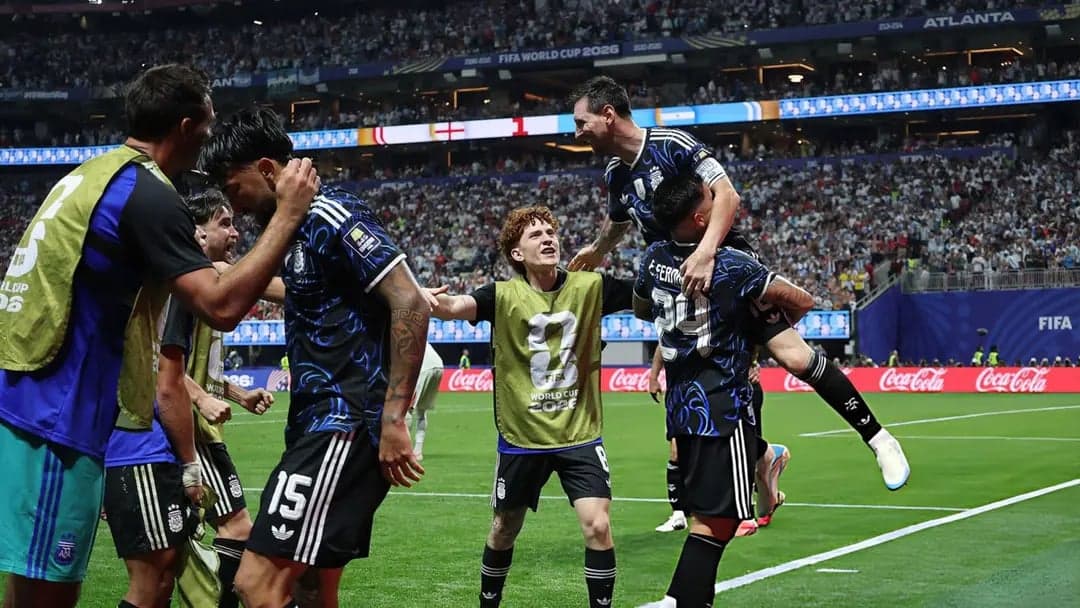

Argentina has secured a spot in the World Cup final against Spain after staging a dramatic late comeback to defeat England 2-1, scoring twice in just six minutes and 24 seconds at the end of a fierce semifinal.
England had looked poised to reach their first tournament final since 1966 after Anthony Gordon opened the scoring in the 55th minute, steering in a cross from Morgan Rogers. As the English side dropped increasingly deeper to defend their lead, they relied on a superb challenge from Djed Spence and two crucial saves by goalkeeper Jordan Pickford to stay ahead. However, Argentina's persistent pressure finally broke through in the 85th minute when Enzo Fernandez curled a stunning equalizer into the net from outside the penalty box. The comeback was completed in the second minute of stoppage time when substitute Lautaro Martinez headed home the winning goal. Lionel Messi provided the assist for both goals, extending his all-time record to 65 World Cup assists.
The chaotic finish capped off a highly physical and tense encounter. It was the first meeting between the two nations in 21 years, with the pre-match buildup heavily focused on historical conflicts, including past World Cup controversies and the Falklands War, which was referenced in songs by Argentine players and fans.
The hostility translated onto the pitch immediately, starting with an early flashpoint where Fernandez hit England’s Elliot Anderson from behind. Jude Bellingham gestured to U.S. referee Ismail Elfath that Anderson had been struck in the back of the head with an arm, but no immediate action was taken. The aggressive play resulted in an Opta-record 12 fouls and zero shots in the opening 30 minutes, the most in any World Cup match since records began in 1966. Discipline eventually came into play as Anderson was booked for bringing down Messi, and Lisandro Martinez received a yellow card for holding back Rogers.
With this victory, Argentina has now scored 11 times from the 75th minute onward in this tournament. They will advance to face Spain in the World Cup final at MetLife Stadium in New Jersey on Sunday. Meanwhile, England will play France in the bronze medal match in Miami on Saturday.
Is Messi going to win another World Cup?
With seven minutes remaining, a defining moment captured the grueling nature of the match: Lionel Messi, racing back toward the halfway line against Nico O’Reilly—a player 18 years his junior—just managed to reach a loose ball first, looking utterly exhausted by the effort. With Argentina trailing 1-0, Messi’s pursuit of a second World Cup title appeared to be slipping away to an unsatisfactory end.

While he did not find the back of the net himself, Messi orchestrated both of Argentina's late goals. He first drew the English defense toward him before finding an unmarked Enzo Fernandez, who struck the equalizer from distance. Moments later, Messi delivered a precise, right-footed cross to set up Lautaro Martinez for the dramatic game-winner.
The performance further dispels the historical, once-common criticism that Messi could not deliver for his country under intense pressure. His quest for a second World Cup championship will now culminate in Sunday's final against Spain at MetLife Stadium.
How did Argentina crack the code again?
Unlike the disorganized and lackluster performances that characterized their path through the knockout stage, Lionel Scaloni’s side displayed a highly organized structure and relative composure on the ball against England.


Following the goal, England made the surprising tactical decision to sit back, allowing Argentina to seize control of the match. The shift in momentum was fully established when Enzo Fernandez’s long-distance strike sailed past goalkeeper Jordan Pickford for the equalizer.


The dramatic victory sent the Argentina fans inside Atlanta Stadium into celebration. Despite looking like a team on their last legs at various points in the tournament, the defending world champions have once again found a way to advance, and they will play for a second consecutive World Cup title on Sunday.
Where did Argentina succeed?
Shaking off the disorganized and lackluster form that characterized their journey through the knockout stages, Argentina delivered a highly organized and polished performance on Wednesday to defeat England and secure their place in Sunday's World Cup final.
Lionel Scaloni’s side kept things relatively clean on the ball throughout the match, but it was England's opening goal that ultimately sparked the Argentine attack. After Gordon found the back of the net in the 55th minute to give England the lead, Thomas Tuchel’s side made the surprising tactical decision to sit back. This retreat allowed Argentina to seize complete control of the match.
The momentum shifted entirely when Enzo Fernandez unleashed a spectacular long-distance strike that sailed past England goalkeeper Jordan Pickford for the equalizer.
With the match level, Lionel Messi—who had been relatively quiet up to that point—capitalized on England's passive defensive posture. Sensing that his opponents had essentially stopped trying to play, Messi began operating in his most dangerous areas near the penalty box, finding frequent touches while his teammates buzzed around him in support.
Argentina's mounting pressure first warned the English side when Alexis Mac Allister struck the post. Shortly after, the decisive blow arrived. Messi received the ball in a wide channel, beat his defender, and delivered a perfect right-footed cross to Lautaro Martinez, who headed it home to complete the comeback.
The match-winning goal sent the Argentina supporters inside the Atlanta stadium into wild celebrations. With the victory, the defending world champions, who many believed were playing on their last legs, have earned the chance to play for a second consecutive World Cup title this Sunday.
Where did England go wrong in their World Cup semi-final defeat to Argentina?
England has experienced devastating World Cup semifinal heartbreaks in the past, but this latest defeat carrying a particularly painful sting compared to historical exits.

In 1990, England was defeated by West Germany on penalties after largely chasing the game as underdogs and securing a late equalizer. In 2018, they held an early lead against Croatia before conceding in the 68th minute and ultimately losing a tournament they were never expected to win.
This semifinal, however, presented a different scenario. Leading 1-0 in the 85th minute after looking like the superior side, England seemed to have the match fully within their grasp. They had successfully weathered Argentina’s highly physical approach, maintained their lead, and looked defensively secure against an opponent that had appeared largely ordinary.
The turning point came when England retreated into a deep 5-4-1 formation following the second-half hydration break. This tactical shift invited relentless pressure from Argentina, completely turning the tide of the contest.
In the aftermath of the defeat, public and media attention is expected to focus heavily on manager Thomas Tuchel’s ultra-defensive strategy rather than individual player errors. While historical tournament exits have often produced player scapegoats through red cards or missed penalties, responsibility for this defeat is being placed squarely on the managerial tactics.
How intense was this match?
The highly anticipated semifinal in Atlanta delivered on expectations of intense physicality and friction, with animosity established well before the opening whistle.
The hostile atmosphere was set during the pre-match national anthems. In a reflection of long-standing historical tensions dating back to the 1982 Falklands War, the rendition of "God Save the King" was completely drowned out by a loud wall of jeers and heckling from the crowd.

The friction immediately spilled onto the pitch. Within seconds of kick-off, Leandro Paredes shunted Jude Bellingham from behind, an challenge the England midfielder merely grinned off. Inside the first two minutes, Enzo Fernandez made forceful contact with an arm to the back of Elliot Anderson’s head. Ten minutes into the match, the Manchester City midfielder retaliated with a late challenge of his own.

This pattern of play dominated the entire opening period of the match, producing 11 fouls and zero shots before the first hydration break. Both teams relied on persistent fouling, kicking, and physical obstruction to disrupt the flow of play and neutralize counter-attacking opportunities.

Amidst the physical battle, Lionel Messi attempted a driving run from midfield that required five successive England challenges to halt, with Anderson eventually bringing him down and receiving a yellow card. Throughout the encounter, Bellingham in particular appeared to relish the highly aggressive, physical nature of the contest.
How did the referee handle the pressure?
In a match defined by its intense friction, referee Ismail Elfath managed to maintain control of a highly volatile contest while keeping his own composure intact.

Faced with a high-pressure opening stage, Elfath’s primary objective was to manage the game's rising temperature. Although the free-kick count reached double figures by the first hydration break, the official deliberately withheld his yellow cards. This conventional refereeing strategy aims to avoid setting too low a disciplinary threshold early on, which can cause problems to compound later in the match, though it risks allowing players to take matters into their own hands out of frustration.
Discipline eventually followed when Elfath brandished a yellow card for each side, with the first being waved somewhat indiscriminately before ultimately being shown to England's Elliot Anderson.
Despite occasional moments of uneven technique, Elfath's overarching strategy proved effective. His management allowed him to operate largely unnoticed throughout the second half. Ultimately, he becomes the first referee to oversee this historic World Cup fixture without controversy, leaving neither side with a legitimate claim that a officiating decision dictated the final outcome of the match.
How did England get ahead?
After 55 minutes of grinding, attritional football, the deadlocked semifinal finally yielded its opening goal.


Argentina's defender Nicolas Tagliafico was aware of Anthony Gordon's run, glancing back as Rogers prepared to cross, but was caught completely flat-footed. Gordon anticipated the bouncing ball, successfully hooking his right foot around it to find the back of the net.

The breakthrough marked Gordon's first-ever World Cup goal, mirroring Kieran Trippier's opening goal in the semifinal four years prior.
Is this the best tackle of the tournament?
Shortly after falling behind, Argentina launched a rapid counterattack that nearly leveled the match. After winning possession in their own defensive third, a quick combination between Enzo Fernandez and Lionel Messi released Giuliano Simeone behind the English backline. The Atletico Madrid forward drove toward the net in a prime scoring position, drawing goalkeeper Jordan Pickford out to brace for the shot.

Just as the equalizer appeared inevitable, Djed Spence executed a perfectly timed recovery challenge. Charging back at full speed, Spence slid in to cleanly take the ball off Simeone's toes at the last possible second, turning the dangerous opportunity away for a corner kick.

The defensive stop triggered an intense celebration, with Spence roaring toward the crowd before being greeted with chest and fist bumps from his teammates, signaling the vital importance of the defensive intervention. The precise execution on such a massive stage marked it as arguably the tackle of the tournament.

However, despite the heroic defensive effort to maintain the lead in that moment, Argentina ultimately found a way to break through twice before the final whistle.

Leave A Comment