

Long spell of hot weather forecast, no sustained heatwave likely
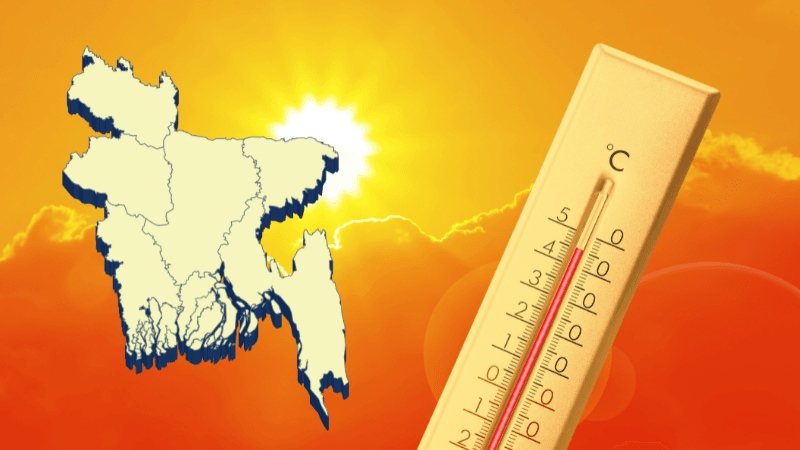

Summer in Bangladesh means prolonged heat and occasional thunderstorms that bring relief - the weather revolves around this cycle. That picture is being repeated in 2026 as well. However, the important difference this time is that although the heat period is long, there is no threat of continuous intense heatwave like in 2024, meteorologists have said.
The latest forecast of the Meteorological Department says that the temperature has started to rise gradually since March and heatwaves may occur in multiple phases from April to June. However, this heatwave will not be continuous and will come intermittently, the main reason for which is the increase in the possibility of thunderstorms and rainfall.
According to the department, April is the hottest month in the country and the average temperature in this month is around 33 degrees Celsius. During heatwaves, this temperature can exceed 42 degrees Celsius. Meanwhile, a rapid increase in temperature is being observed in the western part of the country, especially in Rajshahi, Chuadanga, Jessore and Kushtia.
Meteorologist Abul Kalam Mallick told Views Bangladesh, ''The temperature is likely to remain within the normal range in 2026. However, during heat waves, the temperature may rise to 40 to 42 degrees Celsius in some areas. But it will not last for a long time like in 2024.''
He also said, “This year, the tendency of thunderstorms may be relatively high, which will play an important role in reducing the temperature. It will be hot, but occasional rains will provide relief.”
The forecasts of international meteorological organizations also indicate the same. The World Meteorological Organization (WMO) recently said that due to the impact of global warming, the duration of heat waves in South Asia, especially in India and Bangladesh, is gradually lengthening. However, at the same time, the incidence of thunderstorms may also increase due to the increase in humidity in the atmosphere, which will help reduce the temperature locally.
A recent analysis by the US National Oceanic and Atmospheric Administration (NOAA) said that in 2026, there may be instability in the weather of South Asia, including Bangladesh, due to changes in the temperature of the Pacific Ocean. As a result, there is a possibility of a situation where sometimes there is intense heat, and sometimes there is a sudden thunderstorm.
Meteorologist Bazlur Rahman told Views Bangladesh, "The temperature and water vapor content of the Bay of Bengal will play a major role in determining the character of the heat this year. If the sea surface temperature is between 26 and 32 degrees Celsius, evaporation increases, which creates a favorable environment for cloud formation and thunderstorms. In the event of a thunderstorm, the temperature can suddenly drop by 2 to 6 degrees Celsius. As a result, the prolonged heat wave breaks and brings relief to people. That is why even if the heat wave is prolonged in 2026, it will not be uninterrupted."
He also said, "The duration of the heat wave is gradually getting longer. Whereas earlier, the heat wave was limited from March to May, now it is often extending until September." He blamed global warming and local environmental changes for this.
Professor of Geography and Environment Department of Dhaka University and climate expert Dr. Khondaker Ashraful Islam told Views Bangladesh, "The humidity in the air is also increasing every year in the country along with the temperature. As a result, the feeling of heat is becoming more intense, which increases the 'heat index'. However, the temperature in the summer of 2026 will be close to normal. Although the heat wave period is somewhat longer, the temperature will decrease occasionally due to frequent rainfall and stormy winds. That is, although there is no complete relief from the intense heat, it will not reach an unbearable level continuously." He emphasized on early warning, saying, "During the heat wave, it is necessary to drink enough water, stay out of the sun less, and maintain health awareness. This time, even if there is not a record-breaking continuous heat wave like in 2024, we must be prepared to deal with the effects of the heat for a long time."
Leave A Comment
You need login first to leave a comment