

Mangrove forests expanding across world
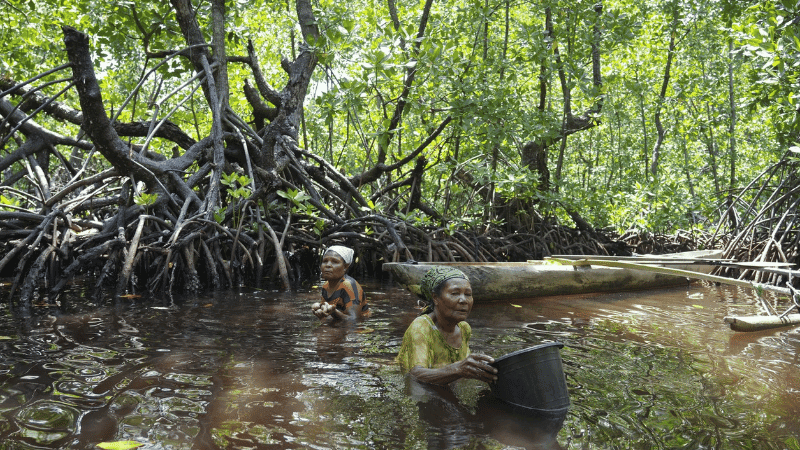

After decades of deforestation and environmental destruction, mangrove forests are expanding again around the world. A new international study has shown that the rate of new forest formation has increased significantly compared to the destruction of mangroves since 2010.
Mangrove forests are considered a natural protection for coastal areas. In addition to reducing the damage from storms, tidal waves and tsunamis, these forests play an important role in combating climate change by absorbing large amounts of carbon dioxide.
According to researchers, mangroves are capable of storing about five times more carbon than ordinary terrestrial forests.
The study found that between 1980 and 2010, about 12,000 square kilometers of mangrove forests were lost across Asia, Africa and the Americas. However, there has been a major change in that trend in the last decade. Currently, the global net loss has decreased to about 849 square kilometers since the 1980s, reports BBC.
Scientists say the positive changes are due to strict legal protection, increased public awareness and, most importantly, the natural regeneration capacity of mangroves. Especially after the 2004 Indian Ocean tsunami, coastal communities have become more aware of the importance of mangroves. This has led to a reduction in deforestation rates in many countries.
Studies have shown that mangrove forests have stabilized in Indonesia and that forest cover has increased in Myanmar. Cyclone Nargis in 2008 and subsequent forest conservation policies have helped bring about positive changes in the country.
However, researchers also warn that not all regions have improved equally. Mangrove forests, especially in the Niger Delta region of Nigeria, are still under serious threat due to oil pollution, pipeline construction and human activities. In addition, powerful cyclones from Australia to the Caribbean are also a major risk to these forests.
Another important finding of the study is that the area of the world's densest and most carbon-rich mangrove forests has increased by about 20 percent since the 1980s. Scientists see this as a significant success in environmental conservation.
According to the researchers, the continued decline in deforestation rates proves that mangrove forests are capable of rebuilding themselves if the right policies, public awareness and nature are given a chance to recover. As a result, this is great news for the world to combat climate change and coastal disasters.
Leave A Comment
You need login first to leave a comment