
Maracanazo to Pelé: How a nation's tears birthed a football empire
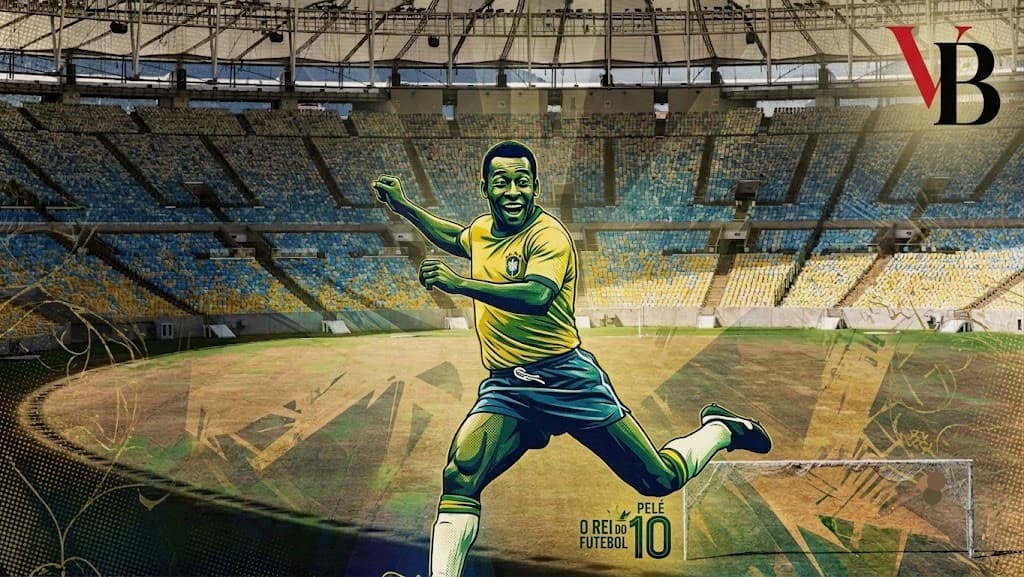

History is sometimes written through a single game of football. A single goal can change the fate of a nation. A single defeat can leave such a deep wound in the hearts of millions that the pain is carried for generations. On July 16, 1950, such a day arrived in Rio de Janeiro, Brazil — a day that would be forever etched in history as the 'Maracanazo'. But history does not only tell stories of wounds. It also tells stories of rebirth. The story of a nation that rises from destruction is truly extraordinary. And the hero of that rise was Pelé.
The doomed afternoon at Maracana
Brazil hosted the 1950 World Cup. Football had returned after the destruction of the Second World War, and the decision was made to hold the tournament in this vibrant South American nation. As hosts, Brazil did not just organise a tournament; they built a temple of dreams — the Maracana Stadium. This monumental structure in Rio de Janeiro was the largest football stadium in the world, with the highest capacity. The stadium, which could hold nearly 200,000 spectators, became a symbol of national pride for Brazilians.
The Brazilians were certain that the coveted trophy would come home. Home ground, home crowd — everything was in their favour. The team was formidable. Ademir, Zizinho, Chico — some of the best names in world football at the time were in that squad. Brazil had demolished Sweden 7-1 and Spain 6-1 in the round-robin stage. In that unusual format, where a final round-robin stage was played between four teams, Brazil's last match was against Uruguay. A draw would have been enough for the title.
On that day, over 190,000 people gathered at Maracana. Some say the number was even higher. The entire city had become a colourful sea of humanity. Celebrations on the streets, at home, outside the stadium — everywhere. A major Brazilian newspaper had run the headline that morning: "These are the world champions." Before they had even won the title!
Rio's mayor at the time, Angelo Mendes de Morais, went a step further. He had gold medals made for the world champions. Not just one or two, but 22 gold medals, each engraved with the player's name. Those medals waited at the stadium, ready to be placed around Brazil's necks. Before the match, the mayor told the players, "You who will soon be hailed as heroes by millions of your countrymen, you who have no rivals in this hemisphere — these medals are for you." A special song was also composed for the victory celebrations — 'Brazil os Vencedores' (Brazil the Victors), which was to be played as soon as Brazil won. Everything was ready. But history had other plans.
The goal that broke a nation's heart
The fiercely contested first half ended goalless. Early in the second half, Friaça put Brazil ahead with a goal. The entire Maracana erupted in wild celebration. It seemed there was no doubt left. But then, history changed its course.
In the 66th minute, Uruguay's Juan Alberto Schiaffino equalised. The sound of Maracana suddenly stopped. Millions of people seemed to hold their breath at once. Whispers were heard among a few, while most remained silent. Some prayed, some closed their eyes. Then, in the 79th minute, came the moment that would remain a black mark on Brazil's history forever. Uruguay's Alcides Ghiggia received the ball, sprinted down the right flank, and took a low shot. He beat goalkeeper Moacir Barbosa, finding the net. The scoreline read 2-1.
A surreal silence fell over Maracana. Such a silence in such a large gathering of people — perhaps never before in history. Ghiggia later said, "Only three people have ever silenced Maracana — Frank Sinatra, Pope John Paul II, and me." Brazilian player Chico said, "There were nearly 200,000 people at Maracana, but it was so quiet that I could hear a pin drop."
The match ended. Uruguay were the world champions.
A nation's tears
What happened at Maracana that day was not just a defeat; it was a blow to the soul of a nation. Inside the stadium, people wept. Outside, they wept. On the streets, at home, in restaurants — everywhere, there was mourning. Some fainted. Some say there were suicides that night. The whole of Brazil was submerged in a deep depression.
Goalkeeper Barbosa carried the burden of that one goal for the rest of his life. Society never forgave him. It is said that a woman once pointed to him and told her child, "This is the man who made Brazil cry." Barbosa lived with that pain until his death in 2000. He spent his life as a virtual outcast in his own land. Following that defeat, another significant change came to Brazilian football — the 'unlucky' white jersey was discarded. In its place came the yellow jersey and blue shorts, the now-iconic uniform of Brazil. It was as if the memory of that failure was buried with the old kit. The situation became so severe that three days of national mourning were declared in Brazil. The incident remains known to Brazilians as 'Maracanazo', meaning — the Cry of Maracana.
From failure to national identity
'Maracanazo' did not break Brazil; it rebuilt them. From that day on, football became more than just a game for Brazilians; it became part of their national existence. Politics, economy, culture — everything was surpassed by football, which became Brazil's language.
The philosophy of Brazilian football is 'Jogo Bonito' — the Beautiful Game. This is not just a strategy; it is a way of life. Street kids, at road intersections, on the beach sand, in the alleys of the favelas — wherever they found a ball, they played. No coach, no rules; just creativity, instinct and extraordinary physical awareness. This football culture was built over decades, and the relentless determination born from the wound of Maracanazo deepened that culture. A new generation of footballers emerged in every city and every neighbourhood, all wanting to erase Brazil's sorrow. Some played with goalposts made from fishing nets, some with balls made from rags. But the dream was the same: to wear Brazil's yellow jersey and win the World Cup one day. The account of that night of tears in 1950 had to be settled.
The arrival of the Football Emperor
The 1958 World Cup was held in Sweden. Brazil returned to the tournament, but this time they were different. Fire inside, beauty outside. In the squad was a 17-year-old boy whose feet seemed made for football. His name — Edson Arantes do Nascimento. The world knows him as Pelé.
Born on October 23, 1940, in Tres Coracoes, Minas Gerais, Brazil, Pelé's father, Dondinho, was a footballer — talented but his career ended prematurely due to a heel injury. His family was poor. Pelé's childhood was spent without shoes, without enough food. But the ball was always at his feet. He loved the game immensely. A ball made from rags, a ball from grapes, a ball from paper stuffed inside a sock — Pelé played with whatever he could find. With a ball at his feet, he felt the world was his. On the streets, on empty fields, behind the school — everywhere was his stage. At just 15, he joined Santos Football Club. At 16, he played for Brazil's national team. And at 17 — he changed the history of world football.
1958: The stage of recognition
The Rasunda Stadium in Stockholm, the World Cup final. Brazil faced hosts Sweden. Pelé scored two goals in that match. But the numbers tell barely half the story. His first goal was something else — chest control, turn, beating a defender, a volley into the net before he hit the ground. Even the Swedish spectators rose to applaud. They had never seen football like this. Brazil won the match 5-2. They won the World Cup for the first time. A 17-year-old boy became the youngest World Cup goalscorer in history, scoring twice in the final.
After the trophy ceremony, Pelé sat on the field and wept. Senior player Vava held him in his arms. A 17-year-old's tears — but in those tears was the release of a nation's eight years of accumulated pain. The revenge for Maracanazo had been taken. The cry of 1950 answered with the joy of victory in 1958.
The Emperor's reign
Pelé did not stop at one title. From 1958 to 1970, in those twelve years, he led Brazil to three World Cup victories. 1958, 1962 and 1970. Three different decades, three different continents, and in each, Pelé's imprint was indelible. His club career was equally incredible. He scored over 1,000 goals for Santos. The number itself is a fairy tale. Opposition goalkeepers would say that facing Pelé meant knowing he would score, it was just a matter of when. His style of play was incomparable. Speed, strength, dribbling, heading, shooting — equally skilled in all. But his greatest quality was creativity. He played in ways no one had imagined. He scored goals that seemed impossible. Leaders and statesmen from around the world honoured him. During the Nigerian civil war, the two warring factions declared a ceasefire just to watch a Pelé exhibition match. This single event shows that Pelé was not just a footballer; he was a force. He was the Football Emperor! The Brazilian government declared him a 'national treasure' to prevent any European club from buying him.
Football is a sport. But sometimes this very sport becomes a nation's dream, a people's identity, a mirror of a civilisation. Brazil is the greatest proof of that. Maracana still stands in Rio. Perhaps somewhere on those walls, the tears of 1950 are still hidden. But on those same walls are written the stories of victory from 1958, 1962 and 1970. And at the centre of that story will forever remain one hero — Pelé. On the other hand, the cry of Maracana is now history. But that history is not one of failure, but of rebirth. A nation took its greatest shame and turned it into the world's finest football culture. The brightest representative of that culture — Pelé. Ghiggia's goal stopped Brazil for only a few years. Then Pelé arrived, and the entire football world was captivated by the magic of Brazil's feet. In that continuity, generations of star footballers have been gifted to the world, taking the game to new heights. Through their magic, Brazil has won the most World Cup titles — five.
That same Brazil, in the passage of time, has now fallen behind in world football again. Their artistic 'Jogo Bonito' style has become ineffective in the pursuit of adopting European-style football. Since 2002, the sixth World Cup title, the 'Hexa', remains elusive. But history is witness that when their backs are against the wall, Brazil perform best. Fans expect that in the 2026 FIFA World Cup, Brazil will once again rise from the brink.
Leave A Comment