

March 25 genocide: In memory of Shaheed Chisti
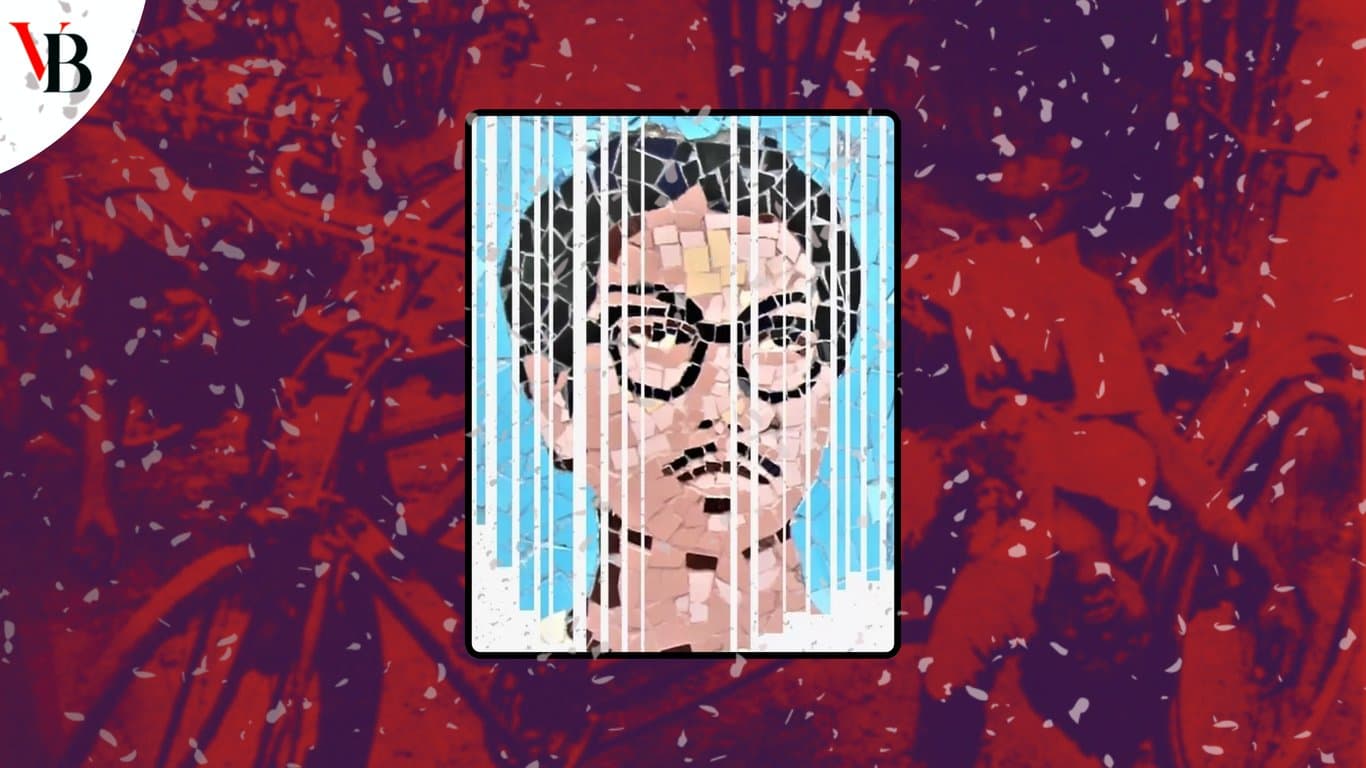

The sovereign nation of Bangladesh emerged from the remnants of East Pakistan, resulting from one of the most tragic, sorrowful, and heart-wrenching events in global history. The narrative surrounding the establishment of this state is deeply connected to a significant amount of violent history.
"On that black night of the March 25 massacre, although Yahya went left, Bhutto stayed to see the massacre with his own eyes. People like them don't always get such an opportunity to see the massacre." - Nirmalendu Goon
On the midnight of March 25, 1971, the Pakistan Army unexpectedly initiated Operation Searchlight. During "Operation Searchlight" on the dark night of March 25, the Iqbal Hall (currently known as Shaheed Sergeant Zahurul Haque Hall) at Dhaka University was among the primary targets of the Pakistani Army. They regarded this hall as the epicenter of the Bengali nationalist movement. This was due to the fact that Sergeant Zahurul Haque, who was implicated in the Agartala conspiracy, was killed by the Pakistan Army while in their custody. Following his assassination, the Iqbal Hall was renamed in honor of Sergeant Zahurul Haque. After this renaming, the student politics of the Chhatra League began to be directed from Sergeant Zahurul Haque Hall. Shortly after the commencement of Operation Searchlight, the Pakistani soldiers launched a violent assault on Zahurul Haque Hall. They anticipated that armed resistance would emerge from both Zahurul Haque Hall and Jagannath Hall, as students had received weapons training on the grounds of Zahurul Haque Hall during the March Non-Cooperation Movement. The Pakistani forces bombarded the hall with heavy artillery, including mortars, and invaded the premises, committing horrific massacres. That night, approximately 200 students and associated individuals were martyred within this hall alone. Among those 200 martyrs was Chisti Shah Helalur Rahman. On March 26, 1971, the Pakistani occupying forces brutally executed him. In remembrance of the martyred intellectuals, the Bangladesh Postal Department issued a commemorative postage stamp in honor of Helalur Rahman on December 14, 1991, titled "Martyr Intellectual Ticket, Ninth Phase." He was recognized as the first martyr of Bogura. The Dhaka University Journalists' Association established the Shaheed Chisti Library on January 17, 1998.
Helalur Rahman was born in 1949 in Rahmannagar of Bogura district. Helalur was the eldest of the four children of private sector employee Chishti Mansur Rahman and Sajeda Khatun. He passed his secondary school in 1965 from Bogura District School and his higher secondary school in 1967 from Bogura Azizul Haque College. He completed his graduation and post-graduation from the Philosophy Department of Dhaka University in 1970 and 1971 respectively.
He held a deep affection for his mother, and throughout his school and college years, he assisted her with daily tasks amidst his studies and other responsibilities. He was actively involved in scouting during his school years, participating in jamborees on multiple occasions. Additionally, he was a committed member of the school drama group, taking part in several theatrical productions. As a resident student, Helalur resided in room 212 of Sergeant Zahurul Haque Hall. He embarked on his journalism career while attending Dhaka University, serving as the university correspondent for the Daily Azad newspaper in 1971. He earned a solid reputation for delivering objective and unbiased news. In 1969, he held the position of library secretary for the Iqbal Hall branch students' union and later became the vice-president of the University Journalists' Association. Helalur Rahman served as the assistant secretary of the central committee of the then East Pakistan Chhatra League. He was a conscientious and brave student leader, dedicated to his role as an organizer. He played an active and courageous part in the mass uprising of 1969 and the non-cooperation movement of 1971, leading the Chhatra League parade on the day of the Independence Bengal Flag Hoisting on March 23. He was the founding organizing secretary of the Bastuhara Samiti, which was established by Sirajul Alam Khan. He worked diligently to empower the workers for the independence of the Kataban-Nilkhet-Palashi slum residents. He did not regard Pakistan as his homeland, thus he did not show respect for the Pakistani flag or national anthem. Photographer Pavel Rahman documented his encounter with Helalur Rahman Chisti in his book "Amar Muktijuddho." Pavel Rahman was part of the student organization of the Chhatra Union during his school days. At that time, they had just moved from Malibagh to the residence allocated to his father in Azimpur Colony amidst the tumultuous events of March. The elder brother of the Chhatra Union at his school, Kamrul Ahsan Khan, mentioned that the Chhatra Union would offer training for the Liberation War. The central leader of the Chhatra Union had instructed the workers to join the training of the boys of the Chhatra Union in the university grounds for the Liberation War. In this regard, the Chhatra League is one step ahead - they have already started training members of the Joy Bangla Bahini at the Sher-e-Bangla Hall of the Engineering University of BUET, Palashi.
From Azimpur Colony to Sher-e-Bangla Hall -- His friend Tuku informed him that Bangabandhu had proclaimed independence. There is no entity known as Chhatra League or Chhatra Union. Engage in training wherever possible. Following his friend's counsel, Pavel arrived at Sher-e-Bangla Hall, where he met the commander of Joy Bangla Bahini, Chisti Shah Helalur Rahman. Chisti Bhai included him in the training without any inquiries. Pavel Rahman continued to learn guerrilla warfare techniques from Joy Bangla Bahini. A few days later, March 25 arrived, and like other days, they finished their training. However, this evening was somewhat different from the others. Although they had concluded their training on previous days and returned home, that day, the commander of Joy Bangla Bahini, Chisti Bhai, instructed them to remain. As time passed, evening descended, and a jeep unexpectedly drove through the hall gate, slipping past the light barrier. The leaders who arrived in the jeep gradually unloaded several items. After the jeep departed, they were arranged in a line. Subsequently, a Molotov cocktail was distributed to each of them. The leaders had brought these for their use. Each pair received one Molotov cocktail. Pavel was paired with his friend Chandu. Together, Chandu and Pavel received one. Prior to this, they had been taught the techniques for throwing Molotov cocktails in a guerrilla manner. Then, Chisti Bhai instructed them on how to ignite and throw the burning cocktails, among other things. Chisti Bhai warned that the Pakistani military would launch a final assault that night.
The road must be barricaded tonight. Once the military halts the vehicle at the barricade, the cocktail will be launched. The petrol contained in a 7-Up bottle will become wet if the twine attached to the cap is inverted. Subsequently, the cocktail must be ignited and hurled at the target. After that, flee. It is essential to evade at that moment, if you wish to survive. While bidding farewell to Chisti Bhai, he advised caution. We shall meet again if you are still alive. Joy Bangla. A strong bond existed between Golam Faruk of the Chhatra League and Chisti Shah Helalur Rahman. He occasionally visited the home of his friend and colleague Golam Faruk, as well as Monirul Islam, who was the vice-president of the central parliament of the Chhatra League at that time. Marshal Monirul Islam's residence was always welcoming to members of the Chhatra League. Marshal Moni's mother, Begum Sufia, treated the children of her son's organization with the same love and care as her own. The siblings emulated their mother. Chisti Bhai would sometimes visit Marshal's home, enticed by the prospect of eating fish. He was unable to select fish for himself. At Moni Bhai's house, his mother or sisters would lovingly choose fish for him with great affection. On the evening of March 25, 1971, around nine or ten o'clock, it is likely that Moazzem Hossain Khan Majlis, Golam Faruk, Shah Chisti, Helalur Rahman, and Iqbal were engaged in political discussions near the hall's gate. At that moment, Abdur Razzak, who was walking in front of the auditorium, approached and warned that soldiers had been spotted roaming the city, advising them to leave the hall. Golam Faruk, feeling hungry, asked Chisti to accompany him to his home, but Chisti declined the invitation and chose to remain in the hall. The youngest members of the Chhatra League, Rosy and Baby, resided in a one-story house opposite Iqbal Hall in the 17th University Residential Area. At that time, there was no boundary wall separating the university residential area from Iqbal Hall. Rosy and Baby started crying and their father moved them away from the window. They then heard Chisti's brother's screams - "Rosy, Baby, save me."
"A group of young men are lying in a row on the ground of Zahurul Hall, their faces distorted in pain yet unblemished with patriotism." - Nirmalendu Goon
Nirmalendu Goon recounts in his book "Autobiography 71" that on March 27, at 10:30 am, he courageously approached Sergeant Zahurul Hall in search of his friend Helal Hafiz. Many individuals refrained from entering due to fear for their safety. A small group had assembled there. He proceeded and entered the area, where he observed several lifeless bodies positioned at the edge of the field. Their remains were bloodied, distorted in agony, and charred. They were not easily identifiable. Among the deceased was not his friend Helal Hafiz, but rather another companion, Chisti Helalur Rahman. Chisti, a poet, had recently engaged in a dispute over a poem just two or three days prior at Sharif Mian's canteen. Today, Chisti's lifeless form lay before him. While reflecting on that night with Mostafa Mohsin Montu, he learned more about Chisti, his heart heavy with remorse. On the night of March 25, Mostafa Mohsin Montu had returned from Bangabandhu's residence and, following the leader's orders, was transporting weapons stored in Sergeant Zahurul Haque Hall to Keraniganj across the Buriganga River to finalize preparations for the Liberation War. During this time, Chisti was his steadfast partner in this perilous task. At 11:30 pm, Montu departed from Zahurul Haque Hall and crossed the river. He intended to bring Chisti along. However, Chisti declined to accompany him. He mentioned that if some of his associates came to see him that night, he would take all of them to Montu's residence across the river on March 26. Those were Montu's final words exchanged with Chisti. Unbeknownst to Chisti, this was to be his last night in his cherished hostel. Mofizul Islam, a former official of the Bangla Academy, documented in his work "Amar Bandhu", "From Room 212 of Sergeant Zahurul Haque Hall - When the invading forces began firing upon the sleeping students on the night of March 25, Chisti leaped onto the shed adjacent to his window on the second floor, situated between the hall and the auditorium. Chisti remained face down on that shed throughout the night. The struggle for survival persisted all night long.
The eastern sky had cleared. Following the all-night bombardment, the machines of the Pakistani hyenas were now silent. Chisti must have believed he had narrowly avoided death. As Chisti cautiously lifted his head to check for any signs of the invading forces, the guard dog stationed in front of Khalek's shop lunged at him. A rickshaw driver named Nuru was being compelled to gather the corpses and place them in a single location. When Chisti attempted to leap off the shed, he was halted. He was told, 'Please come down the pipe, sir, do not jump.' In front of the hall, a Major stood beside the pond. Chisti was brought before him. He identified himself as a university reporter for Dainik Azad, yet he did not make a final stand. Chisti was positioned under a tree adjacent to the drain on the narrow path that connected the back of the hall to the dining area, where he was shot three times consecutively. As the first bullet pierced his left chest and exited, he immediately cried out 'Joy Bangla'.
"Whether Chisti decayed in some slaughterhouse and merged with the earth, or if the savage army incinerated his body with petrol, remains unknown to any of us."
(Memories: 1971, Part III, First Publication 1990, Edited by Rashid Haider).
Author: Kazi Ferdousi Haque Linu, freedom fighter and writer
Leave A Comment
You need login first to leave a comment