
Messi vs. Yamal on the grandest stage: Ultimate preview, predictions, and key battles for World Cup final
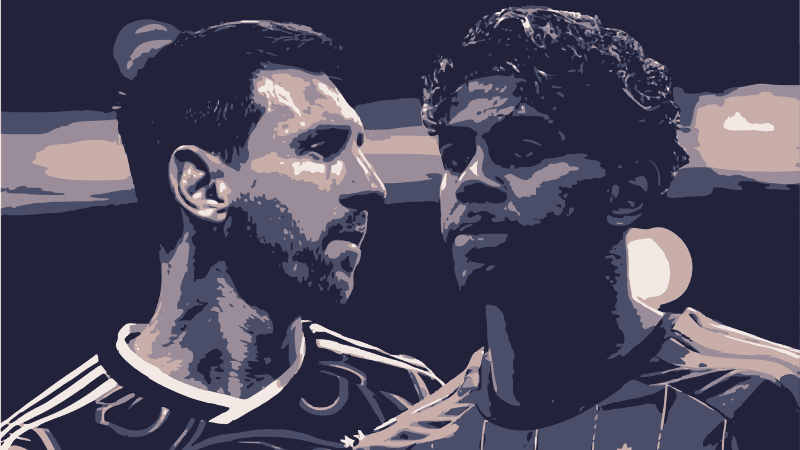

The ultimate prize in football will be decided this Sunday at MetLife Stadium when Spain faces Argentina in the World Cup final. This blockbuster matchup pits the champions of Europe against the champions of South America, highlighted by a legendary storyline: 39-year-old Lionel Messi going head-to-head with 19-year-old Lamine Yamal, who is widely seen as the heir to Messi's legacy at Barcelona.
While this marks their very first time playing against each other on a pitch, the two share an incredible history, as Messi actually helped bathe a five-month-old Yamal during a charity photoshoot back in December 2007. Spain enters the final with an elite defensive record, having conceded just one goal across seven matches in the tournament as they chase their second World Cup title, 16 years after their first.
Argentina is aiming to defend their 2022 crown and secure their fourth title overall, in what is heavily anticipated to be Messi's final appearance on the world stage. Here is an in-depth look at this spectacular clash and the key areas where the match will be won and lost.
How did Spain reach the final?
Spain’s path to the final began with a major shock when they were held to a goalless draw by tournament debutants Cape Verde, who were ranked 67th in the world. They quickly rebounded against Saudi Arabia, scoring three times before the first cooling break as Mikel Oyarzabal netted twice and assisted Lamine Yamal, while an own goal from Hassan Altambakti wrapped up a 4-0 win. Luis de la Fuente’s team then secured the top spot in Group H by grinding out a hard-fought 1-0 victory over a stubborn Uruguay side, courtesy of a snapshot from Alex Baena. The strategy was always for the squad to grow into the tournament as key players like Yamal and Rodri regained full sharpness following recent injuries.

The team's upward trajectory continued in the round of 32 with a commanding 3-0 defeat of Austria, featuring another double from Oyarzabal and a beautifully worked team goal finished by Pedro Porro. The round of 16 served up a tense Iberian derby against Portugal, which Spain won 1-0 thanks to a dramatic 91st-minute strike from substitute Mikel Merino, bringing an end to Cristiano Ronaldo’s World Cup career. Spain raised their game even higher in the quarter-finals against Belgium; despite a late goal from the super-sub Merino following an error by Belgian backup goalkeeper Senne Lammens, the 2-1 scoreline failed to show just how dominant Spain was against the team that had previously knocked out the United States.
Their ultimate test arrived in the semi-finals against pre-tournament favorites France. Spain delivered an exceptional performance on both sides of the ball, with 2024 Ballon d’Or winner Rodri completely controlling the midfield and neutralizing French superstars Kylian Mbappe, Ousmane Dembele, and Michael Olise. Yamal’s smart play and persistence earned a penalty that Oyarzabal successfully converted, before playmaker Dani Olmo set up Porro in the second half to lock down a thoroughly deserved 2-0 triumph.
How did Argentina reach the final?
Argentina's journey through the World Cup has been defined by a distinct sense of survival, making their ability to progress remarkably impressive. They have been backed into both physical and tactical corners multiple times, yet they have consistently found ways to escape. In contrast, the group stage was an absolute breeze in a pool featuring Algeria, Austria, and Jordan. Lionel Messi ran riot while the defense faced minimal pressure, and topping the group was practically guaranteed from the moment they easily brushed aside Algeria in a 3-0 victory.

Because of a new World Cup draw system that used FIFA seedings for the first time, major trouble was unlikely to surface until the knockout rounds, which is exactly when chaos arrived. The pressure surged dramatically in the round of 32, where Cape Verde pushed Argentina to the absolute limit, causing their legs to nearly give out during extra time. They were then on the brink of elimination in the round of 16 against Egypt, trailing 2-0 before mounting a fierce 3-2 comeback in a match that cannot be mentioned without noting some highly controversial refereeing decisions.
The quarter-finals brought more adversity against Switzerland, who held all the momentum at 1-1 until Breel Embolo received a red card. Even their semi-final triumph over England required them to pluck victory from yet another incredibly dangerous position. While Messi’s influence has been undeniable—virtually carrying the team with eight goals and four assists—Lionel Scaloni’s side relies just as heavily on their sheer knack for hanging in games, weathering intense storms, and finding late goals. It is the kind of resilient run that makes it feel as though their name might already be written on the trophy.
What should we expect from Spain?
Spain’s established identity as a possession-dominant, short-passing side has been fully evident in this tournament, with the team averaging 63.7 per cent possession across their seven matches. This control is physically and mentally exhausting for opponents, who are left chasing shadows as Spanish technicians pass around them with precision. However, their approach extends beyond just grinding opponents down while waiting for gaps. Spain relies on dynamic movement, with players constantly swapping positions and making surging runs that dismantle defensive structures.

Deep runs from full-backs into advanced areas have been especially effective. Pedro Porro’s goal against France in the semi-final originated from this exact tactic, while Marc Cucurella has been even more active on the left flank, registering 139 runs behind defensive lines—the fifth-most of any player in the tournament. Despite this high volume, opponents continue to struggle with tracking these movements and deciding who should take defensive responsibility. Dani Olmo has also stood out as one of Spain’s top performers across the midfield and attack.
This obsession with possession is matched by an equally fierce commitment to winning the ball back. Luis de la Fuente’s forwards press aggressively, while centre-backs Pau Cubarsi and Aymeric Laporte maintain a high defensive line that squeezes the pitch and pins opponents back. Holding the entire system together is the irrepressible Rodri, who sweeps up loose balls and snuffs out counter-attacks with unmatched positional awareness. Ultimately, Spain boasts the most well-defined playing style at the tournament, defined by control, cohesiveness, a dogged intensity off the ball, and a clear understanding of individual responsibilities. Combined with the extra stardust provided by Lamine Yamal, they represent a daunting proposition for Argentina to overcome.
What should we expect from Argentina?
Argentina’s run to the final has been defined by a feisty combativeness, a never-say-die attitude, and the brilliance of Lionel Messi. Lionel Scaloni’s side has frequently laboured through long stretches of matches only to come alive late, with an incredible 12 of their 19 tournament goals being scored after the 75th minute of normal time. If an opponent sits off them, as England fatally did late in the semi-final, Argentina boasts enough quality in midfield to comfortably knock the ball around and create a steady stream of chances. Their composure is highlighted by a tournament-high 5.4 passes per sequence, as they patiently move the opposition around until an opening appears. These combinations are heavily concentrated through the middle where Messi generally lurks, with Argentina directing a smaller share of their passing toward the flanks than any other team.
While Messi’s boundless talent has dragged them to this stage, the 39-year-old’s physical limitations mean Argentina does not employ the same aggressive high press as Spain. They win possession in the final third just 2.9 times per game, which is roughly half of Spain’s rate. Instead, they choose to sit off before snapping into challenges and committing fouls once the opposition moves into the midfield. Furthermore, despite being one of the smallest teams at the tournament, Argentina has found significant success in the air by scoring four headed goals. Three of those headers, including Lautaro Martinez’s late winner against England, have been created by Messi’s crosses. His pinpoint delivery makes them incredibly dangerous from wide areas, even though their general play remains concentrated through the center.
While the focal point of the team is obvious, it is reductive to view Argentina solely as a one-man team. Julian Alvarez provides bustling energy and quality up front, Enzo Fernandez has stepped up with crucial late goals, and Emi Martinez offers a confident, reassuring presence between the posts. Spain may enter the final as the more complete side, but Argentina possesses an indefatigable spirit and an uncanny ability to conjure up moments of individual quality exactly when they need them most.
Who is the star player for each team?
For Argentina, while the supporting cast has delivered crucial moments, the tournament remains completely centered around the Lionel Messi show. Messi is currently tied with Mbappe as the joint leader for the Golden Boot with eight goals, and he has directly contributed to 12 of Argentina's 19 goals. Statistics show he serves as both their primary attacking threat and chief creator, leading the team in shots and chances created per 90 minutes.

To an unfamiliar observer, Messi might seem like a 39-year-old whose physical tools can no longer compete at the highest level, considering he has spent 63 percent of this World Cup walking—a share far higher than any other outfield player. However, this walking is simply part of the magician's deception, allowing him to burst into life exactly when his country needs him most. In the match against England, he completed 10 take-ons, which is more than any player in any of the tournament’s other 101 games. His incredible core strength and his ability to hold off defenders and weave past them in either direction remain just as devastating as ever.
On the other side, while Yamal provides the attacking spark for Spain, Rodri is the most vital player in Luis de la Fuente’s squad. The Manchester City midfielder serves as the unflappable anchor for Spain's build-up, offering the control and composure that allows them to initiate their attacks. FIFA data highlights this impact, revealing that Rodri has completed 47 passes under pressure per match, the highest average of any player in the entire tournament.
In addition to his calmness on the ball, the 2024 Ballon d’Or winner is a fierce competitor defensively, utilizing sharp anticipation to reclaim loose balls and using his imposing physicality to dominate duels. His defensive contributions stretch across the entire pitch, and he is especially crucial to Spain’s counter-press, averaging two tackles won in the final third per game, which is more than any other player who advanced to the quarter-finals.
Is there any history in this match-up?
The historical connection between Spain and Argentina stretches back to the 16th century when Iberian explorers first reached what is now Buenos Aires, and deep ties remain between the two nations today. On the football pitch, their national teams share a perfectly balanced rivalry, having met 14 times with six victories for Argentina, six for Spain, and two draws. Surprisingly, the only time these two historic powerhouses have ever faced each other in a World Cup was during the 1966 tournament in England, where Argentina secured a 2-1 victory in their opening group stage match.

It is also remarkable that throughout an international career lasting two decades, Lionel Messi has only played against Spain three times. This is despite spending the majority of his club career at Barcelona, who unsuccessfully tried to convince him to represent the Spanish national team. Messi’s last encounter with Spain occurred in a November 2009 friendly in Madrid. Although he scored a penalty and bewildered Barcelona teammates like Gerard Pique and Sergio Busquets with his trademark mazy dribbling, a brace from Xabi Alonso ultimately gave Spain a 2-1 win. The most recent fixture between the two countries took place in a friendly ahead of the 2018 World Cup, where Spain thrashed an Argentina side missing Messi 6-1. Isco scored a hat-trick for Spain, while Nicolas Otamendi, who could play this Sunday, scored the lone consolation goal for Argentina.
The players on both sides will be highly familiar with one another through La Liga, as 24 of the 52 players across both tournament squads play for Spanish clubs, including 18 from Spain and six from Argentina. One of the many fascinating subplots involves Atletico Madrid teammates going head-to-head, with Spain’s Alex Baena and Marcos Llorente potentially matching up directly against Argentina’s Nahuel Molina and Julian Alvarez. Furthermore, many of the eight Barcelona players representing Spain, including Lamine Yamal, grew up watching Messi at the Camp Nou. Among them, only midfielder Pedri actually shared the pitch with Messi for the Catalan club, as Yamal was only 14 years old when the Argentine superstar departed in 2021.
Where will the game be won and lost?
The outcome of the final will hinge on Argentina’s ability to handle intense Spanish pressure. During their semi-final, Argentina struggled significantly against England’s early high press, managed a mere three touches in the opposition box before half-time. However, unlike England, Spain is unlikely to retreat or tire as the game goes on, forcing Lionel Scaloni to figure out a method to navigate this sustained intensity.
One small comfort for Argentina amidst this relentless pressure is that while Spain ferociously hounds opponents high up the pitch to win possession, they rarely launch rapid counter-attacks, averaging just 1.9 direct attacks per 90 minutes. Aside from Yamal, Spain lacks a massive amount of pace in their forward positions, which is an area that has previously caused trouble for Argentina.
Because Argentina is a team that naturally grows into matches, withstanding Spain's suffocating counter-press could turn this final into a tactical battle for control. Argentina actually holds a slight edge over Spain in passing accuracy, leading the tournament with a 90.5 percent completion rate compared to Spain’s 89.8 percent. Utilizing that composure to establish a foothold and consistently find Messi in dangerous areas between the lines will be vital to Argentina's success.
Beyond the fight for midfield supremacy, the individual duels down the wings could ultimately decide the game. Yamal is incredibly dangerous on Spain's right flank, having completely torn apart France's left-back Lucas Digne in the semi-finals with his explosive dribbling, presenting a daunting task for whoever Argentina starts on that side, most likely Nicolas Tagliafico. On the flip side, Messi has provided crucial cameos out wide in a style reminiscent of his early Barcelona days. When Argentina fell behind against Egypt and England, Messi shifted to the right flank, where his ability to cut inside and deliver pinpoint crosses and through balls turned both matches around—a tactical weapon that could prove vital once again.
Who do our experts think will win?
Carl Anka predicts a 2-1 victory for Spain, anticipating a fragmented match slowed down by hydration breaks, an extended 30-minute half-time show, Argentina's tactical fouling, and Spain's midfield rotation. He expects Argentina to score, most likely from a header assisted by Lionel Messi, but ultimately fall short. Amelie Claydon also forecasts a 2-1 win for Spain, noting that Spain controlled their semi-final while Argentina's physically demanding comeback against England will take a toll. While she expects Argentina to score due to Messi's elite delivery and the team's resilience, she believes Spain's superior midfield control and top-tier defense will ultimately win the match.
Greg O’Keefe expects a 3-1 win for Spain, stating that Argentina’s chaotic journey to the final will hit a wall against a Spanish team that is superior in every department, meaning Argentina's fierce mentality and a non-decisive moment from Messi won't be enough. Conor O’Neill favors Spain with a 2-0 prediction, admitting that while it is risky to bet against Messi, Spain’s collective brilliance is simply too strong to overlook. Finally, Dermot Corrigan also goes with a 2-0 Spain victory, arguing that logic favors the much more complete Spanish side. Although he acknowledges Argentina and Messi have a supernatural habit of defying logic, he backs Spain to secure their second World Cup title, with Mikel Oyarzabal and Lamine Yamal both finding the back of the net.
Who is the referee?
Slovenian referee Slavko Vincic will take charge of Sunday's final, marking his first Argentina match since he officiated their shocking 2-1 loss to Saudi Arabia in the opening group stage of the 2022 World Cup. In contrast, the 46-year-old has previously refereed three Spain matches, all of which were victories at the European Championship finals, including their 2024 semi-final triumph over France right before Spain went on to win that tournament. This assignment represents his second World Cup and his fourth major national-team tournament overall. Vincic's high-profile resume also includes refereeing the 2021-22 Europa League final between Eintracht Frankfurt and Rangers, as well as the 2023-24 Champions League final between Real Madrid and Borussia Dortmund.

He is no stranger to controversy and major decisions, as seen in last season’s Champions League quarter-finals. During the second leg between Real Madrid and Bayern Munich, with the tie deadlocked at 4-4 on aggregate, Vincic sent off Madrid's Eduardo Camavinga in the 86th minute for a second yellow card after the midfielder was judged to have delayed a restart by throwing the ball away; Bayern subsequently scored two late goals to advance. He also sent off Madrid's Arda Guler at the end of that same match for receiving two bookings for dissent.
The upcoming final will be Vincic's sixth World Cup match in total. At this current edition, he has already refereed the group-stage matches between Brazil and Morocco, as well as Jordan and Algeria. His most recent appearance at this tournament was the round of 32 clash between Mexico and Ecuador, where he famously dismissed Ecuador's Piero Hincapie for covering his mouth while confronting Mexico's Santiago Gimenez. His past World Cup experience also includes officiating England’s 3-0 group-stage win over Wales back in 2022. The magnitude of the appointment was clear on Thursday, as Vincic was moved to tears upon receiving the news at FIFA’s referee team base in Miami.
Leave A Comment