

Misuse of re-enlistment policy must be stopped
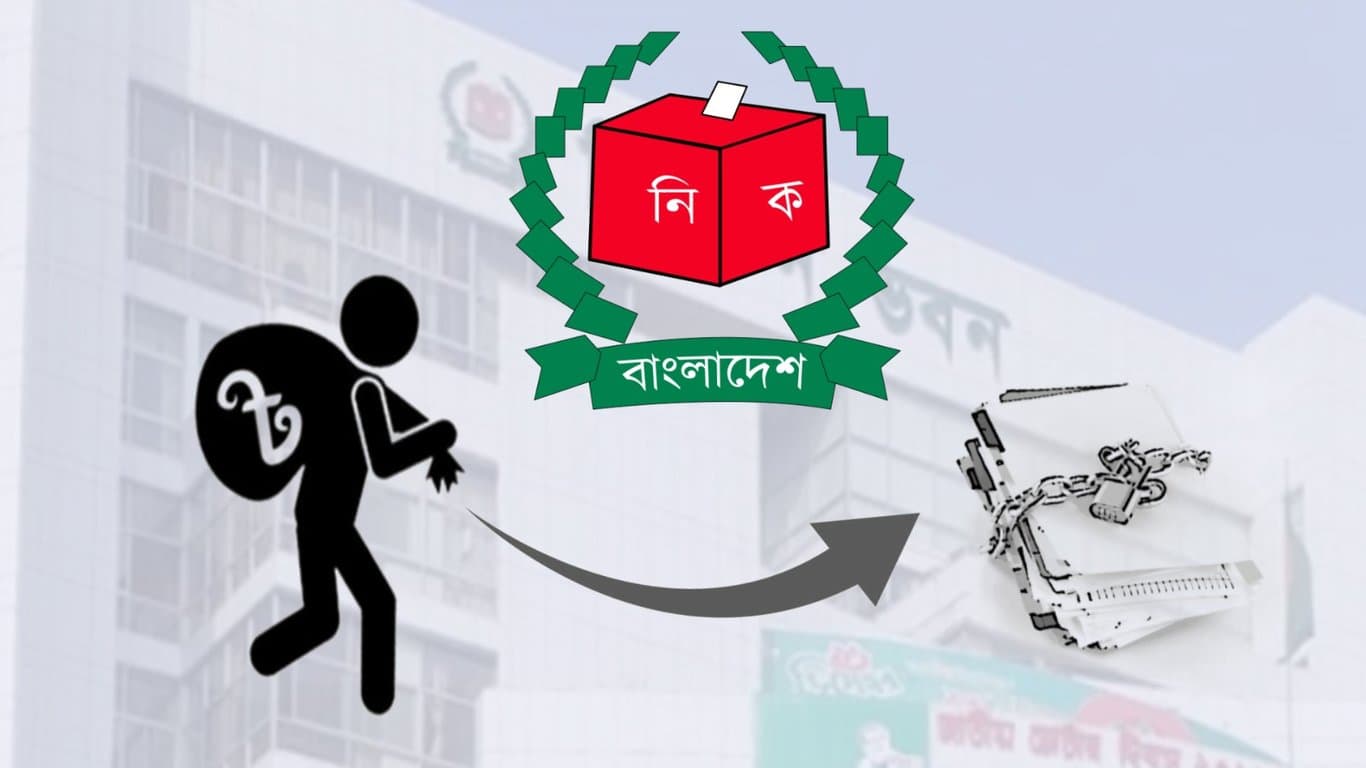

On November 18, a significant news article published in a national daily caught attention. The headline reads, "Loans of two groups regular, defaulted loans reduced to 12 percent." The news is about the country's leading state-owned Janata Bank PLC. Upon reading the news headline, I became quite hopeful because the state-owned Janata Bank Plc was once the top ranked scheduled bank in the country; but in recent times this bank has lost its tradition due to various corruptions and irregularities. So I was hopeful to see the news headline. I thought that Janata Bank might turn around in the end; but after reading the news, I was disappointed. There is an inconsistency in the news headline itself because the debts of both groups have been regularized by rescheduling their debt accounts.
The country's leading industrial group, Beximco Group, and S. Alam Group of Chattogram, have been subject to discussions and criticisms for various reasons in recent times. These two industrial groups are very influential and can take advantage of any situation they want. These two entrepreneurial groups have rescheduled defaulted loans of about Tk 13,700 crore owed to them. It is mainly because of this that Janata Bank's default loan rate has come down from 30 percent to 18 percent of total discounted loans. The central bank advised Janata Bank Limited PLC to bring down its non-performing loans (NPL) ratio to 10 percent; But the bank is still far behind in achieving this target. The rescheduling of these two groups of large defaulters has shown to improve the bank's financial interests; but this improvement is artificial. If Janata Bank could have reduced their defaulted loans by collecting loan installments, they would have been blessed; but it didn't happen. Rather, the amount and proportion of defaulted loans were artificially reduced by rescheduling the loan accounts.
Those associated with the banking system by taking loans or otherwise are familiar with the term 'loan rescheduling'; but many who are not properly informed about the banking system may not be able to understand the meaning of loan rescheduling. So a preliminary discussion can be made in this regard. Debt rescheduling or rescheduling refers to extending or shortening the repayment period of a loan account. In the context of our country's reality, debt rescheduling usually means extending the time limit for repayment of loan installments. For example, a customer's loan repayment due date may be December 30. If he fails to pay the installments of the loan on time, he will be termed or marked as a defaulter. If a loan account is classified as defaulted, the loan account holder has to face various problems. So the entrepreneurs concerned or borrowers try to increase the repayment period of loan installments. If the board of directors of the bank reschedules the loan account of the applicant for a specified period, then the loan account of the entrepreneur cannot be marked as default till the specified period.
The application of debt rescheduling system in the banking sector of our country was first started in 1991. At that time, the BNP government came to power and applied for a loan from the World Bank. At that time, the World Bank stipulated the publication of the list of loan defaulters and strict disciplinary action against them. To comply with that condition, on May 20 of the same year (1991), Bangladesh Bank published a list of 171 big loan defaulters through various national dailies. All the individuals or organizations who were included in this list had defaulted loans of Tk 2.5 crore and above to the banking sector. After the publication of the first list, more lists of such loans were promised. But after the publication of the first list of loan defaulters by the initiative of Bangladesh Bank, the loan defaulters became very angry with Bangladesh Bank and the government. They threatened to non-cooperate with the government. In this situation, Bangladesh Bank is given the opportunity to regularize defaulted loans by giving 10 percent cash down payment. The Debt Rescheduling Act enacted in 1991 was of international standard; but the loan rescheduling policy has been simplified a few years ago. Previously, if a loan account defaulted, an application for rescheduling of the loan account could be made by depositing a cash down payment of 10 percent to 30 percent at one time to the bank.
The loan account could be rescheduled for a maximum of three years. Currently following the policy of rescheduling the loan account, only 2 percent cash down payment is being applied to the bank for rescheduling the loan account. The applied loan account is being rescheduled for 10 years with a grace period of one year. Debt rescheduling is not repayment of loan installments. It is just a trick to make a borrower appear as a regular customer without paying the loan installments. Loan Rescheduling Fund does not in any way guarantee payment of outstanding loan installments. The reality is that rescheduling a loan account weakens the chances of collecting installments from that loan account. Many of those who have recently rescheduled their loan accounts have subsequently defaulted again.
In 2015, on the pretext of political instability, a powerful group restructured the defaulted loan accounts of Tk 500 crore and above. At that time the excuse was given that they had suffered due to political violence so this opportunity was given; But the question is, those who have defaulted on loans of Tk 500 crore or more are the only ones affected by political instability? Those who defaulted on the loan of Tk 499 crore are not affected? This opportunity was not justified in any way. And given the opportunity, it should have been open to everyone.
Several legal reforms have been implemented in the country's banking sector in recent times. But these legal reforms have mainly preserved the interests of special quarters. These legal reforms have not saved the overall interest of the country's banking sector. If the two industrial groups mentioned could regularize their loan accounts by repaying the installment payments, they would undoubtedly have been able to express gratitude; however, they did not do so. Rather, they have regularized their loan accounts by taking advantage of a 2 percent cash down payment. Now the question is, why has Beximco Group taken the initiative to show regularity by rescheduling their non-performing loans at this moment? A leader of this group is engaged as a private investment adviser to the government. He will participate in the upcoming 12th National parliamentary elections. So there was no option for him to show the loan account regularly. If his loan account was marked as defaulted then he could not contest the election. In 2015, Beximco Group was also included in the opportunity to restructure defaulted loan accounts of Tk 500 crore and above on the pretext of political instability.
When there is no end to concern over defaulted loans in the banking sector, providing an opportunity for the rehabilitation of these influential industrial groups through loan restructuring will convey a misleading message to the common people. Do we really want to reduce the amount of NPLs in the banking sector or artificially disrupt the NPL recovery process with various facilities? A tough decision has to be taken at the national level in this regard. The bank officials concerned believe that a reevaluation of the legal reforms in the banking sector, enacted in recent times, is necessary. Those willingly defaulting on loans need to be identified and brought under stringent penalties. Those who have defaulted on loans from various banks and financial institutions, despite having the capability, should not be exempt from repaying the loan installments willingly. Many who have taken loans from various banks and financial institutions and defaulted on them are mostly associated with different political parties, especially the ruling government party. They actively participate in national elections. It is expected that they present themselves as loan default-free before the national elections. The prevailing laws in the country's banking sector provide them with such an opportunity.
Those who will participate in the national elections, it is necessary to stop the rescheduling of the banking sector loan account at least one year before. The same procedure can be adopted for those who will participate in the local level elections. Those who will participate in the elections can be given the opportunity to participate in the elections only if they pay the installments of defaulted loans in one time. Those who take loans from banks and do not repay the loan installments on time are certainly not good human being. Such individuals may not be eligible to participate in elections as participating in elections is not deemed as a privilege for this category of people.
Author: Retired General Manager, Bangladesh Development Bank Limited, and Economic Affairs Writer
Leave A Comment
You need login first to leave a comment