

Most eventful year in history of Judiciary
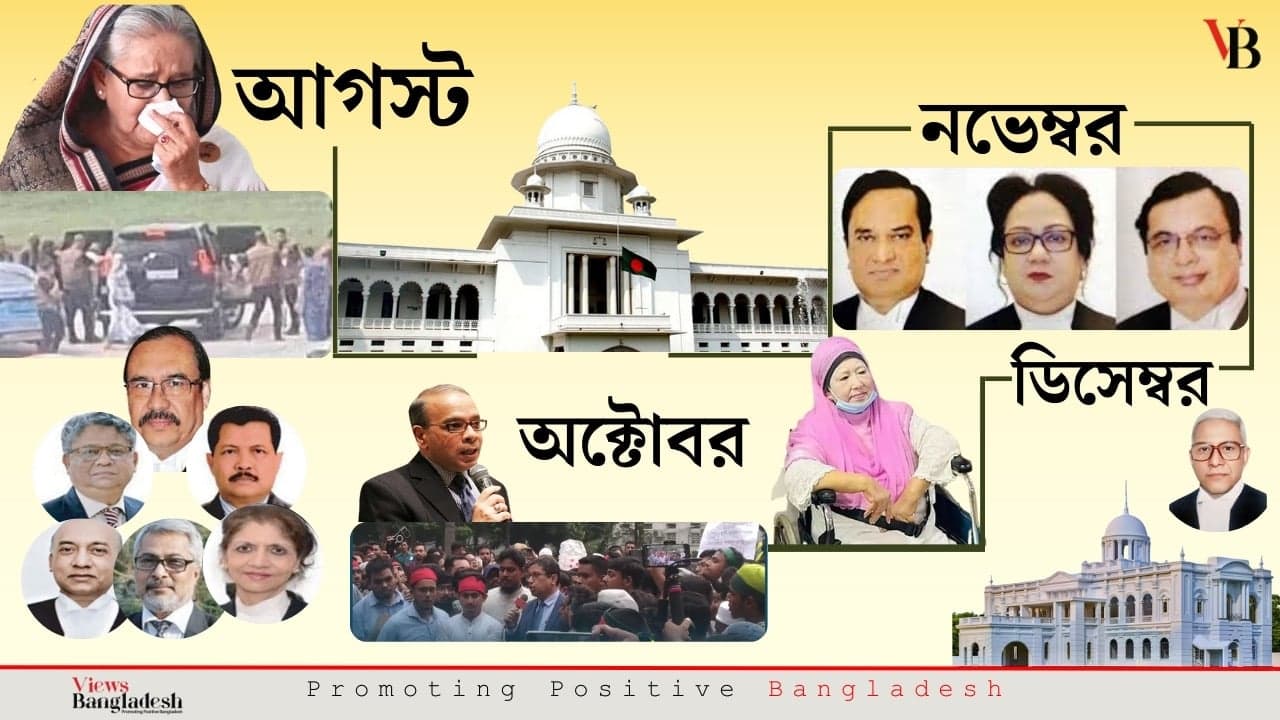

The year 2024 stands out as one of the most eventful years in the history of Bangladesh's judiciary. Landmark verdicts, orders, and observations were issued by both the Appellate and High Court Divisions of the Supreme Court. However, the most significant developments occurred after the political upheaval on August 5. Amid growing demands from the Anti-Discrimination Student Movement, former Chief Justice Obaidul Hassan and all justices of the Appellate Division resigned. Dr. Syed Refaat Ahmed was then appointed as the new Chief Justice, along with the appointment of five additional judges to the Appellate Division.
In response to the movement's demands, the new Chief Justice placed 12 High Court judges on leave. Meanwhile, the International Crimes Tribunal began trials for genocide and crimes against humanity, targeting high-profile figures, including former Prime Minister Sheikh Hasina and members of her administration.
Political Shifts and Judicial Reforms
Amid escalating protests, Sheikh Hasina fled the country on August 5. This political shift had a profound impact on the judiciary. The interim government initiated sweeping changes across the judicial system, leading to resignations and new appointments in key positions, including judges and public prosecutors.
On August 10, former Chief Justice Obaidul Hassan and five other Appellate Division judges—Justice M. Enayetur Rahim, Justice Abu Zafar Siddique, Justice Jahangir Hossain, Justice Md. Shahinur Islam, and Justice Kashefa Hossain—resigned. Their resignations were promptly approved by the President, who then appointed Dr. Syed Refaat Ahmed as the 25th Chief Justice of Bangladesh.
On August 12, the President appointed four High Court judges to the Appellate Division: Justices Zubayer Rahman Chowdhury, Syed Mohammad Ziaul Karim, Md. Rezaul Haque, and S.M. Emdadul Haque. On October 16, Chief Justice Ahmed placed 12 High Court judges on leave, citing allegations raised by the student movement.
War Crimes Tribunal and High-Profile Trials
The restructured International Crimes Tribunal issued arrest warrants on October 17 against 46 individuals, including Sheikh Hasina, for genocide. The tribunal also instructed the accused to appear by November 18. Investigative reports were extended to mid-December.
On November 18, several ministers and advisers from the previous administration were sent to prison, including Anisul Huq, Salman F. Rahman, Rashed Khan Menon, and Hasanul Haq Inu, among others.
Legal and Constitutional Landmarks
The judiciary witnessed numerous pivotal rulings. On November 27, chaos erupted in the High Court following controversial comments in the 16th Amendment case. A senior lawyer threw an egg at one of the justices. In response, the Chief Justice issued a statement expressing concern over the unprecedented incidents and assured the public that measures were being taken to maintain judicial services.
On December 17, the High Court invalidated parts of the 15th Amendment that had abolished the caretaker government system, reinstating it for election-time governance.
In other notable developments, the Appellate Division stayed a High Court verdict declaring "Joy Bangla" as the national slogan. Meanwhile, the International Crimes Tribunal prohibited broadcasting of hate speech by Sheikh Hasina and directed the removal of such content from social media platforms.
High-Profile Acquittals and Deaths
The High Court acquitted BNP's acting chairman Tarique Rahman and others in the August 21 grenade attack case, citing a lack of eyewitness evidence. Similarly, BNP Chairperson Khaleda Zia was cleared of charges in the Zia Orphanage Trust and other corruption cases.
Two former Chief Justices—Md. Ruhul Amin and Mohammad Fazlul Karim—passed away in November.
Restoration of Judicial Independence
On October 20, the Appellate Division resolved a long-pending review of the 16th Amendment, restoring the Supreme Judicial Council's authority to remove judges. This marked the conclusion of an eight-year legal battle, reaffirming the judiciary's independence.
The year 2024 will undoubtedly be remembered as a transformative period for Bangladesh's judiciary, reflecting the intersection of political upheaval and legal reforms.
Leave A Comment
You need login first to leave a comment