
Nepal flash floods death toll rises to 469
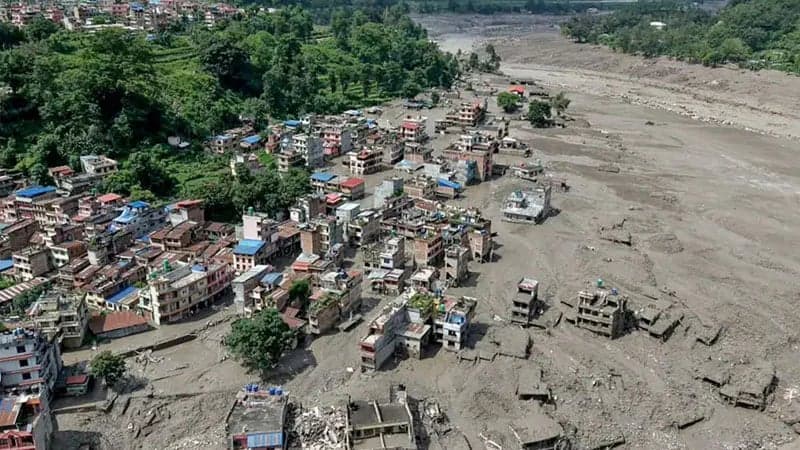

At least 469 people have died and around 1,500 remain missing more than 48 hours after devastating flash floods swept through Nepal’s Himalayan border region, with fears growing that a second wave could hit already ravaged areas.
Many of those missing are foreign nationals, including trekkers in Nepal and Hindu pilgrims travelling to Tibet’s sacred Mount Kailash.
The disaster has also caused deaths and widespread disruption in neighbouring Tibet. Three people have been confirmed dead there, while more than 550 remain missing, although it is unclear whether those figures overlap with Nepal’s tally.
Fresh satellite imagery shows that the Rasuwagadhi border crossing between Nepal and Tibet has been completely destroyed. The flood appears to have scoured much of the valley floor, sweeping away buildings and infrastructure.
Rescue teams are continuing to search for survivors, but their efforts have been complicated by warnings of another potentially devastating flood.
A barrier lake has formed near the China-Nepal border following a massive landslide, prompting Chinese authorities to issue a Level-IV emergency alert – the lowest level in the country’s four-tier natural disaster warning system.
China’s Ministry of Water Resources said the lake formed near the confluence of the Chhochen Khola and Purepu Tsangpo rivers, which originate in Tibet before flowing into Nepal as part of the Bhote Koshi river system.
The lake had accumulated an estimated two million cubic metres of water by Thursday morning, according to China’s state-run Xinhua news agency. Continued rainfall could push inflows to about three million cubic metres, increasing the risk of a breach.
If the barrier gives way, a powerful surge of water could travel downstream, threatening areas including Gyirong Port on the China-Nepal border and communities further downstream.
Local officials have told the BBC that a collapsed glacier triggered the initial flood wave. The surge tore through homes and roads and destroyed a key crossing between Nepal and Tibet.
The region attracts tens of thousands of visitors each year, including trekkers and pilgrims travelling towards Mount Kailash.
Families of missing tourists are anxiously awaiting news. Two sisters whose parents are among those missing told the BBC they were desperate for them to return safely.
“We just love them a lot and want them to come home,” they said.
With rescue operations still under way and the threat of further flooding remaining, authorities fear the death toll could rise further.
Leave A Comment