
Netherlands vs Morocco: Total Football's discipline vs Atlas Lions' transition storm
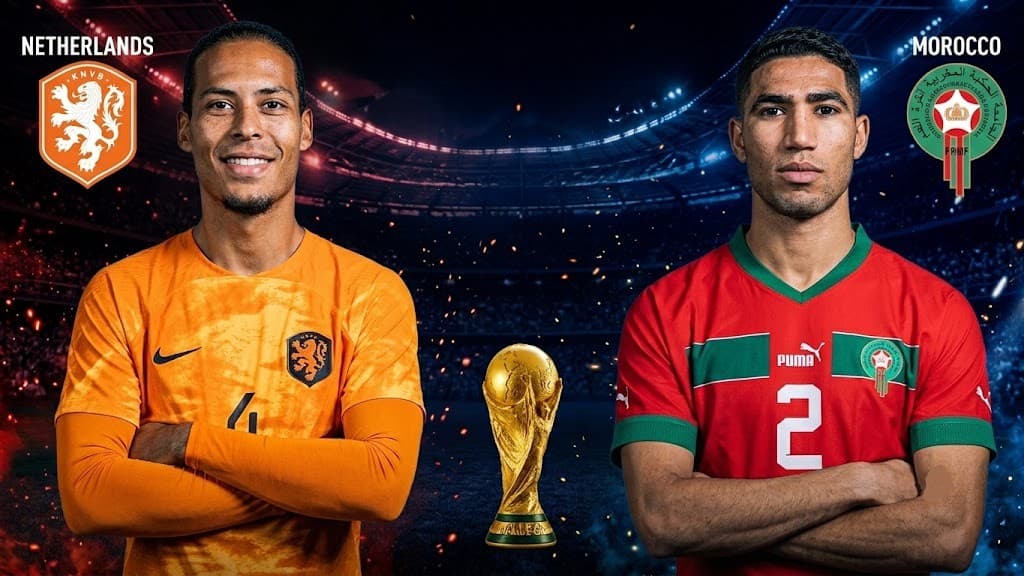

Some World Cup knockout matches are not just about two teams but a clash of two different football philosophies. The Round of 32 encounter between the Netherlands and Morocco at the 2026 World Cup is exactly that kind of match. On one side, the Dutch rely on ball possession, precise passing, set-pieces and aerial dominance. On the other, Morocco rely on solid defending, intense pressing and devastating transition attacks in the blink of an eye.
This match is not just a Europe vs Africa battle; it also carries a deep social and cultural context. The large Moroccan-origin population in the Netherlands gives this fixture significance beyond football. Many Moroccan stars were born and raised in the Netherlands. This is not just a knockout match but a unique battle of identity, emotion and pride.
Tactical battle
Netherlands (4-3-3): Ronald Koeman's side want to control the game through possession. Frenkie de Jong and Ryan Gravenberch build attacks from midfield, spreading play through the wings and creating opportunities from crosses and set-pieces. Virgil van Dijk's presence on corners and free-kicks is one of their biggest weapons.
Morocco (4-2-3-1): Walid Regragui's side sets up in a low block, forcing opponents to lose patience. Once they win the ball, the Atlas Lions transition instantly through the pace of Achraf Hakimi, Brahim Diaz and Ismail Saibari.
Hakimi vs Gakpo
This duel could evoke memories of Brazil's Branco vs Netherlands' Marc Overmars in the 1994 World Cup quarter-final. The question is: will Hakimi continue his devastating overlapping runs, or will he need to spend more time defending to neutralise Gakpo's pace, cut-ins and finishing?
Midfield control
If Frenkie de Jong plays in his rhythm, the Netherlands will control the match. But if Saibari, Ounahi and Morocco's midfield can press quickly and win the ball, they can expose the Dutch defence in no time.
Set-pieces vs organised defence
Set-pieces are one of Netherlands' biggest strengths. Morocco must avoid unnecessary fouls near their box and mark Van Dijk tightly on corners.
What the numbers say
Statistics favour the Netherlands in goals (10-6), assists (9-5), goals per match (3.3-2.0), goals from inside the box (8-5) and headed goals (2-0). They also lead in shots on target (6.7-5.3), possession (60.7%-59%), passing accuracy (90.3%-88.2%), successful passes in opponent's half (315-228), long ball success (61.7%-48.9%), crossing accuracy (26.6%-23.4%) and aerial duel win rate (62.3%-46.3%).
Morocco's strengths lie in work rate, pressing and transition stats: distance covered per match (103.5 km - 97.1 km), sprints (123.7-105), big chances created (3.3-1.7), total shots (16-13.3), successful dribbles (12.3-5.3), corners (5.3-4.3), counter-attacks (7-2), tackles (18.7-11.3), ball recoveries (46.3-36.7) and ground duel win rate (53.7%-48.4%). Morocco also have one clean sheet, while the Netherlands are yet to keep one.
On paper, the Netherlands have a slight edge. Their goal-scoring ability, passing quality and set-piece efficiency can make the difference in a big match. But Morocco are a team that knows how to win even when they concede dominance. They have already shown they can punish any strong side with quick counter-attacks.
If the match stays in Netherlands' controlled rhythm, the advantage will go to the Dutch. But if the game breaks into constant transitions and open-field pace, Morocco are capable of causing a major upset.
This has all the ingredients to be one of the most tactical, balanced and entertaining matches of the Round of 32.
Leave A Comment