

New apprehensions over autonomy of judiciary
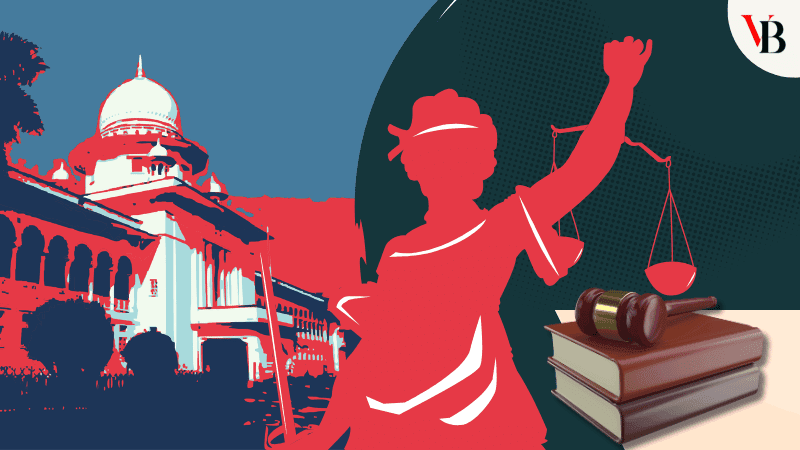

A parliamentary special committee has put forth a recommendation to repeal the Supreme Court Secretariat Ordinance, the Supreme Court Secretariat (Amendment) Ordinance, and the Supreme Court Judges Appointment Ordinance that were enacted during the previous interim government.
This recommendation has ignited a renewed discussion regarding the structure and autonomy of the judiciary in Bangladesh. Legal scholars express concern that this may result in a regression to the former condition of the judiciary, posing a significant obstacle to the long-cherished aspiration of achieving a fully independent judiciary. They argue that should this recommendation be enacted, the administrative independence of the Supreme Court of Bangladesh, the nation's highest court, will be considerably diminished.
The primary objective behind the establishment of the Supreme Court Secretariat was to liberate the judiciary from the executive branch's influence and to provide the court with the capacity to manage its administrative functions autonomously. However, if this secretariat is dissolved, that framework will disintegrate, and administrative authority will once again revert to the government. The issue of delineating the judiciary from the executive branch is not a recent development.
The independence of the judiciary is enshrined in the Constitution of Bangladesh. Nevertheless, in practice, this independence has been constrained at various intervals. There has been persistent criticism regarding the executive branch's influence, particularly concerning the appointment of judges and the oversight of subordinate courts.
Experts assert that a significant change involves the oversight of subordinate court judges. According to the recent ruling, this oversight will once again fall under the Ministry of Law. Consequently, the appointment, transfer, and disciplinary issues concerning judges will be managed by the executive branch.
This development heightens the risk of indirect influence on judges, potentially calling into question the impartiality of the judicial process. Conversely, the matter of restoring the authority to appoint high court judges to the Prime Minister has sparked extensive debate.
The effort aimed at ensuring transparency and impartiality in the judicial appointment process is effectively being halted due to this ruling. Previously, there was an initiative to establish a distinct framework to mitigate the direct influence of the executive branch in judicial appointments. However, under the current circumstances, that initiative is no longer being pursued.
The Supreme Court Secretariat, which was inaugurated on December 11 of the previous year, represents a significant milestone for the judiciary. Its establishment marked a practical measure aimed at ensuring the administrative independence of the judiciary.
The secretariat was intended to function independently in areas such as budget management, personnel administration, and policy decision-making for the court. However, should it be dissolved, the autonomy of the judiciary would once again be compromised.
The rationale behind the parliamentary special committee's recommendation for this action is that the ordinances were not developed through adequate review and in accordance with the legal framework. Consequently, a more thorough examination is essential before these ordinances are enacted into law.
Nevertheless, legal experts caution that if such critical reforms are rescinded based on this reasoning, the journey towards judicial independence will be prolonged. They further assert that the government has the capacity to establish a balanced system that guarantees judicial independence while also upholding necessary accountability. Achieving this, however, necessitates political will and a definitive policy.
In this regard, Dr. Shahdeen Malik, Senior Lawyer of the Supreme Court, told Views Bangladesh, ‘The practical initiative that was taken to make the judiciary completely independent with the decision to cancel these ordinances has practically come to an end. This is a major setback for the judiciary.’
According to him, to make the judiciary effectively independent, administrative and appointment-related matters must be kept outside the executive branch.
Barrister Jyotirmoy Barua expressed a similar opinion. He said, ‘We have been dreaming of an independent judiciary for a long time. But this decision has shattered that dream to a great extent. Now the influence of the executive branch on the judiciary will increase further, which is not a good sign for justice. Such a decision can weaken the public’s trust in the judiciary in the future.’
Senior Supreme Court lawyer Ahsanul Karim told Views Bangladesh, ‘The Supreme Court Secretariat (Amendment) Ordinance and the Supreme Court Judges Appointment Ordinance were an important step for the independence of the judiciary. But with their repeal, that progress came to a halt. Now there is a risk of going back to the previous situation, which is frightening us. Democracy cannot be strong without an independent judiciary. And now there is doubt whether the judiciary will remain independent or not.’
However, Law Minister Md. Asaduzzaman told Views Bangladesh, 'Even if the Supreme Court Secretariat Ordinance, its amendments and the ordinance regarding the appointment of judges issued during the interim government are repealed, there will be no obstacle in the way of establishing an independent judiciary.'
He said, 'The independence of the judiciary does not depend only on any one ordinance; rather, it is ensured through the constitution, judicial principles and the effective role of institutions. It is possible to protect the independence of the judiciary within the existing constitutional framework. Now the most important thing is to maintain the efficiency, accountability and transparency of the judiciary. Therefore, instead of looking at the repeal of the ordinance negatively, attention should be paid to the development of the overall judicial system.'
Leave A Comment
You need login first to leave a comment