
Neymar: The boy who never stopped fighting
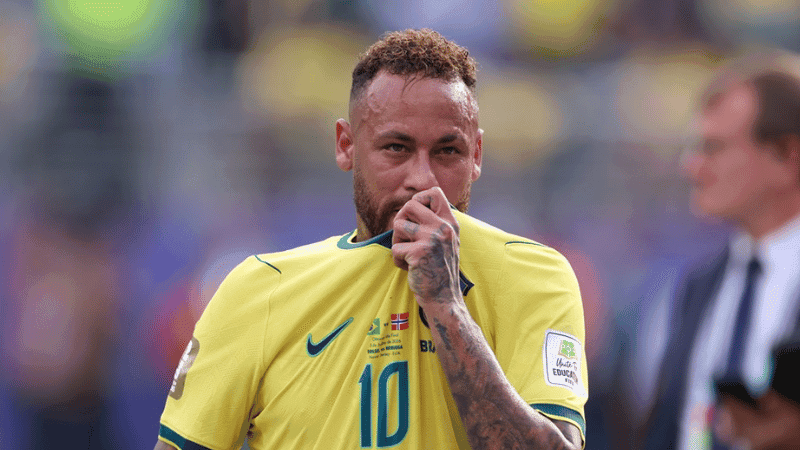

Long before the world knew the name Neymar, there was just a skinny kid with quick feet and quicker hands, growing up in Mogi das Cruzes on the outskirts of São Paulo. His father, Neymar Santos Sr., had been a modest footballer himself, and when his own career faded, he poured everything he had left into his son. Money was tight. The family lived for a time in a small house attached to a gas station where his father worked as a mechanic. There were nights of little food and no comfort — but there was always a ball.
He learned the game the way so many Brazilian legends did: barefoot, on futsal courts, in tight spaces where a first touch had to be perfect or the ball was gone. It was there, in that cramped, unglamorous world, that he built the trickery, the balance, the improvisation that would one day mesmerize stadiums. Even as a child, coaches noticed something different — not just talent, but hunger. A boy playing like every match was his last chance to be seen.
By eleven, he had joined Santos, the club that once belonged to Pelé. The weight of that shirt would follow him for the rest of his life.
Santos, and the World Watching
He exploded as a teenager — audacious, joyful, seemingly untouchable with the ball at his feet. Brazil, a nation that had waited years for its next global icon, began to whisper his name in the same breath as its greatest sons. Europe came calling almost immediately, but he stayed at Santos long enough to become a hero at home first, wearing the number 10 that carried Pelé's ghost on his back.

When he finally left for Barcelona in 2013, it wasn't just a transfer — it was a nation sending its brightest hope out into the world, hoping he wouldn't get lost in it.
Glory, and the First Real Wound
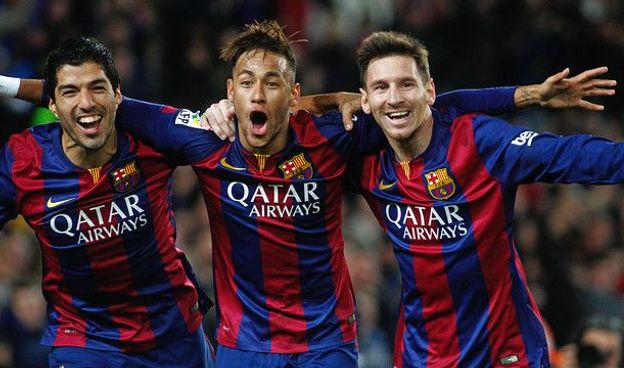
At Barcelona, alongside Messi and Suárez, he became part of one of the most feared attacking trios football has ever seen. Trophies came. So did global superstardom. But football has a way of humbling even its most gifted children, and in the summer of 2014, on home soil, in a World Cup his entire country needed him to carry, a crude challenge fractured a vertebra in his back. He watched from the sidelines in a neck brace as Brazil collapsed 7–1 to Germany in the semifinal — one of the most traumatic nights in the sport's history. He cried on the bench, not from the physical pain, but from something deeper: the helplessness of wanting to fight for his people and not being able to.
That night stayed with him. Everyone could see it.
Paris, Pain, and the Cost of Chasing Greatness
The move to Paris Saint-Germain in 2017, for a fee that shattered the sport's transfer record, was supposed to be the platform for him to finally step out of Messi's shadow and become the undisputed best in the world. Instead, it became years of a different kind of struggle — a cycle of brilliance interrupted again and again by injury. Broken metatarsals. Ankle surgeries. Hamstring tears. Each time, the football world questioned whether the version of Neymar they once knew was gone for good. Each time, he returned, older, quieter, more guarded, but still chasing that same joy he'd found as a boy on the futsal court.
Off the pitch, the scrutiny never let up — his personal life, his parties, his loyalty to family, all dissected endlessly by a press that had once celebrated him as a saviour. Through it all, those close to him say the one constant was his relationship with his father, still by his side, still believing.

The Cruelest Injury
Then came October 2023. Playing for Brazil in a World Cup qualifier, he tore the ACL in his left knee — one of the most serious injuries in football, and, for a player already past thirty, one that many assumed would end his international story entirely. He needed a long and painful rehabilitation, away from the game, away from the crowds, forced simply to sit with his own body and wonder if it would ever fully answer his instructions again. Few footballers return the same after that injury. Almost none return to a World Cup after it.
He returned anyway.
The Long Road Back to Santos, and to the World Cup
He went home to Santos, the club of his childhood, seeking form and peace in the years that followed, his body no longer capable of the same explosive dribbles that once defined him, but his mind as sharp and generous as ever. Brazil's coach, Carlo Ancelotti, still believed there was something irreplaceable in him — not just as a player, but as a presence, a leader, a symbol for a locker room full of younger stars like Vinícius Júnior and Endrick who had grown up idolizing him.
A calf injury picked up just weeks before the 2026 World Cup threatened, cruelly, to steal even this last chance from him. He arrived in North America unable to train fully with his teammates, watching Brazil's opening two matches from the sidelines yet again, the pattern of his career repeating itself one more time. Then, finally, in the final group match against Scotland, he stepped onto the pitch to a roar from the crowd — fourteen minutes, no goal, but a lifetime of meaning packed into every touch. It was his first appearance in a World Cup match in years, and for a man many had already written off, it was enough to remind the world he was still there, still fighting.
He watched again from the bench as Brazil scraped past Japan in the Round of 32, and again as they faced Norway in the Round of 16 — a substitute now, no longer the guaranteed centerpiece, accepting a smaller role with a grace that surprised even his harshest critics. Ancelotti has spoken openly about how difficult that adjustment has been for him, and how well he has carried it anyway — respectful, humble, still working, still present for the younger players who now carry the torch he once carried alone.
A Career, Not a Verdict
It would be easy to remember this tournament only for the bench, the tears, and the quiet ending. But that would miss the larger truth. Neymar's story was never really about one summer. It was about a kid from Santos who made the impossible look playful, who carried the hopes of a footballing nation on shoulders that were, more often than fans wanted to admit, held together by hope and physiotherapy as much as talent.
He leaves this World Cup not as the hero of the highlight reel, but as something more human — a champion of persistence, a leader in decline who still chose to show up, train, and fight for a role he no longer controlled. Somewhere between the four goals of 2014 and the tears of 2026, Neymar became less of a phenomenon and more of a man. And perhaps that, in the end, is the story worth telling.
What is already written, though, is the shape of the journey itself: a boy from a gas-station house who learned to dance with a ball because there was little else; a teenager who carried a nation's hope to Europe; a young man broken and rebuilt more times than most players ever have to be; and now, at thirty-four, a veteran who no longer needs to be the fastest or flashiest man on the pitch to matter. He has become something else — proof that greatness is not only measured in trophies and highlight reels, but in the willingness to keep coming back, one more time, for one more chance, no matter how many times the body and the world have said no.
Leave A Comment