
Nine years of Rohingya crisis: Repatriation still remains a distant dream
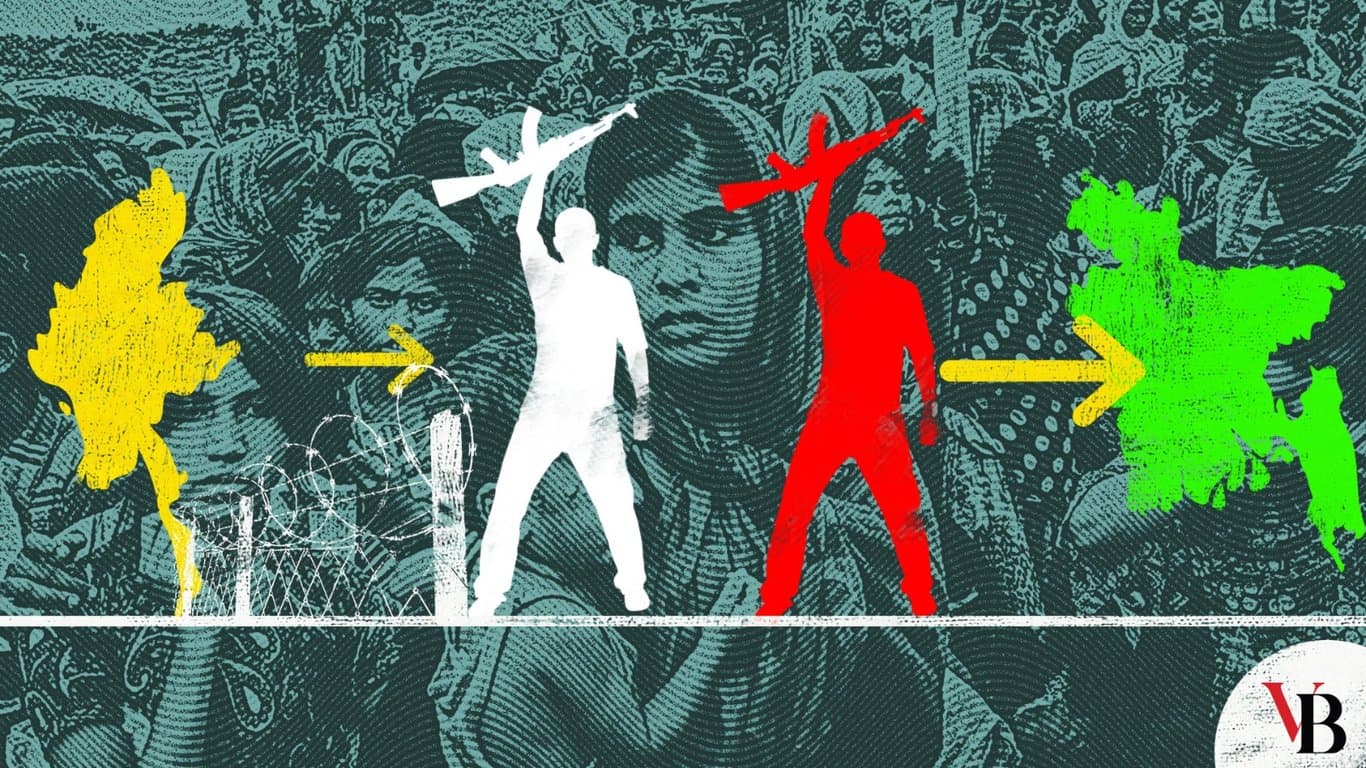

Nine years ago this month, nearly 1.2 million Rohingya fled Rakhine State to Bangladesh to escape brutal military crackdowns in Myanmar. When they crossed the border, they believed they were seeking temporary shelter and would soon find an opportunity to return to their homeland. But nine years on, that wait remains unending. What was meant to be a temporary refuge has, over time, turned into a seemingly permanent exile.
In the 33 Rohingya camps in Ukhiya and Teknaf of Cox's Bazar, hundreds of thousands of people continue to live in limbo, their wait for repatriation growing more unbearable with each passing day. Their dreams of returning home are slowly fading, with no clear sign of repatriation on the horizon. The Rohingya crisis, therefore, is no longer just a humanitarian issue, it has become a multidimensional challenge for Bangladesh.
Nine years on: Still in search of a lasting solution
Before August 25, 2017, Bangladesh hosted a relatively small Rohingya population. But the Myanmar military's campaign of ethnic cleansing triggered a mass exodus, forcing hundreds of thousands to flee for their lives. On humanitarian grounds, Bangladesh opened its borders and provided shelter to this massive population. Then Prime Minister Sheikh Hasina had said, "We bow down to humanity." The global community widely commended Bangladesh's generosity.
Yet, nine years later, this 'temporary' arrangement has failed to produce a 'permanent' resolution. Each year has followed the same pattern; repatriation pledges followed by dashed hopes, renewed promises followed by fresh disappointments. The security situation in Myanmar's Rakhine State has never been conducive, rendering every effort ineffective. Recently, Refugee Relief and Repatriation Commissioner Mohammad Mizanur Rahman clearly stated, "The Rohingya crisis is a long-term problem for Bangladesh." It is no longer merely a crisis; it has become a burden that Bangladesh continues to shoulder.
Rising crime in camps, steady deterioration of security
When displacement becomes prolonged, hopelessness deepens and the Rohingya camps are no exception. Reports over the past four years show that at least 202 Rohingya have been killed in clashes among various armed groups. These killings are largely driven by turf wars over arms and drug trafficking. Several powerful criminal outfits have established strongholds in the Ukhiya camps. Just five kilometres away, armed conflict rages on in Myanmar, allowing weapons to flow easily into Bangladesh. At the same time, illegal traffickers from within Bangladesh are also supplying arms to the camps. In Maheshkhali and other parts of Cox's Bazar, firearms are being manufactured illicitly.
These criminal networks extend beyond the Rohingya community. Bangladeshi criminals and traffickers have become entangled in the web. As a result, the overall security situation in Cox's Bazar has steadily worsened. With Rohingya spreading beyond the camps, crime is increasingly spilling over, threatening the safety of the local Bangladeshi population. The message from locals is clear: the Rohingya must return to their homeland soon. They believe that after nine years, this temporary refuge has become a threat to their environment, economy and security.
International funding crisis
The Rohingya camps depend largely on international donor support. But over the past few years, funding has been shrinking. The UN has halved food assistance, reducing the monthly food allowance per Rohingya from $12.50 to $6. This drastic cut risks fuelling further criminal activity in the camps. Rohingya leaders have warned that such reductions could trigger greater social instability.
Interim government's promise and the reality of disappointment
In August 2024, Professor Muhammad Yunus took over as Chief Adviser of the interim government, raising hopes that the Rohingya crisis would finally be addressed. Alongside UN Secretary-General Antonio Guterres, he visited Ukhiya during Ramadan, sat for iftar with nearly one lakh Rohingya, and made a firm commitment to resolve the crisis. The media, political leaders and the repatriation commission all saw this as a promising breakthrough. But subsequent events brought only disappointment. Summer passed, autumn arrived, winter came, but that verbal promise never materialised. Myanmar offered no formal response, instead adding new conditions.
Professor Yunus himself later admitted that he had not anticipated this outcome. He observed that the Rohingya crisis still lacks the international attention it deserves. Once again, those who had hoped his global stature would bring focus to the issue were left disheartened.
The path to resolution is still long
Some recent positive signals have emerged, though they remain limited and conditional. In mid-August, Myanmar announced that it would repatriate nearly 309,000 Rohingya if the security situation in Rakhine State improves. For the first time, Myanmar formally acknowledged this many Rohingya as former permanent residents of Rakhine—a historic step, given that Myanmar had previously refused to recognise Rohingya citizenship. According to a statement from Myanmar's Foreign Ministry, 308,975 Rohingya have so far been verified as former Rakhine residents. This is undoubtedly progress, as repatriation can only proceed once identity verification is complete.
However, significant hurdles remain. First, Myanmar claims that 4,241 individuals on Bangladesh's repatriation list were involved in terrorist activities and has refused to accept them. Another 113,507 people remain unverified. Second, the condition of 'improvement in the security situation' remains vague and open-ended. The Arakan Army is steadily expanding its control across Rakhine, with the Myanmar military now halting supply routes to the region. Analysts warn that the situation could worsen further. Internal political turmoil in Naypyidaw, including tensions with the military, suggests that stability in Rakhine is unlikely any time soon.
The path to resolving the Rohingya crisis is blocked by three major obstacles:
Myanmar's internal instability: The Arakan Army now controls about 90 percent of Rakhine State, a territory beyond the reach of the Myanmar government. With this armed group in direct conflict with the military, returning Rohingya to Rakhine has become a highly risky proposition.
Identity verification problems: Of the approximately 800,000 Rohingya family profiles sent to Myanmar in 2018, only 250,000 have been fully verified. Much of the data is outdated or flawed, and the new generation lacks any documentation. Full verification is likely to be a prolonged process.
Insufficient international commitment: International donors were generous in the early years, but funding is now drying up. Foreign Minister Dr Khalilur Rahman has noted, "The pace and nature of the solution depends to a large extent on the security situation in Rakhine State, international pressure, and above all, the goodwill of the Myanmar authorities." In reality, international pressure has not been effective, and Myanmar has shown little goodwill.
After nine years, the Rohingya crisis has evolved from an immediate emergency into a structural crisis for Bangladesh. The Rohingya themselves now endure an impossible existence. Their children have been born and raised in the camps, knowing nothing of a free life. The local Bangladeshi population is also weary of the situation, they want their land, their environment and their security back.
Question remains, how much longer must the Rohingya wait to return home? The answer no longer rests solely with Bangladesh or the global community. It is now tied to Myanmar's political future, the security situation in Rakhine, and the calculations of major international powers. Until those factors align, the Rohingya will remain trapped in an unending wait.
Each day, the sun rises and sets over the Rohingya camps— but the dawn of their long-awaited return has yet to break.
Leave A Comment