

Nipah virus first spread to humans through pigs
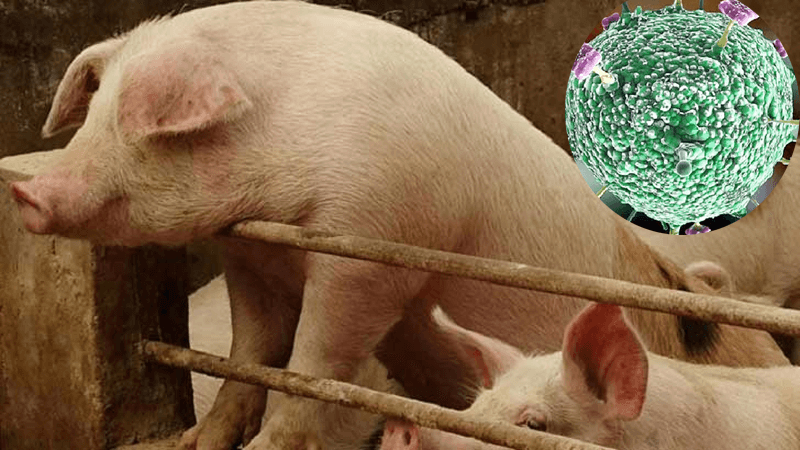

Nipah virus is an animal-borne or zoonotic disease. We know that this virus is spread from the saliva or urine of bats. This virus can be transmitted to humans, especially from fruits eaten by bats. This virus enters the body of pigs from bats and spreads to humans from there. There is a risk of rapid infection among humans, especially if there is no necessary protection during contact with infected pigs, working on farms, or slaughtering and transportation.
Nipah virus is an animal-borne infectious disease (zoonotic disease), which is transmitted from the body of animals to humans. It can also be transmitted from person to person. Among the various types of animal-borne infectious diseases in the world, Nipah virus, Covid-19, SARS, Rabies, Avian Influenza and Ebola are notable. Among these diseases, the risk of death is highest if infected with Nipah virus. The first reports of Nipah virus infection and death among pig farmers in Nipah, Malaysia, were published in 1998-1999.
Later, cases and deaths were also identified in Singapore. The virus was named after the village of Sungai Nipah in Malaysia. The virus was mainly transmitted from fruit bats to pigs, especially those working in pig farms. Of the 283 people infected at that time, 109 died.
According to the Institute of Epidemiology, Disease Control and Research (IEDCR) of the Department of Health and other published reports, the first Nipah virus was identified in Bangladesh in 2001 in Meherpur. Of the 13 patients identified that year, 9 died. The virus later spread to other areas.
In the last 25 years, Nipah virus infections have been reported in 35 districts of Bangladesh. The highest number of infections occurred in Faridpur district (71 cases), followed by Rajbari (35 cases), Naogaon district (34 cases) and Lalmonirhat (24 cases). In the last 25 years, a total of 347 people in Bangladesh have been infected with Nipah virus and 249 have died, with a mortality rate of about 72%.
Sadly, all four people in 2025 and five in 2024 have died. For this reason, the World Health Organization (WHO) has classified Nipah virus as a priority disease. The main reasons for this are the high mortality rate of the virus, the possibility of human transmission, and the lack of a vaccine or specific treatment.
In Bangladesh, during the winter, especially from November to February, date palm sap is collected from date palm trees in various districts. The collected sap is squeezed or filtered and made into molasses by burning. In addition, people of different ages, especially children and adolescents, consume raw date palm sap. The sap is usually collected by hanging a pot in a tree hole.
When bats drink the sap at night, their saliva, urine, feces or droppings can mix with the sap, which can transmit the virus. As a result, drinking raw date juice can cause Nipah virus infection in people of any age. The virus can spread not only from bats but also from pig waste.
If infected with Nipah virus, symptoms of the disease appear within five to fourteen days. However, according to many, the virus can remain dormant in the body for up to 45 days, in addition to showing symptoms. The infection can cause fever, headache, shortness of breath, cough, vomiting, diarrhea, weakness, and various physical complications such as brain infection, which can also cause death. In addition, some cases may be asymptomatic, while others may only experience a simple fever and cough. If not treated on time, the affected person may die.
In Bangladesh, during winter, date juice is collected in Jessore, Kushtia, Rajshahi, Natore, Chapainawabganj, Manikganj, Faridpur districts, and in other districts. There is a possibility of Nipah virus spreading in our body by drinking raw date juice. Therefore, after storing date juice, it should be boiled or steamed (at 70–80 degrees Celsius) or heated to kill the virus.
However, it is best not to drink date juice. It is better to boil or steam the date juice or make jaggery by following only personal hygiene and safe methods. Let us encourage everyone, young and old, not to consume raw date juice and create public awareness against consuming raw date juice.
Author: Member, Food Industry and Production, Bangladesh Food Safety Authority
Leave A Comment
You need login first to leave a comment