
No futher talks before education minister's resignation: CJP
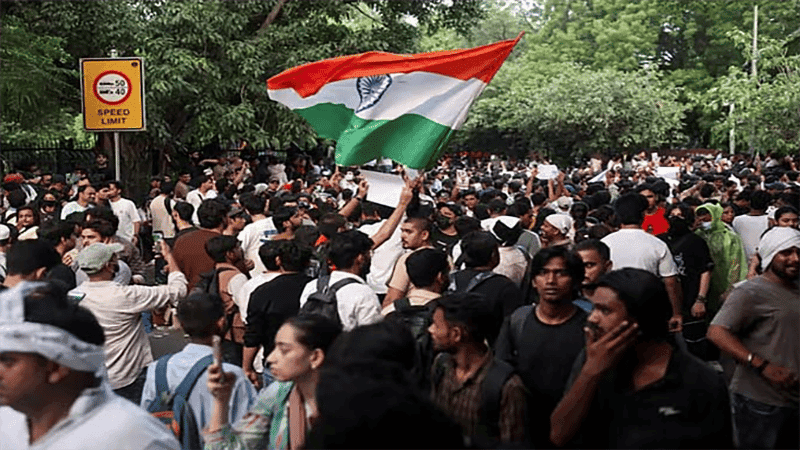

Just hours before the third round of talks with the Indian government, the Cockroach Janata Party (CJP) has hardened its stance, declaring that no further negotiations would be meaningful unless Union Education Minister Dharmendra Pradhan resigns.
According to an NDTV report on Saturday (July 25), the party made it clear that the minister's resignation remains its primary and non-negotiable demand.
CJP National Spokesperson Ashutosh Ranka, in a post on X (formerly Twitter), warned that there was no room for compromise on the issue.
"The demand for Dharmendra Pradhan's resignation is non-negotiable. If the government refuses to accept it, there is no point in holding further talks," he said.
The protesting students continue to stand firm on three key demands: the resignation of the education minister, legal immunity for all students participating in the movement, and compensation of ₹10 million (1 crore) to the families of students who allegedly died by suicide following the NEET examination paper leak controversy.
On Friday, senior Union ministers JP Nadda and Jitendra Singh held a second round of discussions with CJP representatives at the Constitution Club in New Delhi. The meeting lasted nearly two hours.
Sources familiar with the talks said the government had shown a positive inclination toward providing legal protection for protesters and financial compensation to affected families. However, no consensus was reached on the demand for Pradhan's resignation.
Following the meeting, JP Nadda indicated that the issue would be discussed further within the government's top decision-making circles before another round of negotiations, expected later on Saturday.
Meanwhile, government sources maintain that the Centre continues to back Dharmendra Pradhan and has no plans to seek his resignation.
In response to the controversy, authorities have already dismissed 47 officials of the National Testing Agency (NTA), replaced the Education Secretary, and announced tougher anti-paper leak legislation alongside the establishment of fast-track courts to deal with examination-related crimes.
However, CJP insists these measures fall short of accountability.
According to spokesperson Ashutosh Ranka, the education minister must ultimately accept responsibility for the large-scale examination scandal, arguing that disciplinary action against officials alone cannot resolve the issue.
Source: NDTV
Leave A Comment