
Oprotim will never return, but where are the 2,038 other children?
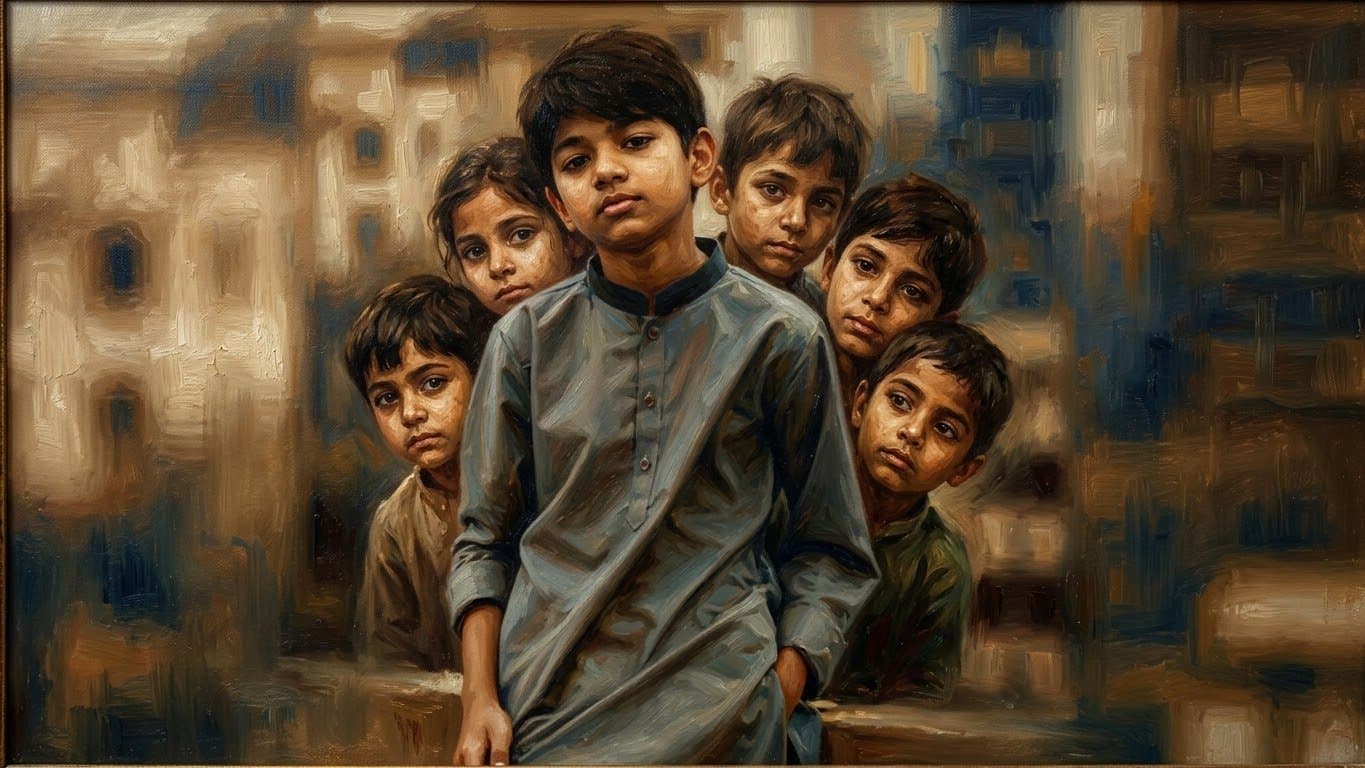

Approximately at 3:30 p.m. on September 18, Oprotim, a thirteen-year-old resident of Kotbari in Cumilla, departed from his residence with his mother's iPhone in order to capture photographs alongside his companions. For the seventh-grader, it was an entirely ordinary afternoon. He was supposed to take pictures, spend some time chatting with his friends, return home and hand the phone back to his mother. But Oprotim never came home. Nearly 20 hours after he went missing, his body was recovered at noon on September 19 from an isolated spot in the Lalmai hills near Cumilla University.
It is not difficult to imagine what the family went through during those 20 hours. Phone calls, checking with acquaintances, searching the roads, filing a general diary with the police, trying to determine his last known location. When a child goes missing, every passing moment becomes a mixture of hope and anxiety for the family. Perhaps at some point they thought Oprotim had been found. In the end, what they found was his body.
What caused Oprotim’s death, how he died and who was involved will emerge through the investigation. But Oprotim’s case has left us with a question whose answer matters not only to his family but to thousands of families across the country: How quickly, in a coordinated and effective manner, does the state respond when a child goes missing?
Statistics provided by the police make the question even more significant. From January to July 2026—just seven months—general diaries were filed over 15,717 cases of missing children across the country. According to police verification, 13,679 children were rescued or returned to their families. But the whereabouts of 2,038 children are still unknown.
For children aged 10 to 17, 15,243 general diaries were filed over seven months in connection with missing cases. Although 13,273 were rescued, the whereabouts of 1,970 remain unknown. Among children aged zero to nine, 406 were rescued in 474 cases, while 68 remain missing. According to police explanations, younger children may go missing after getting lost or because they are unable to provide their identity or address. Among adolescents, possible reasons include family conflict, hurt feelings, academic pressure or the influence of friends. Police have also said that the introduction of online general diaries has contributed to an increase in reports of missing children.
These explanations are important, but they do not end the central question. It is important to know why a child went missing, but it is even more important to know what happened to the child after going missing.
The fate of missing children is not always the same. Some may get lost and eventually return, while others may leave home out of anger or hurt feelings and return safely. Yet others may become victims of abduction, trafficking, abuse or other crimes. Therefore, there is no basis for treating every missing child as a victim of abduction or trafficking. The task of an investigation is not to speculate, but to gather information quickly and verify the possible explanations.
This is where time matters most. The child’s photograph, last known location, mobile phone data, CCTV footage and eyewitness accounts—the sooner these pieces of information can be put to use after a child goes missing, the greater the opportunity for an effective search.
A new initiative for rapid searches in Bangladesh is MUN Alert. The CID and Amber Alert for Bangladesh jointly launched the initiative in January 2026. Information about missing children can be reported through the 13219 hotline; the initiative is specifically aimed at triggering rapid alerts and searches when a child goes missing.
But a single platform is not enough. What is needed is an integrated national system in which the complete trajectory of a child’s case is documented from the moment the child goes missing. Whether the child is rescued, returns home on their own, is found to have been abducted, becomes a victim of trafficking, or remains missing—each outcome should be updated within the same system.
Particular importance should be given to matching information on missing children with unidentified bodies. If an unidentified child’s body is found somewhere in the country while, elsewhere, a family has filed a missing-person report involving a child of the same age and description, but the two sets of information are not regularly cross-checked within a common framework, the family’s long wait may continue unnecessarily.
INTERPOL uses Yellow Notices for missing persons, which serve as international police alerts, particularly to help locate missing children. There are also international mechanisms for sharing information and providing forensic cooperation to identify unidentified bodies.
Bangladesh also needs to adopt this kind of integrated approach—not merely searching for missing children, but keeping each case active until the child’s ultimate fate is established. The responsibility should not end once a general diary is filed at a police station. There should be an accountable record showing who is responsible for the case, what the latest lead is, what searches have been conducted, whether the family remains in contact with investigators and whether any new information has emerged. Where necessary, information from the police, hospitals, morgues, border authorities and child protection systems should also be coordinated.
Of course, the privacy and safety of children must be protected. Making all information public is not a solution. But within the state’s own system, no missing child’s case should be allowed to disappear into the dark.
A child going missing is not an ordinary administrative matter. It is an urgent signal for the child-safety system.
Oprotim will never return. But his final afternoon should teach us to ask: What about the 2,038 children who have not yet returned? Are efforts to find them among the state’s daily priorities?
This is what the state needs to understand. A child going missing is not an ordinary administrative matter. It is an urgent signal for the child-safety system.
Oprotim will never return. But his final afternoon should teach us to ask: What about the 2,038 children who have not yet returned? Are efforts to find them among the state’s daily priorities?
Leave A Comment