

Ordinary people will bear the burden of rising transport costs due to Iran war: Maersk CEO
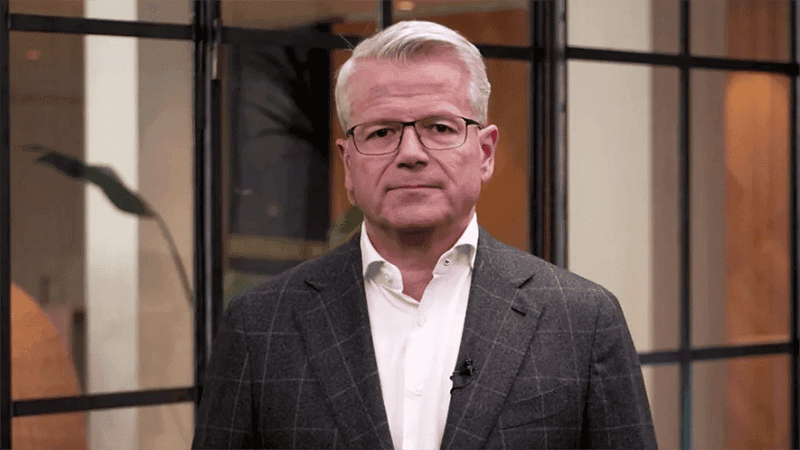

The ongoing war involving the United States and Israel over Iran has severely disrupted the movement of cargo ships, leading to increased maritime transport costs – an additional expense that will ultimately have to be borne by ordinary consumers, the CEO of the world's second-largest shipping company, Maersk, has warned.
In an interview with the BBC, Vincent Clerc said the international shipping sector operates under a contractual framework where fluctuations in fuel transport costs are passed on directly to customers.
He said, "In our existing contract system, whether fuel prices go up or down – the adjustment is passed on to our customers. This means that the additional costs arising from this situation will be transferred to our clients and ultimately land on consumers."
Maersk's container shipping division plays a vital role in transporting everyday goods including toys, clothing and electronics to various countries around the world. But due to the Iran conflict, two crucial maritime routes in the Middle East have become nearly impassable.
Clerc called upon the United States, Israel and Iran to reach a diplomatic agreement to restore global trade routes in the Middle East. He said, "We need to return to a situation where freedom of navigation and a safe environment are maintained."
Currently, many shipping companies are avoiding the Red Sea and the Strait of Hormuz due to security risks. As a result, vessels are forced to take the longer route around Africa's Cape of Good Hope, increasing both time and fuel costs.
Clerc said, "Our primary concern is the safety of seafarers. As long as there is a significant risk of drone attacks and no guarantee of a ceasefire between the parties, it is difficult for us to push our personnel and vessels into danger."
Under normal circumstances, a vast number of oil and gas tankers used to transit the Strait of Hormuz, one of the world's most important waterways. Approximately 138 ships used to cross this route daily under normal conditions. Since the war began, that number has dropped to around eight – a decrease of nearly 94 per cent.
Before the conflict, about 20 million barrels of oil were transported through the Strait of Hormuz daily, accounting for roughly 20 per cent of the world's total oil supply. Due to security risks, many of the world's leading shipping companies have now stopped using this route. It is understood that numerous oil tankers remain stranded in the Gulf area.
The Iranian government has described this obstruction as a necessary wartime measure. Government spokesperson Fatemeh Mohajerani said that in a war situation, Iran must utilise all its strategic assets, and therefore the Strait of Hormuz is also being considered a crucial strategic tool.
Leave A Comment
You need login first to leave a comment