
Pahela Baishakh: From origins to global spread of modernity
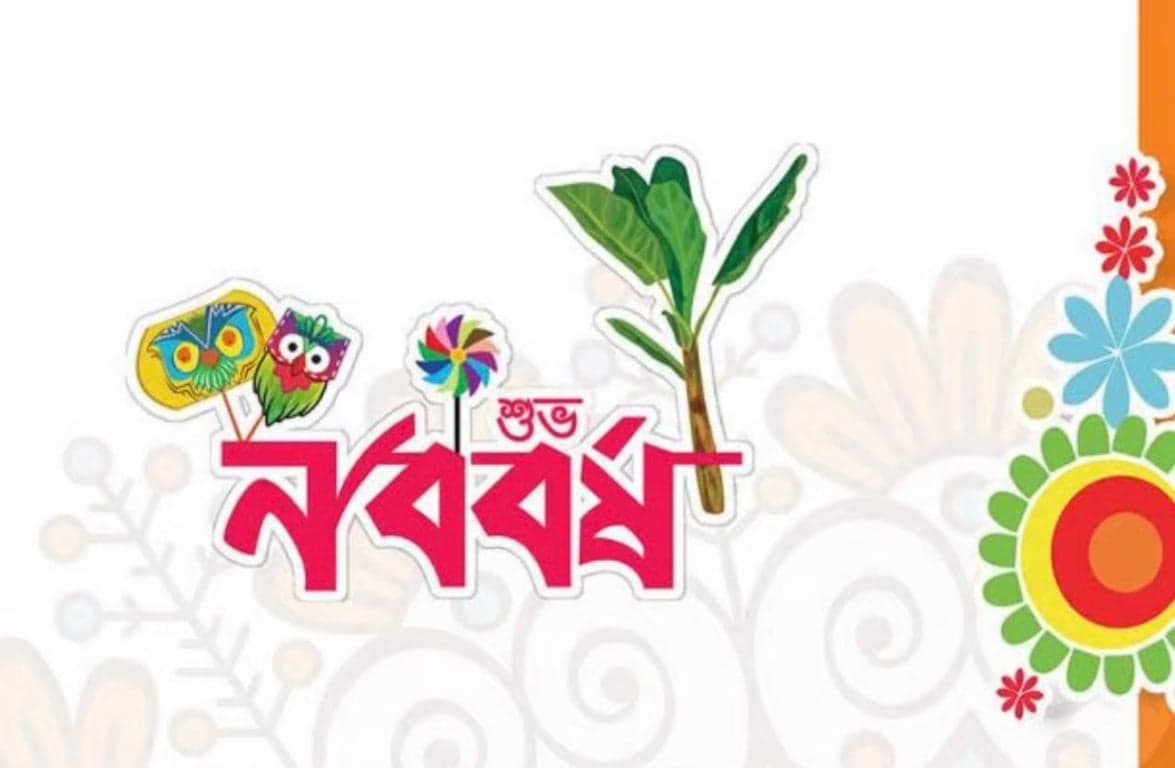

Throughout history, a nation's identity is expressed through the vibrancy of its festivals. For the Bengali people, this vibrancy is epitomized by 'Pahela Baishakh'. From its roots in an agricultural society to the complexities of contemporary global life, this festival has experienced significant transformations.
The progression of the Bengali New Year can be categorized into three primary phases: the ancient or pre-Islamic period, the medieval or Mughal administrative period, and the modern or post-colonial political-cultural period.
Throughout this extensive timeline, the New Year has served various roles, at times being a royal mandate, at other times a seasonal celebration for farmers, and occasionally a cultural instrument for Bengalis to resist oppression.
In ancient Bengal, there was no designated date or 'Bangabda' for the New Year celebration. Nevertheless, Bengali society was largely agrarian, leading to the observance of numerous festivals aligned with seasonal transitions, referred to as 'Artab Utsab'.
According to ancient astronomical beliefs, the New Year commenced when the sun transitioned into the zodiac sign of Aries, marking the shift from spring to summer.
The day preceding the New Year festival, known as Chaitra Sankranti, was the principal celebration in ancient Bengal. Through rituals such as the worship of Shiva, Gajan, Charak Puja, and Nil Puja, the agrarian community would cast off the remnants of the previous year. These traditions continue to be a vital aspect of the New Year celebrations in rural Bengal.
The contemporary administrative framework of the Bengali New Year was established during the Mughal era. Under the rule of Emperor Akbar (1556-1605), there arose a necessity for a systematic calendar to aid in the collection of taxes and tributes.
The Mughals adhered to the Hijri calendar in India. However, due to the Hijri year being a lunar year, it would fall behind the solar year (seasonal cycle) by 11 days annually. Consequently, the timing of the farmers' harvest did not align with the period for tax collection.
In 1584 AD, Emperor Akbar commissioned Fatehullah Siraji, a distinguished astronomer at his court, to develop a new calendar. He established the 'Fasli San' by merging the Hijri lunar year with the Bengal solar year. This new calculation commenced from the year 963 Hijri, which subsequently became known as the 'Bangabda' or Bengali year. From this point onward, the economy was tied to the New Year. The 'Punya' tradition was initiated to transform the tax collection day into a festive occasion, during which the subjects were offered sweets.
From the 19th century until the mid-20th century, the 'Halkhata' was the primary highlight of the New Year. As the feudal society gradually evolved into a commercial one, the New Year emerged as a symbol of new beginnings for traders. In rural areas and district towns, merchants would settle their debts for the year and initiate new 'lal salu' wrapped accounts on this day. Customers were welcomed with sweets and betel nuts.
During this period, fairs served as the core of the rural economy. Large markets for pottery, handicrafts, and cottage industries were organized at these fairs. Nagardola, puppet performances, and poetry recitals constituted the primary forms of entertainment. By the mid-20th century, the evolution of the Bengali New Year experienced a significant transformation. Following the partition in 1947, when the Pakistani state attempted to impose an alien culture on the Bengali people, the New Year emerged as a symbol of political resistance.
In 1967, when the Pakistani government sought to prohibit Rabindra Sangeet and aimed to suppress Bengali culture by branding it as 'Hindu', the Chhaya Nat Barshavaran festival was initiated in Ramna Batamul as a form of protest. This was more than just a song; it represented a movement to preserve the identity of a nation. Irrespective of religion and caste, Pahela Baishakh evolved into the sole non-communal festival for Bengalis. It was the first celebration that united Bengali Muslims, Hindus, Buddhists, and Christians.
Mangal Shobhajatra and Global Recognition In the context of independent Bangladesh, the observance of the New Year adopted a more cohesive and artistic expression.
To foster a sense of hope among the populace during the oppressive era of military rule, students and faculty from the Institute of Fine Arts at Dhaka University initiated the 'Ananda Shobhajatra'.
This procession introduced a distinctive element by incorporating the burning of masks, folk motifs (such as birds, tigers, and elephants), and representations of malevolent forces.
In 2016, UNESCO recognized 'Mangal Shobhajatra' as the world's 'Intangible Cultural Heritage of Humanity'. Consequently, the Bengali New Year has secured a permanent position on the global cultural map.
In the 21st century, the New Year has transformed into a technology-driven and commercial event. During the eighties and nineties, a culture centered around eating panta-hilsha emerged in urban life, which remains quite popular today, although it is historically an urban romanticized version of the staple food of peasants.
Modern boutique establishments have established a significant market for clothing themed in red and white, particularly in relation to the New Year.
At present, due to the Internet, expatriate Bengalis are able to celebrate the New Year simultaneously across the globe, effectively turning it into a worldwide festival.
Bangla Academy has made several reforms to the calendar in response to contemporary needs. In 1963, under the guidance of Dr. Muhammad Shahidullah, and with the most recent reform in 2019, the number of days in the months of the Bengali year has been aligned with the English calendar (for instance, Pohela Baishakh is now consistently celebrated on April 14). This alignment has facilitated modern administrative functions and international communication.
Upon reviewing the history of the Bengali New Year, it becomes evident that it is not merely a fixed designation. It resembles a flowing river, which has at times served as a means to collect royal revenues, and at other times has surged along the highways in pursuit of political rights. Today, Pahela Baishakh signifies more than just a change in the calendar; it embodies the non-communal consciousness of Bengalis, the freedom movement, and a global affirmation of cultural identity. This festival, which has developed over millennia, demonstrates that the resilience of the Bengalis is rooted in their folk traditions and their unwavering capacity to endure adversity.
Leave A Comment