

'Pakistan Army stopped radio broadcast of March 7 speech at gunpoint'
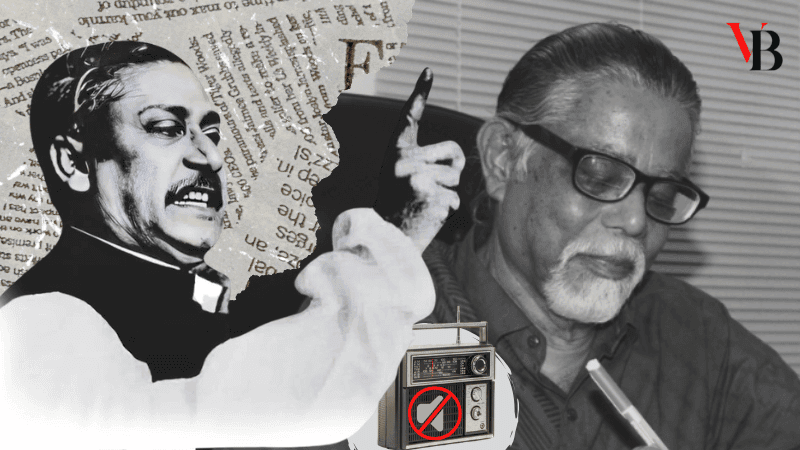
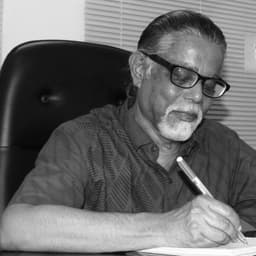
Professor Dr. Sakhawat Ali Khan is a distinguished educationist and journalist. He is considered a pioneer in the fields of media, mass communication, and journalism education in Bangladesh. Journalist Sakhawat Ali Khan possesses extensive experience. He commenced his professional career at a weekly publication named Sonar Bangla. Subsequently, he became a part of Paygam. On January 5, 1965, he joined Dainik Pakistan, a newspaper affiliated with the National Press Trust. This newspaper began its operations on November 6, 1964. By 1971, Sakhawat Ali Khan held the position of senior sub-editor at Dainik Pakistan. Although he had no official assignment on March 7, 1971, he was present at the Race Course Maidan in his capacity as a journalist. Views Bangladesh is sharing his experiences with the courtesy of Rahat Minhaz, Assistant Professor in the Department of Mass Communication and Journalism at Jagannath University.
Rahat Minhaz: I would like to know about Bangabandhu's March 7 speech. How did you hear this speech?
Sakhawat Ali Khan: On the day of Bangabandhu's address, I found myself at the racecourse ground. My visit was spontaneous. I thought that if I encountered something noteworthy, I would document it. I entered the ground through the gate that now leads to the Art College (Institute of Fine Arts). Once inside, I positioned myself beneath the microphone in a location where Bangabandhu was clearly visible and audible. Accompanying me was a journalist friend. Together, we stood and absorbed the entirety of the speech. At that time, the racecourse ground (now known as Suhrawardy Udyan) featured several small hills resembling mountains. On top of these hills, there were a few houses, including a veranda. On that day, officers of the Pakistan Army occupied that house. I observed them distinctly. As Bangabandhu delivered his speech, large army helicopters hovered above us. Upon entering the racecourse grounds, where the flower shops currently stand, I noticed rows of army trucks parked nearby. The original radio office was situated next door (prior to the PG Hospital). We later discovered that the Pakistani army had entered the radio office and, at gunpoint, ordered that Bangabandhu's speech could not be broadcast. Consequently, the radio office was unable to transmit at that moment. However, the following day, the radio did air Bangabandhu's speech multiple times. Bodyguard Mohiuddin stood beside Bangabandhu during his address.
Rahat Minhaz: Do you have any other evaluations or memories of the March 7 speech?
Sakhawat Ali Khan: Bangabandhu's body language during the speech was truly remarkable. I distinctly recall how he articulated his words and raised his index finger. In 1971, the television infrastructure in Bangladesh and Pakistan was not as developed; they may have been preparing to record the speech for later broadcast. At that time, live broadcasting technology was not as sophisticated as it is today. Nevertheless, radio was relatively advanced and capable of live transmission. It was reported that Bangladesh Radio would air the speech live. On March 7, Bangabandhu commenced his speech slightly later than expected. Prior to Bangabandhu's address, announcements were being made on the radio. When an anchor announced that Bangabandhu Sheikh Mujibur Rahman would now speak live, the radio abruptly went silent at that very moment. There were no words, no messages—just silence. Subsequently, I believe some songs or recitations from the Quran began to play. There were no speakers available. However, the staff and personnel at the radio office were all supportive of Sheikh Mujib and the cause of an independent Bengal. At the time the broadcast was set to begin, the Pakistan army had ordered that the transmission of Bangabandhu's speech on the radio be halted.
Rahat Minhaz: When Bangabandhu delivered his speech on March 7, numerous newspapers featured a prominent image of him the following day, showcasing his distinctive index finger. Dainik Ittefaq published a cautious headline stating, 'I can go to the council if....' This raises the question of how the newspapers reported on the event...
Sakhawat Ali Khan: Dainik Ittefaq may have had several motivations for such a headline. Nonetheless, there was a prevailing sentiment regarding the survival of Pakistan! It could endure. At this juncture, it is pertinent to discuss Manik Mia [Tafazzal Hossain Manik Mia]. Initially, Manik Mia did not extend significant support to the six-point movement or the quest for freedom. However, he later provided his full backing. During that period, the support from Dainik Ittefaq was crucial. Manik Mia passed away in 1969, before witnessing the liberation war or the emergence of an independent Bangladesh. Subsequently, others assumed leadership roles, each with differing perspectives. This divergence in thought likely contributed to the headline stating, 'I can go to the Constituent Assembly, if....' It is essential to recall that Sheikh Mujibur Rahman articulated four conditions in his March 7 speech, the foremost being the necessity for power to be transferred to the elected representatives. Only after that would he consider the possibility of attending the Constituent Assembly.
Leave A Comment
You need login first to leave a comment