
Passenger train fares are increasing, will the revenue increase?
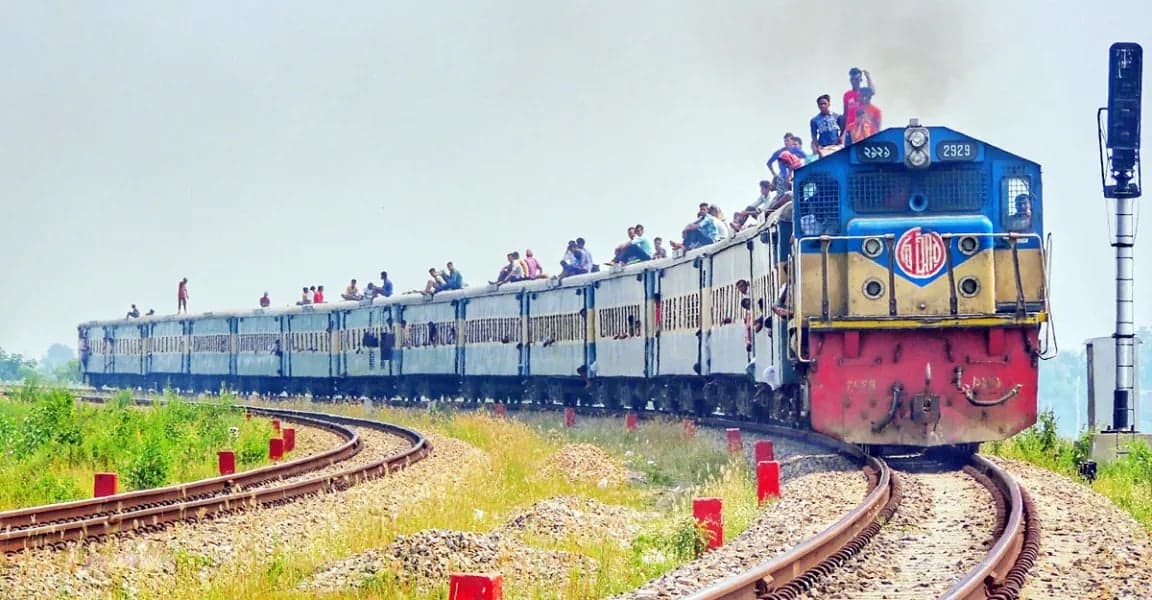

For many years, Bangladesh Railways has only been racking up losses. The company has not seen a profit in the last two and a half decades. The fiscal year 1998-99 was the last time Bangladesh Railway made a profit. The company's net profit that year was 18 crore 47 lakh 91 thousand taka. Since then, year after year, the organization has only been accumulating losses. Losses exceed 2 thousand crore Taka every year. In the past more than a century, the loss has exceeded 17 thousand crores.
The news published on March 16 stated that the fare for passenger trains of the railway is increasing. Bangladesh Railway has received approval from the highest level of the government on this matter. It may come into effect from the month of April. The second week of April marks the beginning of Eid al-Fitr. During the Eid holidays, when people return home, they will have to pay additional fare this time. As a result, there will be pressure on the market due to the upward trend in commodity prices, coupled with the additional fare. Although the pressure may be slight, it will still impact the general public.
The train fare was last hiked in 2016. Despite several attempts to increase fares afterward for the purpose of boosting revenue, they were not successful due to political considerations. This time, the fare is being increased by discontinuing the rebate (discount) facility for journeys exceeding 100 kilometers. Railway officials expect that by abolishing the rebate facility and imposing reservation charges, the annual revenue of the railway will increase by approximately 300 crore Taka.
Earning 300 crore Taka annually may not seem significant for such a large organization. However, compared to the losses incurred, it's a considerable profit. The question arises: why does Bangladesh Railway face losses year after year? Much has been written about the railway's "black cats." Despite being state-owned and operated, the railway transportation system suffers from irregularities and corruption, benefiting some individuals. The primary complaint against Bangladesh Railway is ticket scalping. Tickets for intercity trains get sold out a week in advance, and even the introduction of online ticket sales hasn't solved the issue. This malpractice intensifies greatly before Eid.
The question is, despite the busy operations, why isn't Bangladesh Railway making a profit? Will increasing the fare now result in profit? Or will that profit also slip into the hands of beneficiaries?
For a long time, there have been common complaints from passengers regarding Bangladesh Railway. Most trains do not run on time, and passenger comfort is often compromised. It is true that the fare for long-distance trains is still relatively low compared to long-distance buses. However, due to factors such as scheduling and other inconveniences, many people are reluctant to travel by train. In this situation, simply increasing the fare will not suffice; there is a need to improve the quality and service of the railway system. If the quality of service improves, there will be hope for increased profitability.
Leave A Comment