
Robert Hall and Michael Woodford win economics Nobel for stabilisation models
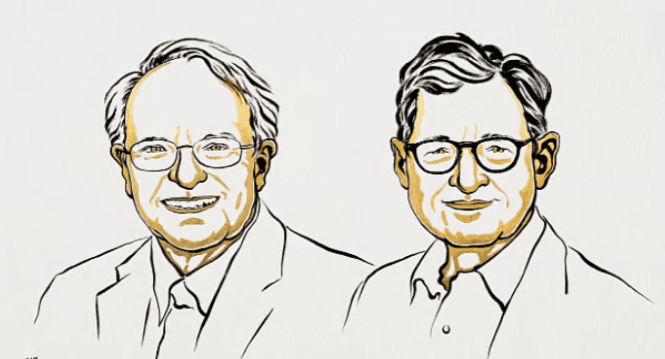

Two American economists, Robert E. Hall and Michael Woodford, have won the 2026 Nobel Memorial Prize in Economic Sciences for important research linking microeconomics and macroeconomics and on economic stability.
The Royal Swedish Academy of Sciences announced their names on Monday (October 12). Hall is professor emeritus of economics at Stanford University, while Woodford is a professor at Columbia University in New York.
They were honoured for their contributions on "the microeconomic foundations of macroeconomic stability." Their research explains how the financial decisions of individuals, households and businesses shape the course of the overall economy, affecting inflation, employment, interest rates and economic growth. Their work has also provided an important theoretical basis for policymaking by governments and central banks.
Their research has played a particular role in connecting the two key branches of economics. Microeconomics deals with decisions by individuals and institutions on spending, saving, investment and employment. Macroeconomics, on the other hand, deals with broader issues such as inflation, unemployment, interest rates and national output. Analysing the relationship between the two has made it possible to identify the causes of economic crises and design effective policies to tackle them.
Born in 1943, Hall has long studied employment, consumer spending, inflation and economic fluctuations. Alongside his professorship at Stanford, he chaired the Business Cycle Dating Committee of the US National Bureau of Economic Research. His work has given particular weight to labour market dynamics and to how people's consumption decisions affect the wider economy.
Born in 1955, Woodford is a leading researcher in modern monetary policy and macroeconomic theory. His work on the relationship between interest rates, inflation and people's expectations of the future economy has made an important contribution to central bank policymaking. His 2003 book, *Interest and Prices: Foundations of a Theory of Monetary Policy*, has had a major influence on theoretical discussion of modern monetary policy.
Woodford's research has highlighted how central bank policy announcements and signals about future interest rates can influence economic decisions. If a central bank indicates it will keep rates low for a long time, households and businesses may change their spending and investment plans. This kind of policy communication is known in economics as "forward guidance," and its importance in managing monetary policy has grown, especially since the 2008 global financial crisis.
The prize money this year is 12 million Swedish kronor, to be shared equally between the two laureates. The award is officially known as the Sveriges Riksbank Prize in Economic Sciences in Memory of Alfred Nobel.
Sweden's central bank established the prize in 1968, and it has been awarded since 1969. Although it is not one of the original five prizes created by Alfred Nobel, it is presented alongside the Nobel Prizes in the same manner.
Leave A Comment