

Role of women entrepreneurs in domestic fashion
The fashion industry is as expansive today as it was a few years ago. It has undergone significant transformations, experiencing numerous highs and lows. After several decades, entrepreneurs are beginning to perceive a glimmer of optimism within this sector. The emphasis on domestic fabrics has risen both nationally and internationally. Innovations in design are emerging. Numerous entrepreneurs have established their own enterprises to bolster the nation's clothing industry. The formal inception of the fashion industry in independent Bangladesh dates back to 1973. The establishment of this industry was not marked by extensive planning. It can also be noted that the pioneers of this movement did not engage in much strategic planning. Nevertheless, regardless of the initial plans, many successors have progressed, while some may have ceased operations. The encouraging news is that many newcomers have integrated into the fashion realm over time. As the market has evolved, what were once local or amateur boutique houses have now transformed into recognized brands. Individuals of all ages are gravitating towards these garments, which feature diverse designs, aesthetics, and indigenous concepts to satisfy consumer demands. It is evident that the market for indigenous clothing is consistently expanding in response to increasing demand. In the decade following independence, the fashion landscape underwent significant changes. Initially, Rupayan and Nipun, followed by Aarong, embarked on their journeys with innovative concepts centered around indigenous clothing. Through their efforts, new ideas regarding indigenous garments began to gain recognition. During this same decade, several other boutiques, including Karika, Kumudini, Setuli, Jaya, Shuksari, and Tangail Sari Kutir, endeavored to showcase crafts and the clothing industry through the lens of indigenous concepts. The success of their initiatives became apparent in the 1980s, as many new institutions aligned themselves with these efforts. Thanks to a sort of revolution in indigenous fashion spearheaded by these institutions, these garments gradually became beloved choices during festivals and celebrations, owing to the variety of indigenous fabrics, colors, and designs.
Various forms of fashion shows have significantly contributed to advancing the fashion industry. Events such as Friendship Color of the Chairs and Arca Fashion Week, along with numerous fashion shows that showcase new collections from local brands, are currently on the rise in popularity. The demand for handcrafted garments made from natural colors and local materials has seen a substantial increase. These shows feature sarees, scarves, ready-to-wear clothing, jewelry, and a variety of other items crafted locally and by hand. Both local and international designers and investors attend these events, where the richness of entrepreneurs' work is more prominently displayed. What type of clothing has gained prominence? In the past, the fashion scene was largely characterized by a singular genre of clothing. However, this trend has evolved significantly over time. Today, fashion encompasses not only sarees, salwar kameez, or Punjabi attire but also fatwas, shirts, dhupi cutting pants, skirts, frocks, and half-fashion long shirts of various cuts, long courts, jackets, and co-ord sets. Contemporary blouses have become increasingly appealing, with patchwork, kathasteech, and flexi blouses capturing the attention of fashion enthusiasts. Hand-painted, digital print, block, and embroidered garments have surged in popularity. The demand for these styles has notably increased in children's clothing, irrespective of gender. The second-hand and resale fashion market As the production of clothing in the fast fashion industry escalates, it poses a growing threat to the environment. Consequently, fashion is not expected to cease; rather, there is a continuous effort to adapt fashion to be more environmentally friendly in various ways. Discussions have emerged in numerous circles regarding the use of clothing that does not harm the environment. Currently, a significant shift is observed in consumer behavior. Individuals are no longer solely purchasing luxury items; they seek emotional connections, narratives, and reflections of their personal values. This shift is driving the rapid growth of the second-hand and resale fashion markets. According to research, at least 50 percent of buyers worldwide are now choosing second-hand clothing as an alternative to their main purchases. Only Gen Zers are thinking about sustainable fashion. Until a few days ago, this was thought to be the case. However, the reality is that this is not limited to Gen Zers—buyers of all ages are leaning towards circular fashion.
Various initiatives with entrepreneurs
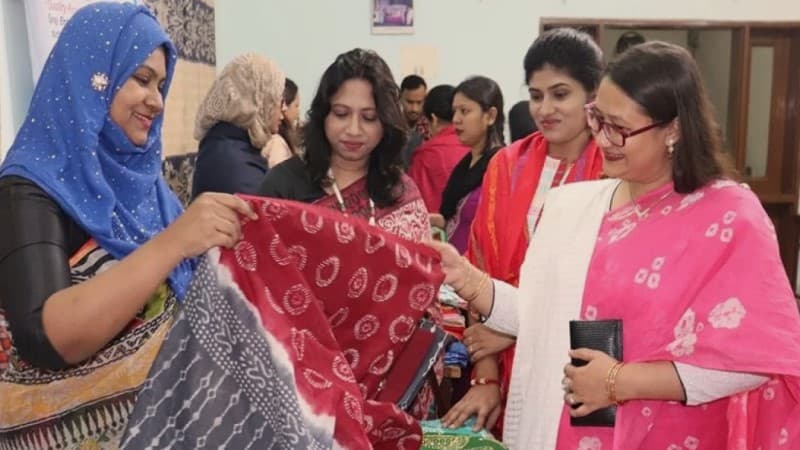
The Fashion Entrepreneurs Association of Bangladesh (FEAB) collaborates with entrepreneurs to advance the fashion industry in Bangladesh. They host a variety of events at different intervals to maintain the interest and creativity of entrepreneurs in their projects. In line with this, a unique exhibition and fair named 'Sutoor Golpo: A Festival of Weaving in Our Own Way' was recently conducted on the 12th floor of the Midas Center in the capital. A total of 39 entrepreneurs showcased their work at this fair. Furthermore, their creations are presented to customers at various events throughout the year. Some organizers independently arrange these events for entrepreneurs, while others plan and execute their own exhibitions. Among the notable events are Adda Chole, Baruni and Trinayani Mela, and The Flow Fest Dhaka, among others. The journey of women entrepreneurs It is evident that women constitute the majority of the fashion industry in the country. In their hectic lives, some women manage to run businesses alongside their jobs, while others dedicate their full attention to their entrepreneurial endeavors. Each of these women is engaged in creating distinct styles of clothing. Some have achieved significant success within the country, while others have expanded their businesses internationally. Their contributions to the growth of the country's GDP are substantial, currently accounting for approximately 20% of it. They are participating in productive economic activities by obtaining loans and support from banks and financial institutions, which positively influences the country's GDP. However, despite the external signs of hope, the challenges associated with running a business are considerable. Shahnaz Sultana has been involved in hand-painted clothing for 11 years through her enterprise, Rangdhanu Creation. Despite facing numerous challenges, she continues this demanding venture through relentless effort. When asked about her journey and the obstacles she has encountered along the way, she shared her insights on her success and the difficulties faced.
When asked how successful she feels about her work, Shahnaz Sultana said, 'I can't really say that I am successful in business. However, I work with a small part of this huge industry (hand painting). I have definitely been able to make a place for myself. I have been working for 11 years and 80% of my clients are returning. A large part of them buy their favorite clothes from me from the very beginning. Whenever I want something hand-painted, I think of my rainbow. I definitely consider it my achievement.’
Regarding the challenges, she said, ‘There are many challenges. One of the biggest challenges is working with hand paint in the midst of digital work. Where digital can make a few clothes in an hour, and hand paint can only do a tenth of a hundredth of the work in an hour. There are some hand-crafted things in Rangdu, but they are part of my main product. The customer base is small. Not everyone likes art, very few people understand and appreciate it, it may be surprising to hear, but it is true. Along with that, working with local things in the midst of foreign easily available things.
'All of my creations are handcrafted. We gather clothing and various items from different local sources. The painting is performed on these items. The workspace is limited; even if one desires, it is not feasible to engage in large-scale production with numerous individuals simultaneously, as not everyone possesses artistic skills. While ten individuals may handle sewing tasks, not all can paint. Even if we manage our operations and uphold quality standards, we still face current business challenges. The regulations governing small businesses in our nation are exceedingly complex. These regulations are primarily designed for larger enterprises. We must navigate within these constraints. The intricacies of documentation and financing persist. Even when work is completed by the end of the day, it remains quite challenging to consolidate the business and establish it in a single location. Consider the issue of trade licenses; the government promotes home-based work and encourages initiatives from home. However, the fundamental requirement for a business, the trade license, necessitates a shop or space within a commercial building. This endeavor is quite costly. If I had the means to acquire a shop, would I still be drawing or sewing from home? I am striving to elevate my modest skills to a financial level, correct? I am uncertain whether the investment and monthly expenses associated with a shop will justify the anticipated sales. This serves merely as an illustration. Many small enterprises like mine encounter this dilemma. Numerous policy complications hinder progress at times. If the documentation processes were approached with greater consideration, it would yield benefits for all. Another significant challenge is the export of goods. This process incurs substantial costs. Our expenses are several times higher than those associated with transporting similar items from neighboring India to any location worldwide. Consequently, despite the considerable demand, buyers find it more convenient to purchase from there rather than from us. It is crucial to address this issue as well.'
'The VAT on the sale of ready-made garments in Bangladesh is also very high. Currently, it is 10%. While we are dependent on foreign garments in the market, we are constantly trying to establish domestic products with great difficulty. There, this amount of VAT discourages buyers from buying. Many people may be able to evade the policy by doing irregularities, but that should not happen. The policy itself is providing an opportunity for these irregularities. After all, there is a lot of work, many people are trying to work and are definitely contributing to the economy. I think it is important to pay kind attention to this small enterprise sector, understanding its importance.'
There are countless women entrepreneurs like Shahnaz in the country who are continuously running their businesses despite facing countless challenges. If the VAT on clothing sales can be reduced as well as the policy complications, it is possible to take the country's fashion industry much further.
Leave A Comment
You need login first to leave a comment