
Scientists discover 210-million-year-old dinosaur species in Zimbabwe
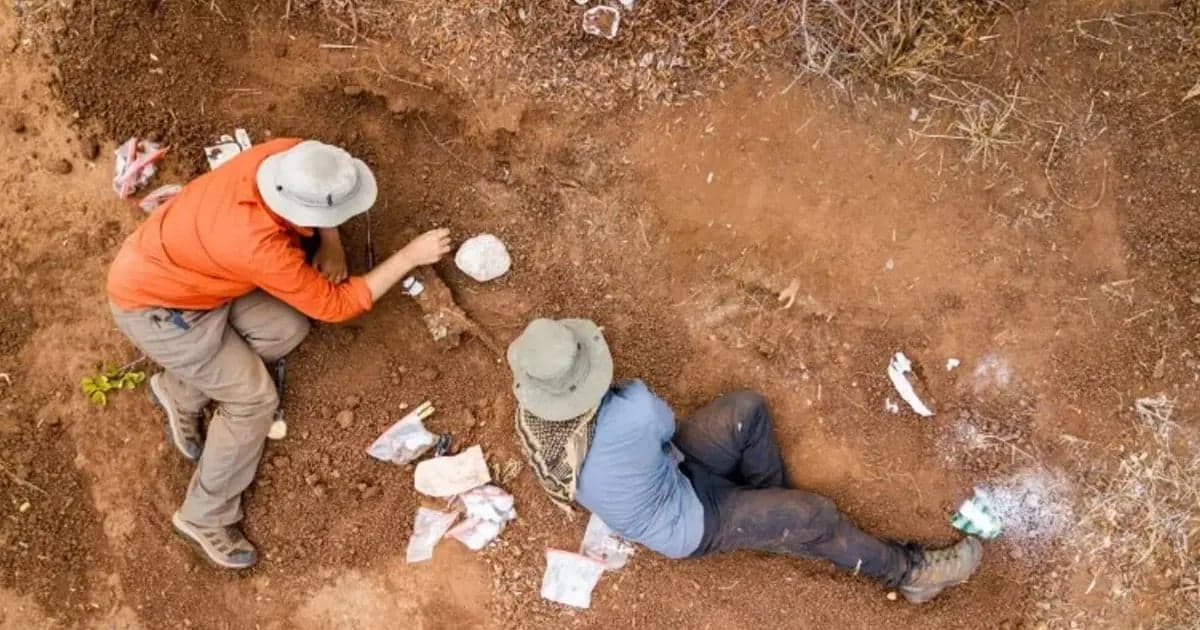

Scientists have identified a newly discovered dinosaur species in Zimbabwe that is offering fresh insights into the diversity and evolution of early dinosaurs.
The discovery suggests that dinosaurs evolved separately across distinct ecosystems in southern Africa, rather than inhabiting a single uniform environment.
The findings were reported by AFP on Wednesday. The newly identified species has been named Musango matusadonaensis, based on a fossil skeleton unearthed in 2018 near the shores of Lake Kariba in northern Zimbabwe. It is the fifth dinosaur species to be identified in the country.
According to an international team of palaeontologists, the dinosaur lived approximately 210 million years ago during the Late Triassic Period, when dinosaurs were beginning to spread across the globe but had not yet become the dominant land animals.
Unlike the gigantic long-necked dinosaurs that evolved later, Musango was relatively small and lightly built. It measured around 4.5 metres (15 feet) in length and weighed an estimated 222 kilograms (490 pounds)—roughly the weight of a fully grown pig.
The name "Musango" comes from the local Shona language and means "bushland" or "one that lives in the bush," reflecting the animal's likely habitat.
Paul Barrett, a researcher at the Natural History Museum in London, said scientists had long assumed that dinosaurs living across southern Africa were largely similar.
"This discovery shows that the region was actually divided into several distinct ecosystems, each inhabited by different dinosaur species," he said.
Barrett added that the find suggests scientists have uncovered only a small fraction of what may be a much larger and still unknown prehistoric world.
The research has been published in the Journal of Systematic Palaeontology.
Researchers said the fossil is among the most complete dinosaur skeletons from the same period ever discovered in Zimbabwe, preserving the vertebrae, ribs, forelimbs, hind limbs and foot bones.
They estimate that Musango was about eight years old at the time of its death and had nearly reached full maturity. Analysis of its bones also revealed that it had recovered from a serious injury or infection during its lifetime.
Although its skull has yet to be found, researchers believe the dinosaur was likely herbivorous or omnivorous, feeding on vegetation growing along rivers and streams.
In 2022, Zimbabwean scientists announced the discovery of Mbiresaurus raathi, regarded as Africa's oldest known dinosaur, which roamed the Earth around 230 million years ago.
That dinosaur stood about one metre tall, had a long tail and weighed up to 30 kilograms.
Leave A Comment