
Scientists use AI to build bacteria-killing viruses for first time
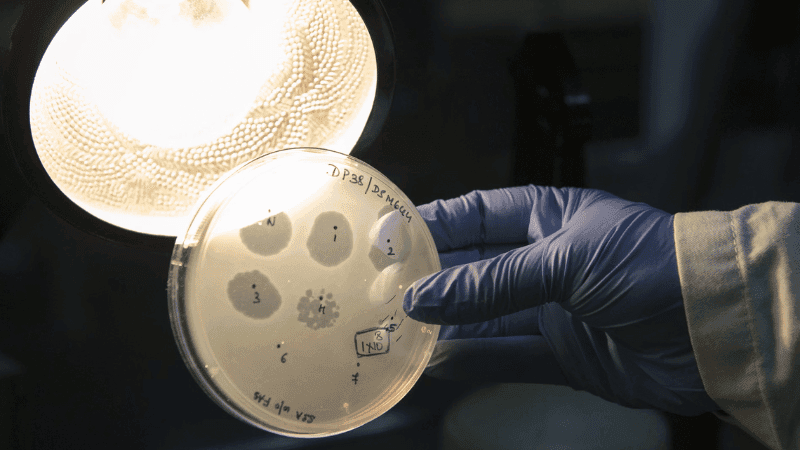

Scientists have used artificial intelligence (AI) to design entirely new bacteriophages—viruses that infect bacteria but not humans, animals or plants—in a breakthrough that could accelerate the fight against antibiotic-resistant infections while reigniting debate over biosafety and responsible AI use.
Researchers at Stanford University employed a genome language model to generate genetic blueprints for novel bacteriophages. Laboratory testing showed that several of the AI-designed phages, when used together, successfully destroyed E. coli strains that had already evolved resistance to naturally occurring phages.
The findings were published in the journal Science.
The team developed two AI models, Evo1 and Evo2, using genetic data from nearly 2 million bacteriophages. To reduce the risk of misuse, the training datasets deliberately excluded viruses capable of infecting humans, animals or plants.
Although the AI generated thousands of potential phage genomes, researchers selected around 300 candidates for laboratory evaluation. Of those, 16 proved functional, demonstrating the technology's ability to create viable, previously unseen bacteriophages.
Scientists say the advance could pave the way for next-generation therapies against drug-resistant bacteria, an increasingly urgent global public health challenge.
However, experts from Johns Hopkins University and other institutions cautioned that rapid advances in AI-powered genome design are outpacing the development of regulatory frameworks and biosafety standards.
They stressed the need for stronger oversight of DNA synthesis, robust biosafety protocols and clear governance policies to ensure the technology is used responsibly.
Researchers also warned against overstating the implications of the study. While AI successfully designed bacteriophages, creating viruses capable of infecting humans remains far more complex because their genomes are significantly larger and biologically more intricate.
The study, they said, represents a promising step toward precision antimicrobial therapies—not evidence that AI can readily create dangerous human pathogens.
Leave A Comment