

Secret of Iran's survival against advanced weapons of superpowers
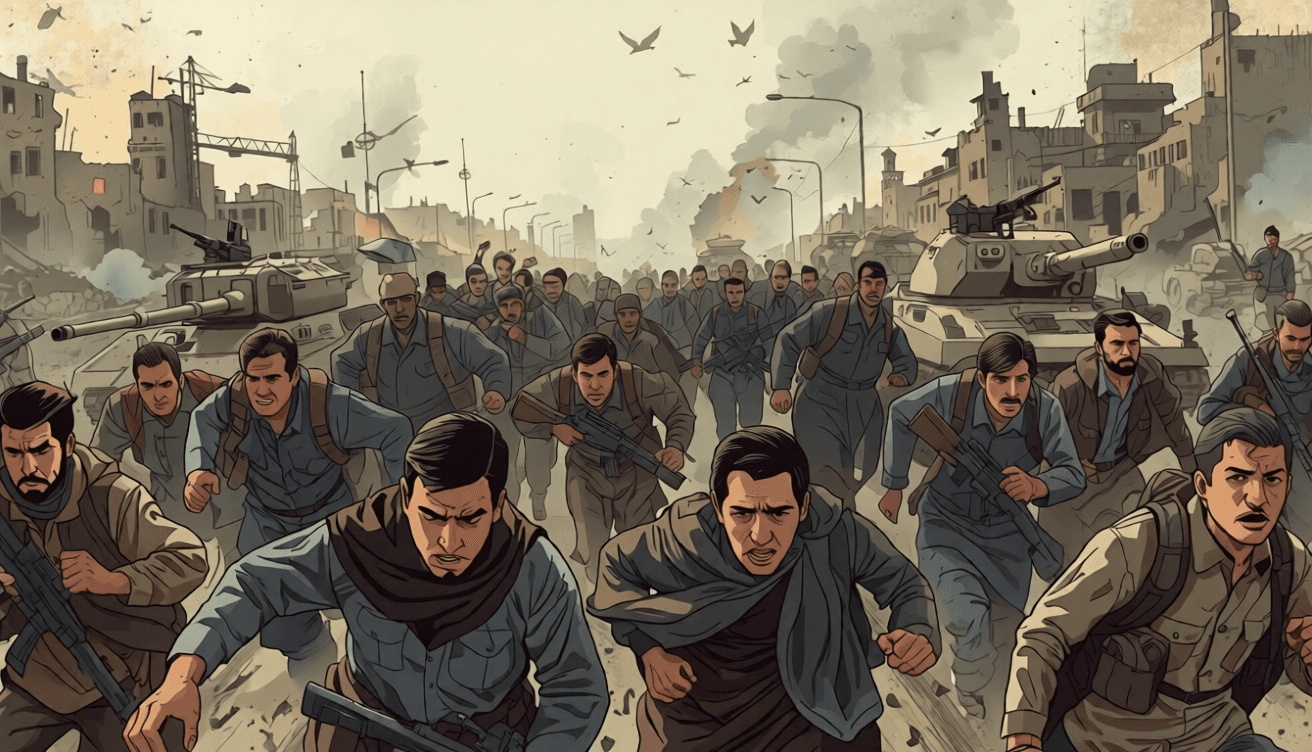

Although Iran is seemingly behind the United States and Israel in terms of modern fighter jets, powerful air defense systems, or sophisticated intelligence capabilities, the country has emerged as an 'irresistible' regional power in the past few decades.
Especially after the death of Supreme Leader Ayatollah Ali Khamenei in a joint US-Israeli attack on February 28, Iran's unprecedented counterattacks across the Middle East are giving world military experts a new thought. The Pentagon's high-tech drones or Israel's 'Iron Dome' - all of them are facing major challenges to Tehran's strategic 'asymmetric warfare' philosophy today.
Targeted attacks and counter-strategies
After Khamenei's death, Iran has continued to launch missile and drone attacks not only on Israel, but also on countries with US interests in the region. Iran has been launching a large number of ballistic missiles and drones at US military bases in Qatar and Bahrain and key economic facilities in Dubai. Attacks on military and civilian infrastructure in Haifa and Tel Aviv inside Israel have exposed the limitations of modern defense systems.
While the US and Israel rely on expensive defense systems such as the F-35 fighter jet and Patriot or Arrow-3, Iran is making up for their shortcomings with a “low-cost, high-impact” strategy. Each Shahed-136 suicide drone manufactured by Tehran costs only $20,000 to $50,000 to produce. By launching hundreds of such cheap drones and ballistic missiles together, Iran is proving to be very effective in the battlefield, disrupting and disabling the enemy’s multi-million dollar air defenses.
Proxy network and new front in the Middle East
Iran has long built a network of powerful regional allies and armed groups in the Middle East, known as the ‘Axis of Resistance’. This network, which consists of Lebanon’s Hezbollah, Yemen’s Houthis and Iraq’s Shiite militias, has opened multiple fronts in the Middle East since Khamenei’s death.
Meanwhile, in a televised speech, Naim Qassem, the head of the Iranian-backed Lebanese armed group Hezbollah, said that they would continue to fight in the face of Israeli and US aggression and would not surrender under any circumstances.
Qassem also said, “We are facing aggression. Our decision is to confront it. We will not surrender even if we make the ultimate sacrifice.”
According to analysts, Iran is putting its adversary under four-way pressure through these proxy forces, avoiding the risk of a direct major war. Iran's counterattacks and skillful coordination of shadow warfare, especially at strategic points like Qatar, Dubai, and Bahrain, have made the country an invincible force even in the current adverse situation.
Strategic geopolitics: Strait of Hormuz
The Strait of Hormuz is the world's most important oil and gas transportation route. About one-fifth (20%) of the world's total fuel oil and liquefied natural gas are transported through this narrow waterway between Oman and Iran. After Khamenei's death, Iran's Islamic Revolutionary Guard Corps (IRGC) closed the Strait of Hormuz. They declared, "Not a single drop of oil will go out."
According to international media, about 13 million barrels of oil are transported through this waterway every day, which is about 31 percent of global oil transportation. But in the recent tensions, various reports have revealed that between 150 and 750 cargo ships and tankers have already been stranded on both sides of the Strait of Hormuz.
Shipping data shows that the export activities of LNG giants like Qatar and major oil producing countries like Saudi Arabia are now on the verge of a complete halt. This impasse is expected to increase not only fuel, but also the cost of power generation and transportation of goods around the world.
Hakan Kaya, Senior Portfolio Manager at Neuberger Berman, warned that if this impasse lasts long, the price of crude oil will exceed $100 per barrel.
Current market situation and impact on Bangladesh
Oil prices in the global market have started to increase dramatically since the beginning of the conflict. As soon as the market opened on Monday, the price of Brent crude oil increased by about 7-10 percent to $81-82 per barrel. This international instability has also been felt in the Bangladesh market.
Although the government has not yet set a new price, the news of the closure of the Strait of Hormuz has already raised uncertainty about the arrival of oil ships from Saudi Arabia to Chittagong.
In such a situation, Petrobangla has already started reducing gas supply to the national grid to ensure the country's energy security. On the other hand, customers are being seen crowding and 'panic buying' at various fuel stations in the country, including the capital, due to fears of a future price increase, which has created the risk of creating a kind of artificial crisis in the domestic market.
Iran's 'missile city' and impenetrable defense
In the past few decades, Iran has built huge tunnels and military bases about 500 meters (1,600 feet) deep under the surface to evade sophisticated satellite surveillance by Israel and the United States. According to the IRGC, there are such 'missile cities' under almost every province and major city in the country.
Most of these bases are located in Iran's Zagros and Elburz mountains. The several layers of solid rock on the mountain make these bases modern 'bar'The 'Nar-buster' also provides protection from bombs. The specialty of these bases is their ceiling or roof design.
It is possible to quickly launch missiles using specific openings or 'apertures' without leaving the tunnel. As a result, Iran can end their operations before the opponent's drones or fighter jets have a chance to react. Analysis by various international media outlets, including Reuters, has revealed that Iran has fired most of its ballistic missiles from these 'underground silos' in response to the recent post-Khamenei provocations.
Leave A Comment
You need login first to leave a comment