

Sheikh Hasina gradually emerging as a global leader
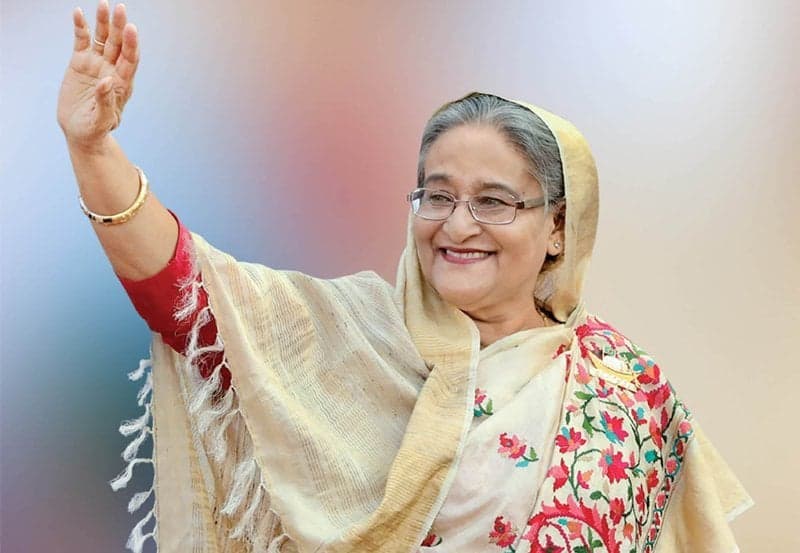
Twenty-one years ago, at Visva Bharati University in West Bengal, India, Bangladesh Prime Minister Sheikh Hasina was awarded an honorary doctorate degree in literature, bearing the title 'Desikottam'. During her acceptance speech, she expressed her dedication to fostering goodwill among the people of her country, visiting various regions periodically to cultivate a sense of unity and affection among them. On that day, she offered a prayer, aspiring for the complete fulfillment of Bengal's soil, water, air, and fruits, keeping Rabindranath Tagore at the forefront.
On that occasion, she manifested her commitment to follow the path laid out by the national leader, drawing attention towards a vision of global leadership and positioning himself to be a part of it. Since the day, she has concluded his preparatory phase and is moving forward with a focus on peace and harmony. Breaking free from the confines of geography, she has expanded her presence in the global arena.
She has transcended the boundaries of nationalistic thinking, and in the international context, she has made it clear that she is ready to assert his vision on the world stage. She aims to spread a message of peace amidst the global conflicts, disputes, hostilities, clashes, and the ominous roar of arms and explosives.
Therefore, it is evident that, just as she brokered a peace agreement in the hilly region of Chittagong in her homeland, she is also actively working towards establishing peace in places like Palestine and the Middle East.
At various times, she has offered her insights and directions. It is worth noting that towards the end of the twentieth century, in her capacity as prime minister, during a speech at a United Nations assembly, she spoke about the danger of military interventions by powerful nations against democracies and expressed faith in the unity of the world's citizens against such interventions. Unlike leaders like Pervez Musharraf in Pakistan, who did not handle such statements gracefully, Sheikh Hasina did not react adversely. She understands how civilian life has been affected by the mismanagement of military interventions in her own country. Hence, she has even addressed the issue of provisions in her country's constitution that prevent military interventions against the civilian government.
Primarily, Sheikh Hasina has always sought to resolve conflicts peacefully and promote goodwill. She has not portrayed herself as a symbol of vengeance, refraining from adopting a retaliatory stance. Instead, she is consistently proactive in seeking solutions to conflicts. In her love for humanity lies the liberation from violence.
According to Bangabandhu, "Without the word 'peace' in the dictionary, no other language has a more foreign word." Sheikh Hasina wants that even the word itself, "war," be erased from the Bengali dictionary. However, she understands that it is not an easy task to remove these deep-rooted conflicts from societies where they exist. Like a true admirer of Rabindranath Tagore, Sheikh Hasina believes that if one country, one nation is embraced by the entire world, then there will be no enmity between countries and nations. People will not harbor enmity against each other within countries and nations. Nevertheless, she also knows that understanding this concept is not as simple as it may sound; it requires a deep understanding of high culture and education for people to grasp the essence of such ideals.
Ensuring every individual's essential needs in their daily lives, such as food, clothing, shelter, education, and healthcare, is a responsibility that lies with the government. When these fundamental rights are guaranteed, people can move away from violence and hostility, embracing peace, harmony, and fraternity. Sheikh Hasina has taken various steps in her own country to expand education and make it more accessible. She has not only improved the education system but also modernized educational institutions. As people gradually become educated, they have the potential to transform into global citizens. However, in this context, various obstacles do not stand unchallenged. Such challenges distort society, leaving Bangladesh in a predicament.
Those who have the responsibility to protect Bangladesh must consider that after the assassination of Bangabandhu, the military rulers not only distorted history but also distorted society. In 1971, seventy million unarmed people gathered immense strength and organized an armed resistance, ultimately leading to the liberation of the country. There is no parallel to such a sight in world history.
The Pakistani oppressors, armed to the teeth, were defeated by the united strength of the Bengalis. The murder of the father of the nation by the conspirators of that country had a profound impact, creating a distorted societal structure.
The independence gained through the Liberation War has since been under the shadow of dependency. Sheikh Hasina has not only restored Bangladesh to its rightful place but has also reinstated the core values of independence. She has steered the country away from the path of violence and has diligently worked to revitalize the foundational principles of freedom. After the defeat in 1971, she has uplifted the nation, breaking the chains of violence, and not only brought the perpetrators to justice but also ensured that they face the consequences.
She has empowered the society to shatter the shackles of militarism. Hence, she has actively called upon the global community to engage against them. Sheikh Hasina has made it evident that terrorism, which opposes fundamental human rights and stands in direct opposition to living freely and independently, is a form of medieval barbarism that she believes the world community should unite against.
Sheikh Hasina's stance against extremism is resolute. She understands that extremism pushes people backward in time. Pakistan and Bangladesh have both firmly strengthened this position in the modern era. True progress can only be achieved through education and enlightenment, even in the realm of knowledge and science. She is actively working to push extremists further into the background.
In educated Muslim societies, she is determined to resist all forms of extremism, even in the domains of knowledge and science. She is determined to combat the extreme views held by some within the educated Muslim community. To uproot the poisonous tree of extremism, she has issued a call.
Through these efforts, Sheikh Hasina stands out as one of the most committed voices against extremism, radicalism, and sectarianism. She believes that through combating these ideologies, Bangladesh's path to independence was paved. It is deeply intertwined with the birth of the nation known as Bangladesh.
The pledge of the liberation war was not to make religion a tool of politics. However, if opportunistic individuals and power-seekers use religion as a political weapon, it can lead to alarming consequences, as witnessed by the people of Bangladesh in the post-1971 and post-1975 periods. People have exploited human faith in religion, twisting it for their political gain, thereby distorting the true essence of religion for their political maneuvers.
Sheikh Hasina does not want religious extremists to gain ground in Bangladesh. She envisions a society where people of all religions, castes, and creeds live in harmony under the umbrella of religious freedom and coexist peacefully. She understands that religion should be a personal belief and does not condone using it as a tool for violence or division. In recent times, Bangladesh has witnessed the emergence of religious fanatics, extremists, and bloggers-turned-murderers.
To resist them, the people must stand united and committed to eliminating such threats to ensure a peaceful and harmonious society. Bangladesh's democracy has repeatedly been the victim of turmoil. This is true. Illegal infiltrators have tarnished the history of the liberation war by collaborating with murderers, rapists, looters, and arsonists.
Sheikh Hasina is determined to rescue the country from this situation. She understands that only under the leadership of the pro-independence forces can the country progress. The power of the pro-independence camp's leadership is essential for the country to develop, and the people know it. They have shown their respect for Sheikh Hasina's leadership.
Therefore, we see that both Sheikh Hasina and Bangabandhu, as well as subsequent leaders, have secured their place in politics in such a way that their opponents have gradually faded into silence. Many have been defeated, and some have disappeared without leaving a mark in history.
Sheikh Hasina is transitioning from being a national leader to a global figure. She has transcended the borders of our country and made herself heard on the world stage. In addition to steering the course of Digital Bangladesh, she has also been recognized internationally by receiving the International Telecommunication Union (ITU) award. Under Sheikh Hasina's leadership, the country is progressing on the path of prosperity.
Bangladesh is now considered a role model in many aspects on the global stage. Today (September 28) is the birthday of the beloved leader Sheikh Hasina. On this special day, we extend our heartfelt wishes for her well-being. She is turning 75, and we wish her a long and healthy life.
Sheikh Hasina possesses a simple and profound greatness that draws the admiration and love of all. She serves as an inspiring figure in various fields, awakening awareness among everyone. Her excellence shines through in her pursuit of knowledge, wisdom, interests, character, grace, and open-mindedness. It's a charm that is seldom seen.
Sheikh Hasina believes in nurturing the qualities instilled by her parents in education, values, and graciousness. Sheikh Hasina has organized her own party with great dynamism.
When people in Bangladesh, among the Bengalis, look at Sheikh Hasina, they see a leader who has grown along with them, starting from humble beginnings. She is, in essence, the representative of Bengalis and the entire country. In the global arena, she has propelled Bengali progress to unparalleled heights.
Sheikh Hasina aspires to lead Bangladesh as a prosperous nation and the Bengali people as a thriving community. Like Rabindranath Tagore, Sheikh Hasina also understands that, "Even if a tree blossoms with a fragrant flower, it doesn't bear fruit on the same tree." That's why Sheikh Hasina, the leader of Bangladesh, has progressively advanced on the global stage, becoming a symbol of pride for the Bengali nation.
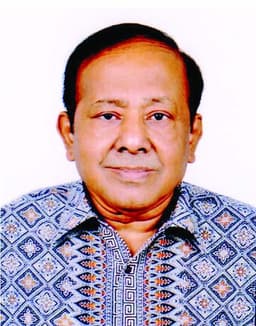
Writer: Director General, Press Institute of Bangladesh (PIB) and
Recipient of Ekushey Padak Journalist
Leave A Comment
You need login first to leave a comment