

Shwapno data breach: A wake‑up call for businesses
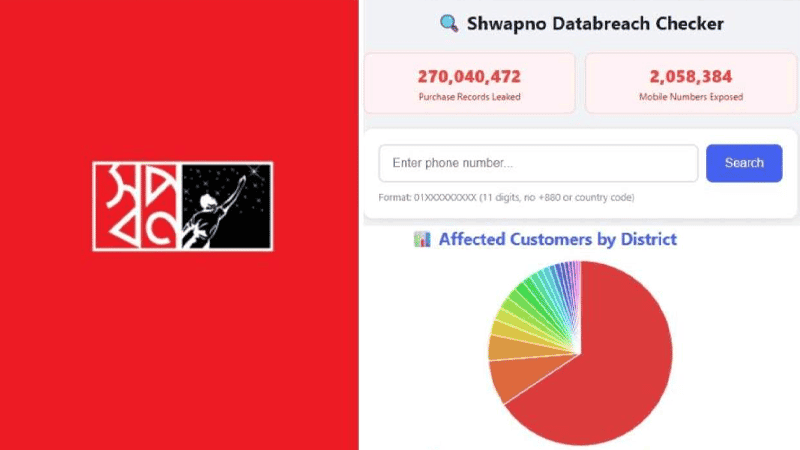

The recent disclosure of a massive data breach at Shwapno, Bangladesh’s largest supermarket chain, raises serious questions about corporate responsibility, regulatory oversight, and the adequacy of current cybersecurity practices in the country’s private sector. With over 4 million registered customers and 812 outlets across 63 districts, Shwapno holds one of the largest consumer datasets in the country. Such scale inherently carries a duty of care.
Firewalls are not Enough
Modern cyber threats, especially against high‑value consumer databases cannot be mitigated by perimeter protections like firewalls alone. Firewalls may stop unsophisticated attacks, but they are insufficient against persistent, targeted intrusions.
For companies storing millions of customer records, cybersecurity must include:
- 24/7 Security Operations Centre (SOC) monitoring
- Real‑time intrusion detection and response
- Segmentation and encryption of sensitive data
- Continuous vulnerability assessment and threat intelligence integration
The Role of Data Centres and Infrastructure Standards
Another critical issue raised by this breach is where and how customer data is stored. Organisations handling massive datasets must be required to use certified, professional data centres that meet strict standards for:
- Physical security
- Redundancy and disaster recovery
- Security compliance and audits
Storing sensitive customer information in poorly governed or non‑compliant infrastructure exposes both the company and the public to unacceptable risk.
This is no longer a matter of corporate choice, it is a matter of public interest.
Customer Data is not Optional Collateral
Shwapno’s refusal to negotiate with hackers on ethical grounds may be principled but ethics must begin with prevention. Customer data should never become collateral damage in inadequate security posture. Collecting millions of consumer records is a business decision. Protecting them is a legal and moral obligation. If this breach results only in investigations and statements, but no regulatory reform, it will signal to the market that scale can exist without accountability. That is a risk Bangladesh can no longer afford.
In this context, the role of professional data infrastructure becomes increasingly important. Facilities such as Felicity IDC, which operates as a modern data center with round‑the‑clock Security Operations Centre (SOC) monitoring, demonstrate how stronger safeguards can be built into enterprise systems. As cyber risks continue to grow, the Shwapno incident may serve as a timely reminder that it is now essential for enterprises in Bangladesh to start taking at least the first concrete steps toward stronger cybersecurity practices.
Sharful Alam, CEO, Felicity IDC Limited
Leave A Comment
You need login first to leave a comment