
Spain win: Ronaldo’s final World Cup ends in a whimper
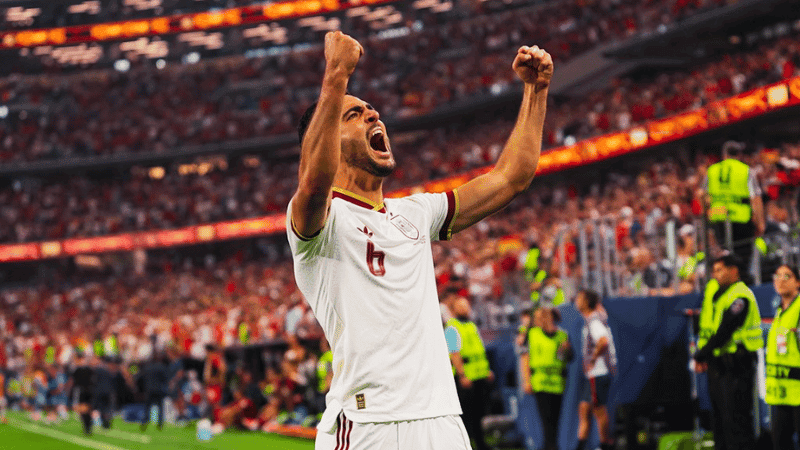

Spain brought Portugal’s World Cup journey to an end and, in all likelihood, drew the curtain on Cristiano Ronaldo’s glittering international career.
Mikel Merino struck a clinical finish in the first minute of stoppage time to secure a 1-0 victory in a tight, low-chance affair that had looked destined for extra time. Spain will now face the winner of Tuesday’s match between the United States and Belgium.
Ronaldo, 41, had already confirmed before the game that this would be his final World Cup. If so, it was a subdued and heartbreaking farewell for one of the greatest players the game has ever seen. The Portuguese superstar was in tears as he left the pitch at full time.
Ronaldo’s World Cup end
The show is over. Cristiano Ronaldo’s 2026 World Cup dream ended exactly the way it started, overshadowed by persistent questions over whether this final campaign was simply a tournament too far for a 41-year-old icon fighting a losing battle against time.
While Ronaldo secured a historic milestone by becoming the first player to score in six different World Cups, there is little else from this tournament that will be remembered fondly. His statistical impact was limited to two goals against an Uzbekistan side that lost all three of its group matches, alongside a single penalty against Croatia. Beyond those flashes, the aging forward cut a peripheral figure when it mattered most, a harsh reality that came to define his final World Cup appearance against Spain.
The stark reality of his diminishing influence was laid bare on the stat sheet during the knockout clash. Ronaldo managed a mere 12 touches in the opening 45 minutes of play. That total was nine fewer than the next lowest player on the pitch, Spanish center-forward Mikel Oyarzabal, leaving the Portuguese talisman isolated from his own midfield.
With Ronaldo largely starved of service, the stadium crowd was reduced to making a lot out of very little. When Joao Felix nodded Pedro Neto’s inswinging cross back across the box, Ronaldo stretched every sinew to flick the ball goalward, drawing collective gasps from the spectators. In reality, the angle was too acute and the contact too weak, resulting in an easy save for Spain goalkeeper Unai Simon. An earlier attempt carried more of his trademark conviction after a sharp stepover created half a yard of space, but the angle remained firmly against him.
As the match slipped away, Ronaldo was unable to conceal his growing frustration on the pitch. Early in the second half, he made a sharp run in behind the Spanish backline, only to erupt in annoyance when Joao Neves turned down the pass. Moments later, he drifted toward the center of the penalty area, watching helplessly as a Joao Cancelo cross sailed over him toward the back post.
The disconnect peaked late in the game during a counter-attack that ultimately fizzled out, when Ronaldo visibly questioned why Pedro Neto had passed him the ball rather than driving it upfield himself. It was a sequence that summarized Portugal's evening: the chemistry was missing, the physical dominance had faded, and the system simply failed to work.
Spain breaks the deadlock
Spain broke the deadlock late in a tight, cagey match by taking advantage of a momentary lapse in Portugal's concentration.
Following a quick free-kick that caught the Portuguese defense reacting slowly, substitute Ferran Torres received the ball on the edge of the penalty box. Torres controlled the pass, spun, and slipped a precise through-ball into the path of fellow substitute Mikel Merino, who was making a trademark late run into the area.
Merino then calmly dispatched an assured finish into the near corner to secure the decisive goal for Spain.
Spain’s defence
Spain maintained their status as the only team yet to concede a goal at this World Cup, delivering another defensive masterclass that highlighted exactly why La Roja has become so difficult to breach.
Unlike traditional defensive powerhouses, Spain’s strength does not stem from sitting deep or crowding the penalty box with numbers. Instead, Luis de la Fuente’s side suffocates opponents by completely dominating possession and controlling the territory on the pitch. This proactive approach famously left Austria without a single shot on target in the round of 16, allowing goalkeeper Unai Simon to set a new all-time World Cup record of 519 consecutive minutes unbeaten.
When opponents do manage to break through the territorial press, they find a backline anchored by individual brilliance and sharp concentration. Cristiano Ronaldo did manage to test the Spanish goal twice in the opening half, including a stinging drive that required a sharp parry from Simon. The Athletic Bilbao goalkeeper continues to justify his starting spot under De la Fuente, keeping high-profile challengers like Arsenal’s David Raya and Barcelona’s Joan Garcia on the bench.
In front of Simon, the defensive unit functioned seamlessly. Center-backs Pau Cubarsi and Aymeric Laporte remained perpetually alert to danger, while full-backs Marc Cucurella and Pedro Porro provided excellent positional discipline on the flanks.
Crucially, the backfour was shielded by a dominant performance from holding midfielder Rodri. Looking as sharp and physically imposing as he has in months, the Manchester City star consistently read the game to stifle Portuguese counter-attacks before they could develop, executing perfectly timed challenges to dispossess Ronaldo, Joao Felix, and Joao Neves.
Spain’s impenetrable armor showed only one brief moment of vulnerability when Portugal exploited a short-corner routine. The quick movement created a two-on-one advantage that allowed Nuno Mendes to unleash a fierce shot, which took a deflection off Pedro Porro's head and rattled the crossbar. Aside from that solitary scare, Spain’s defensive system proved once again to be the gold standard of the tournament.
Spain stays so patient
Spain relied on their signature tactical discipline and structural control to maintain patience in a match that threatened to mirror the frustrating World Cup exits of their recent past.
For large stretches of the encounter, La Roja put on a quintessential major tournament performance, dictating the tempo and keeping Portugal at arm's length. In the center of the pitch, the midfield trio of Rodri, Pedri, and Dani Olmo combined to execute intricate passing triangles that starved Portugal of the ball. However, despite controlling the territory, Spain initially lacked a clinical edge in the final third. Portuguese goalkeeper Diogo Costa made smart early saves from Lamine Yamal and Alex Baena, but he was rarely pushed to his limits as three dangerous Spanish crosses flashed across the six-yard box without finding a teammate.
The lack of an immediate breakthrough carried a heavy psychological weight for Spain. At the previous two World Cup tournaments, the national team suffered agonizing penalty-shootout eliminations against Russia and Morocco after dominating possession but failing to break through stubborn, packed defenses. While Spain’s legendary 2010 squad famously parlayed this style of territorial dominance into four consecutive 1-0 knockout victories on their way to the trophy, the mounting tension in this match naturally sparked nerves among the fans and players as the clock ticked down.
Rather than panicking or abandoning their philosophy as the game remained scoreless, Luis de la Fuente’s side trusted their system and waited for the opposition to tire. That unwavering patience finally paid off in the dying moments of the match. Spain clicked into gear with a fluid, multi-man passing sequence involving Fabián Ruiz, Rodri, and Ferran Torres, culminating in Mikel Merino arriving precisely on time to slot home a cool, low finish and send Spain through.
Leave A Comment