
Sri Lanka regains upper-middle-income status after three-year crisis
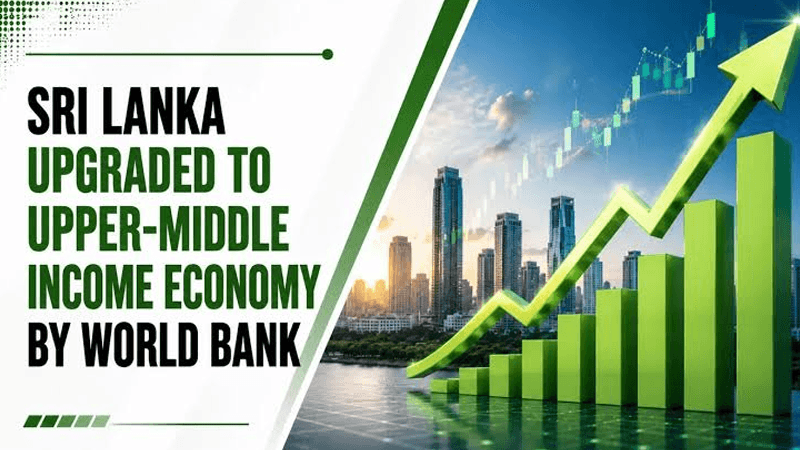
Sri Lanka has made a remarkable recovery from the severe economic crisis of 2022, with the World Bank upgrading the country from a lower-middle-income to an upper-middle-income nation.
According to the World Bank's latest income-based classification, Sri Lanka's economy grew by 5 per cent in 2025, driven by industrial recovery, tourism expansion and growth in the financial services sector.
The World Bank has described Sri Lanka's progress as a "story of recovery," noting that the country was on the brink of collapse just three years ago. Through consistent reforms and economic recovery, it has managed to return to the upper-middle-income category.
The World Bank said this reclassification is an important recognition of Sri Lanka's economic resilience, though the country has crossed the threshold by a very narrow margin.
The World Bank classifies countries into four income groups: high income, upper-middle income, lower-middle income and low income, based on gross national income (GNI) per capita. The latest list, covering 218 countries and economies, will remain in effect until June 2027.
Following the 2019 Easter Sunday attacks, the Covid-19 pandemic and a balance of payments crisis, Sri Lanka defaulted on its sovereign debt in 2022, plunging the country into its worst economic crisis in decades.
According to the World Bank, the IMF-supported economic stabilisation programme, fiscal and monetary reforms, foreign debt restructuring, tourism revival, increased remittances and improvements in the external sector have helped Sri Lanka overcome the crisis and return to economic growth.
Leave A Comment