

Successful efficacy of anti-cancer bacteria tested on mice
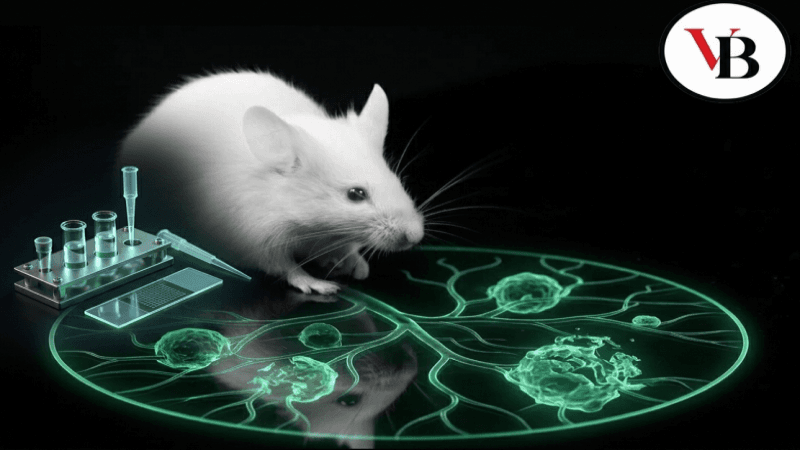

A successful test of the potential anti-cancer efficacy of newly synthesised nanoparticles and specific plant-derived bioactive compounds has been conducted on mice. A team of researchers from Rajshahi University (RU) has successfully completed tests applying anti-cancer bacteria to inhibit cancer in mice.
Recently, a research team from Rajshahi University shared this information in an interview with Views Bangladesh. The team includes Md Muntasir Ahmed, Umme Shayla, Md Mohiuddin, Sushmoy Chandra Das, Mubashira Anjum Mahi, and Sadia Neha. The team is supervised by Professor Dr Md Ashadul Islam, Chairman of the Department of Genetic Engineering and Biotechnology at RU.
They have titled their research topic "Nano-particles and Herbal Elements in New Cancer Treatment: Success of RU Researchers and Future Prospects".
Md Muntasir Ahmed said, "The potential of nanoparticles and natural compounds in cancer treatment: Pre-clinical research on Ehrlich Ascites Carcinoma. Cancer is currently considered one of the leading causes of death worldwide. Although modern treatments like chemotherapy, radiotherapy and surgery are effective in many cases, they have significant side effects and limitations. Consequently, the need to develop comparatively safer, more effective and targeted new therapeutic strategies is increasing day by day. Recently, nanotechnology and plant-derived bioactive compounds are gaining importance as promising fields in cancer treatment."
Umme Shayla said, "In this research, we are using a widely used experimental cancer model called Ehrlich Ascites Carcinoma (EAC), which is commonly used to evaluate cancer growth and treatment efficacy in mice. The main goal of this research is to test the potential anti-cancer efficacy of newly synthesised nanoparticles and specific plant-derived bioactive compounds."
Mohiuddin said, "In the first phase, bioactive compounds were extracted and analysed from a selected plant source. Simultaneously, metallic nanoparticles were synthesised through modern nanotechnology, which can have targeted effects on cancer cells. Subsequently, the anti-cancer efficacy of these nanoparticles and separately identified compounds was evaluated by applying them to mice affected by EAC cells."
Sushmoy Chandra Das said, "In this pre-clinical research, the treatment's effects are analysed through tumour growth, cell survival rates, and potential changes in gene expression. The research uses RT-PCR technology to understand how effective the synthesised nanoparticles and selected natural compounds are, individually or in combination, in inhibiting cancer growth by causing genetic changes in cancer cells."
The results of this research could play a vital role in developing new and effective anti-cancer therapies in the future. Particularly, the combined use of nanotechnology and natural compounds could open up a promising alternative path in cancer treatment.
Mubashira Anzum Mahi said, "The role of natural compounds in the risk and control of pancreatic cancer: Pancreatic cancer is one of the biggest challenges in modern medical science. Recent research has shown that unhealthy lifestyles, especially regular alcohol consumption and Western high-fat diets, cause chronic inflammation or pancreatitis in the pancreas. This long-term inflammation can later transform into deadly pancreatic cancer."
Sadia Neha said, "To address this complex situation and overcome the limitations of conventional chemotherapy, researchers are now seeking alternative paths. A key aspect of our research is the combined application of chemotherapeutic drugs with natural compounds, particularly Resveratrol. Resveratrol is a powerful antioxidant derived mainly from grapes and various plant sources, capable of acting against cancer cells."
Research has shown that combined use with Resveratrol yields much more promising results in suppressing pancreatic cancer cells compared to using chemotherapy alone. On one hand, it increases treatment efficacy; on the other, it creates the possibility of reducing the negative impact of chemotherapy on healthy cells.
They claim, to take these two ongoing cancer research projects from the laboratory to the clinical stage, government patronage and specific allocations are crucial. Research Grants are needed to cover the substantial costs of laboratory chemicals, nanoparticle synthesis materials, and animal testing. Modernising technology, having the opportunity to use Western Blotting for protein expression analysis and Single-cell RNA sequencing technology, would vastly increase the depth and accuracy of the research.
Professor Dr Md Ashadul Islam, Chairman of the Department of Genetic Engineering and Biotechnology, told Views Bangladesh, "If there is an opportunity for an advanced molecular biology lab and collaboration with international research, primary-level research teams will be able to make groundbreaking contributions to cancer treatment."
He said successful tests have been conducted on mice. Approval from Bangladesh and the World Health Organisation is required for human trials. If this test is successful, the world will gain a cancer cure system. The country will step into a new era.
Leave A Comment
You need login first to leave a comment