
Superhumans lie dormant in all individuals around the globe
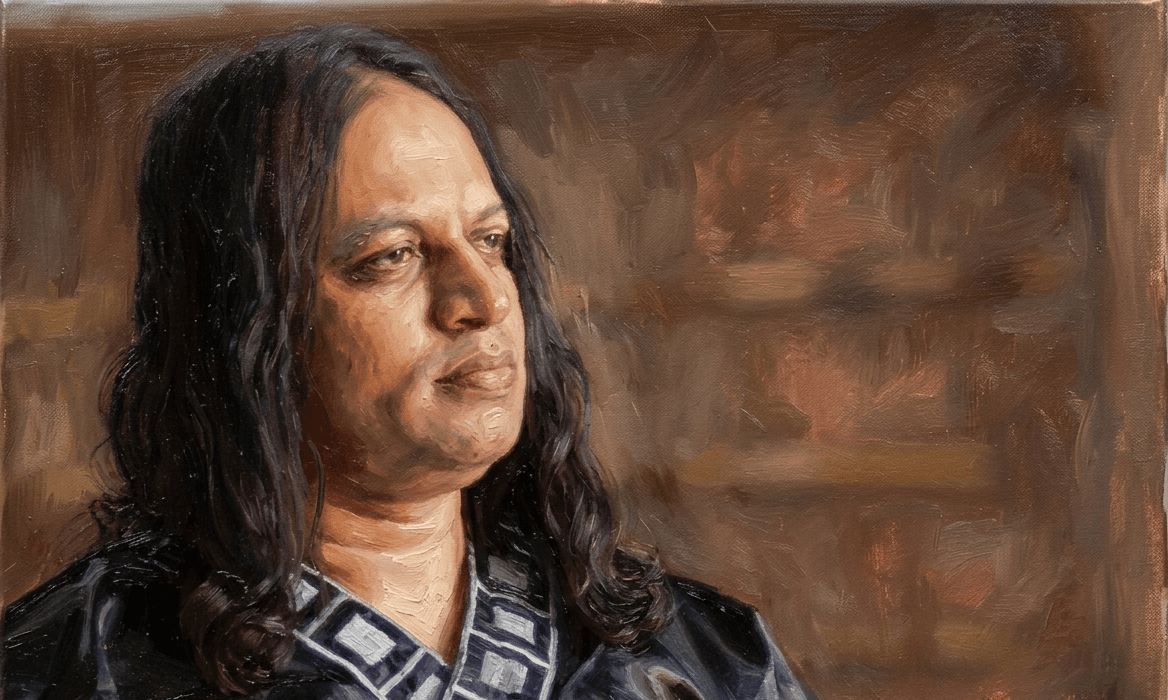
When we were engaged in the organization of Eid-ul-Fitr, surrounded by lights, music, and the delightful aroma of polao-semai. Conversely, a man was deeply engrossed in meditation within a mountain cave. In this isolated cave situated in a remote mountain, he sought the answer to 'Mo Ko Ho (Who am I)'. To safeguard himself from wild animals and potential tiger attacks in the unprotected cave, he had placed a spear by his side. As we envision this scene, it conjures the image of a mythical saint; it may appear to be a surreal tale. However, this is not merely a story. Amidst his introspection in the mountain cave, the internationally acclaimed martial arts grandmaster and world record-holding superhuman Siddhacharya Yuree Vajramuni was celebrating Eid. During this period of intense focus, he would occasionally descend to the city to gather food from the remote mountains. This respite allowed for a personal conversation with the globally recognized Thunder Shinman. The most intriguing aspects of the dialogue between Siddhacharya Yuree and Views Bangladesh News Editor Maria Salam are summarized here.
Currently, you dedicate a significant portion of your time to meditating in a cave in the mountains. It is likely that you will be in the mountains this Eid-ul-Fitr as well. How is this solitary and introspective time treating you?
The term vajra signifies both lightning, with its immense power, and diamond, representing hardness. Additionally, prana refers to life or breath. When combined, these terms form ‘vajrapran’. Essentially, vajrapran embodies the concept of harnessing the vast power within an individual to experience spiritual strength. In practical terms, vajrapran can be described as a method of meditation that engages both static and dynamic states of the body's organs. It represents a contemporary interpretation of yoga. The core teaching of vajrapran is to attain equilibrium between the body and mind through meditation, particularly in a unique dynamic state of the body's organs. Furthermore, merging with the energy stream is a crucial element of Vajra Pranacharcha. Overall, individuals first learn to cultivate and refine their ability to achieve balance in their lives through this practice. Vajra Prana serves as a source of motivation for triumph in life by fostering balance and connecting the body, mind, and nature with the energy stream. This boundless power of victory, akin to Vajra, manifests in various dimensions of human existence. By tapping into this limitless strength, anyone can lead a lively, refreshing, vibrant, and active life. Moreover, an effective process for disease prevention and healing can be realized within both body and mind. The effects of Vajra Pranacharcha allow this power to be experienced internally. Through these practices, Vajra Pranacharcha significantly contributes to enriching life with joy and comfort. It encompasses four levels: Vajra Prana Meditation, Vajra Prana Knowledge, Vajra Prana Healing, and Vajramati, which signifies unbreakable and indestructible wisdom. Additionally, there is the concept of Haritsadhan, which promotes a long, healthy, and active life.
You are recognized as the pioneer of modern psychophysical training techniques. What is the relationship between the mind and the body? What type of power can an individual gain through this training?
Regardless of the nature of the relationship between the mind and the body, it remains unbreakable. The body serves as the dwelling place for the mind. Consequently, a frail body signifies a corresponding weakness in the mind. This notion is supported not only by ancient Indian philosophies but also by contemporary scientific findings. Our physical form consists of muscles and bones; the connection between nerves and these components is essential, as is the link between nerves and the brain. Therefore, if one's body is not in good health, mental strength cannot be achieved. Maintaining a healthy body is a prerequisite for mental well-being. Conversely, if the mental state is poor, the body will not function effectively. The mind operates as software, while the body functions as hardware. If the software malfunctions, issues will arise with the hardware as well. This relationship is complementary. The mind governs, and the body executes its commands. Thus, comprehensive training is essential to grasp the entire process. This training encompasses both physical and mental aspects. Hence, it is imperative to acquire adequate knowledge regarding psychophysical training methods. A commonality among all of us is that we often remain oblivious to the means of maintaining health until we fall ill. We tend to focus on health only when the body is unwell. However, during periods of good health, we frequently overlook the importance of sustaining our strength through proper care. A person in good health can achieve remarkable feats through dedicated practice and training. If I, a Bangladeshi, can attain the status of one of the strongest individuals globally through diligent training, then it is achievable for everyone. This endeavor necessitates profound meditation and appropriate physical exercise.
You are recognized as the founder of Butthan Meditation and Butthan Martial Arts, regarded as the pioneer of modern Bangladeshi martial arts. Can you share how this journey commenced?
To put it differently, exercising was something that came naturally to me. My interest in martial arts began during my time at the cadet college. Since childhood, I have felt a strong internal motivation. My goal has always been to achieve physical perfection. Consequently, I gravitated towards yoga and martial arts while still in my school years. I believed this was the key to my success. My teachers supported me in this pursuit. My principal at the cadet college played a significant role in my journey, providing substantial assistance. My parents were also supportive, although my father was not particularly enthusiastic about it. As a successful engineer, he prioritized education above all else and believed that martial arts were not pursuits for educated individuals. In contrast, my mother was very encouraging, asserting that I should be allowed to follow my passions. She remains my inspiration to this day. Everyone has dreams, but there are often hurdles to overcome in their pursuit. I faced my own challenges, but with the support of my mother and teachers, I have progressed.
What have you accomplished through this dedication?
My primary accomplishment is representing myself to the world as a Bangladeshi. People, both in Bangladesh and globally, seek a connection with their national identity. Many have questioned the value of my martial arts and meditation practice, suggesting I should focus on my work in security instead. They would ask, are you Chinese or Japanese to be engaging in such activities? Allow me to share an experience: during the semi-final round of the Discovery Channel's Superhuman qualifiers in 2013, I competed alongside twenty other participants from various countries. Among them were several grandmasters from China and Japan, who looked down upon me, assuming that a Bangladeshi could not excel in such fields. However, when the Discovery Channel's scientific and research team ultimately selected five superhumans, I was among those chosen. Prior to this, I had set a record by breaking two baseball bats, a feat that no one had dared to surpass by breaking three. I then took up the challenge and set a new world record of breaking three baseball bats with one kick. Later, researchers analyzed my physical abilities and said that my leg strength is the highest among all people in the world. Later, Wayne University in America conducted a study and found that it takes 740 pounds of force to break each standard baseball. In the presence of the Mayor of Nottingham, UK, World Records Registry Adjudicator John Evans officially handed over the world recognition certificate to me. But then, people's attitude towards Bangladesh or Bangladeshis changed. This is not my personal achievement, it is the pride of establishing my nation in front of the world as a Bangladeshi.
Have you received any official recognition from Bangladesh for this achievement?
As I mentioned earlier, lobbying is inherently a political endeavor to secure such acknowledgments. Consequently, I have neither the inclination nor the time to engage in lobbying activities. My focus has been on my professional responsibilities and personal development. I harbor no regrets regarding this. Moreover, how long do individuals truly remember those who have been honored with national awards over the years? Often, such accolades fade from memory shortly after they are bestowed. In contrast, figures like Buddha or Confucius, who dedicated themselves to philosophical pursuits and the enhancement of mental faculties, are revered and remembered for millennia. Thus, if I can generate a similar resonance through my endeavors, I believe my contributions will be remembered even five hundred years from now.
Do you have any activities with the government? Or what are your expectations regarding government support?
Currently, I am engaged in several initiatives with the government, primarily focused on defense. In 2024, the National Defense College is set to host a two-day Bajrapran Meditation Training program, which will see participation from 300 defense officers across 26 nations. This initiative is spearheaded by the Ministry of Defense. Additionally, I have been providing training to various agencies in Bangladesh for approximately 25 years. This information is not widely publicized. Regarding my expectations, I believe the most significant development at this time is the inclusion of my martial art in the national sports framework, which has afforded us some support as a developing nation. Disciplines such as karate, judo, and taekwondo are ancient arts, approximately 1500 years old. Even in their countries of origin, it took around 500 years for them to achieve national recognition. In contrast, our martial art has gained acknowledgment in 18 countries worldwide within just 40 years and is now recognized as a national sport.
We heard that you are writing on this journey. When will your book be available?
My book on Bajrapran Dhyan is nearing completion. I anticipate its publication will occur shortly. However, a publisher has yet to be selected. This is because I need to reach out and engage with numerous individuals to find one. I am uncertain about how much I will be able to accomplish in this regard. Nevertheless, 98 percent of my work on the book concerning the uprising is complete. Only a few photographs remain to be taken. I plan to print it upon my return to Bangladesh. Additionally, I am in the process of writing another book that focuses on my primary philosophy, Janaism or Janabad.
What guidance would you offer to the youth of Bangladesh?
My guidance remains consistent: to create a new Bangladesh, one must develop both mental and physical abilities. It is only through this development that the nation can attain greatness. If I can achieve this, then so can all the citizens of Bangladesh. The people of Bangladesh possess the potential to turn many seemingly impossible tasks into reality through sheer willpower. If they hold this conviction, the new generation can accomplish significant feats. To do so, they must practice self-discipline and self-improvement, fostering a sense of order. They should avoid engaging in chaotic or unstructured activities. It is essential to believe that every individual is inherently extraordinary, with this potential lying dormant within each person. This potential can only be realized through dedicated practice. One must understand oneself, push the boundaries of one’s capabilities, and strive for personal excellence. In my philosophy, the core tenet of Jnanism is to acquire self-knowledge. Only by understanding oneself can one comprehend the world. Another fundamental principle is the service of life. This is the pathway to 'expansion' and to uniting with the Supreme Power. However, we must first fulfill our responsibilities. The universe has bestowed upon you a priceless life; do not allow it to be squandered in negligence and ignorance.
A glance into Siddhacharya
Yuree Vajramuni, also known as Mak Yuree, ranks among the top five superhumans globally. The Discovery Channel has recognized him as a superhuman. In Western cultures, he is referred to as Thunder Shinman. He holds the world record for maximizing the use of leg muscles and also for achieving the highest neuro-connectivity between the body and mind. Since the 1980s, Acharya Vajramuni has been dedicated to teaching meditation and self-improvement. He is a renowned figure in the field of psycho-physical development. His lifelong research has focused on the relationship between the mind and body, as well as spiritual enlightenment. He has traveled to 50 countries to acquire ancient and lost natural knowledge, wisdom, and techniques. Additionally, he has mastered 40 martial arts techniques.
Vajramuni is the founder of Bangladesh's first security training institute. He has provided training to various security agencies within Bangladesh and has also instructed military forces from several countries, including the United States and the United Kingdom. Between 1991 and 1993, he earned a seventh-degree black belt in Bando martial arts. Grandmaster Khing Mong Ji, the President of the Asia Bando Association, nominated Vajramuni as his global successor in Asia Bando.
In 2005, the Thain (Martial Arts) Federation Yanggu honored him with the title of Than Shin Pa, a flower blooming in a century, a title that had not been awarded in 50 years. That same year, he received the titles of Vajramuni and Asan, conferred by Grandmaster Bhaskaran of Verma Kalai in South India.
In 2006, the Bhutanese government bestowed upon him the title of Shanti-Dragon of Golden Nails. The following year, he was named Grandmaster of the Year by the World Martial Arts Hall of Fame in the United States. Subsequently, he received honorary titles from various organizations worldwide, including those in England, Malaysia, and Japan.
In 2010, he established his first world record at the Birmingham National Exhibition Center International Martial Arts Show. It was the record for breaking the highest number of baseball bats with one shin kick. In 2012, Discovery Channel named him one of the world's five superhumans. This year, he broke three baseball bats.
In 2013, he was inducted into Ripley's Believe It or Not Museum, California. The same year, he set a world record for using the most muscles through conscious mind control.
Leave A Comment