

Take measures to tackle air pollution.
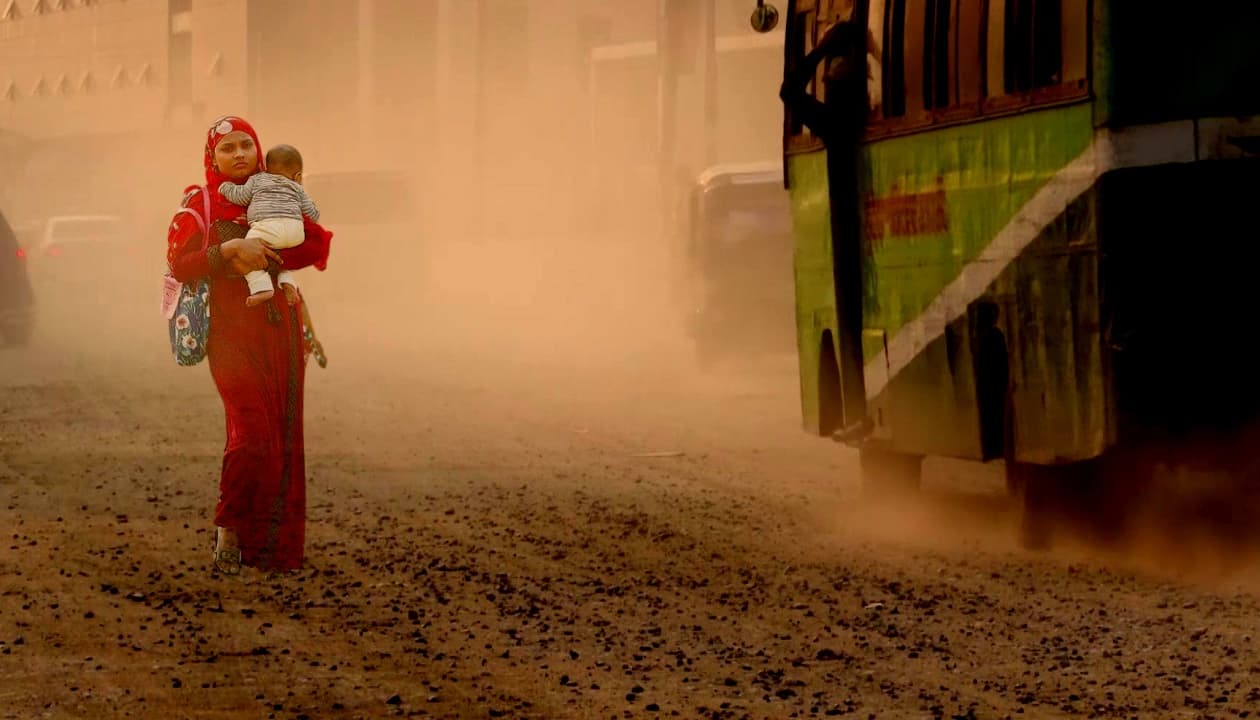

The majority of deaths worldwide due to non-communicable diseases are primarily linked to air pollution. The impact of pollution, generated by the presence of tiny particulate matter in the air, leads to various diseases, causing an annual death toll of at least 7o lakh people globally. Recently, several cities around the world have reached levels of air pollution where concerns arise about their habitability. Bangladesh has recently found itself at the top of the list of countries with the most polluted air globally. Alongside this, among the most polluted cities, Dhaka, the capital of Bangladesh, holds the second position after Delhi, India. In this situation, the excessive air pollution in the country is significantly impacting overall public health, including reproductive capacity.
According to recent research conducted by the Center for Atmospheric Pollution Studies (CAPS) at Stamford University, the air quality index (AQI) for Dhaka was 171 in 2023, compared to 163 in the previous year. When the air quality index falls within the range of 151 to 200, it is considered 'unhealthy.' The higher the number, the more hazardous the air quality. The new year (2024) has commenced this Monday. On that day, in the morning, Dhaka ranked as the most polluted city among 109 cities worldwide. This past Tuesday (January 2), Dhaka experienced the highest level of air pollution globally. According to data from the Switzerland-based organization IQAir, the air quality index (AQI) for Dhaka was 281 at 9 pm last night, indicating it as 'very unhealthy.' Following Dhaka in the top five were Delhi in India, Kolkata, Lahore in Pakistan, and Shenyang in China.
The number of people dying due to various diseases is increasing in air pollution prone areas of the country. These minute particles in the air, so tiny that they easily enter the human body through the eyes, nose, and mouth, contribute to a surge in respiratory, cardiovascular, kidney, and liver diseases. Additionally, due to this pollution, there has been an increase in the incidence of respiratory issues, heart problems, kidney disorders, and liver diseases. Moreover, the overall life expectancy of individuals is decreasing, and the impact extends to issues such as miscarriages, birth defects, and developmental abnormalities in children. Medical professionals assert that this pollution is significantly affecting the reproductive health of women. Apart from this, the process of making food or photosynthesis of plants is hindered as a result of air pollution. As a result, it has an adverse effect on the animal world.
Generally, the air quality in the country is rarely conducive to good health. During July-August, there are brief periods when the air quality is acceptable. However, for the rest of the year, it fluctuates between unhealthy and very unhealthy levels. Due to air pollution, each individual incurs an annual cost of 8,334 Bangladeshi Taka for the health damages they suffer. The total economic loss amounts to 6.52 billion US dollars, which is 3.9% of the GDP.
Research has shown that unregulated construction, haphazard urban planning, poorly managed waste disposal, road excavation, brick kilns, industrial emissions, and the use of fitness-lacking vehicles are contributing to an escalating air pollution crisis in the country's cities.
In such a situation, researchers have recommended several interventions to effectively combat air pollution. Among these, addressing contaminated water in dry seasons in polluted cities, covering construction sites during construction work, covering construction materials during transportation, using suction trucks to collect dust on roads, prohibiting illegal brick kilns, and controlling individual vehicles as well as fitness-lacking vehicles have been suggested.
Bangladesh is currently on the path of development, marked by various construction projects. However, this development has led to an increase in environmental pollution. Consequently, the necessity of controlling environmental pollution has become more pronounced. To truly liberate the country from the grip of air pollution or environmental pollution, it is essential to ensure the effective implementation of national laws, coupled with an increase in public awareness. In this regard, collaborative efforts among various government agencies are imperative to combat air pollution effectively. Apart from creating robust legislation to combat air pollution, it is crucial to swiftly pass and urgently enforce these laws to effectively address the issue. Without strong political intervention, air pollution may escalate in the coming years. Therefore, the causes of all types of pollution, including air pollution in the country, need to be thoroughly investigated and analyzed by the relevant authorities. Strict measures must be taken to implement and enforce control mechanisms based on this scrutiny.
Leave A Comment
You need login first to leave a comment