

Tarique Rahman, beware of toadies
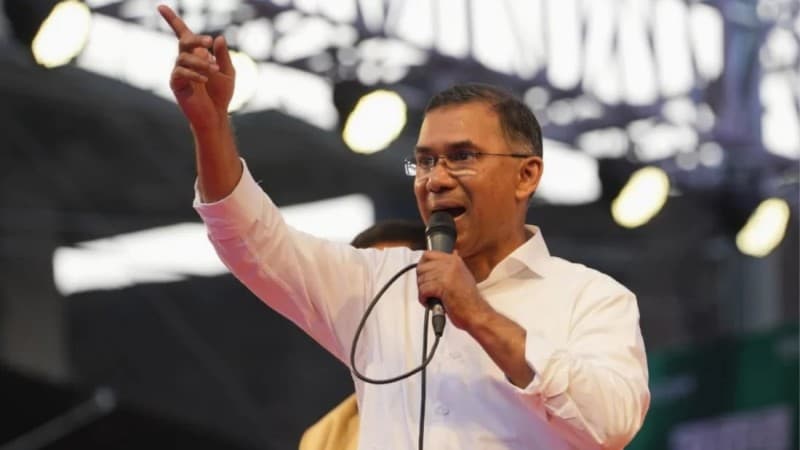

BNP Chairman Tarique Rahman is currently receiving an outpouring of congratulations due to his imminent assumption of the role of Prime Minister of Bangladesh within the next day or two. We extend our congratulations to Tarique Rahman on this significant occasion of becoming the leader of the nation, following the party's substantial victory in the national elections. However, as a professional journalist, I feel it is my responsibility to highlight a crucial aspect of national politics. As a conscientious citizen, I wish to avoid witnessing any future head of government being perceived as a 'disrespectful' figure by the conclusion of their term. I understand that such discussions may not be well-received in the current climate. While it is certainly gratifying to hear words of commendation today, I seek to hear something more substantial, as my professional obligation is to convey the truth with clarity and precision.
In the realm of Bangladeshi politics, the primary political parties have consistently thrived in opposition. The leaders of these parties have gained significant popularity as opposition figures. However, when the political party in power and its leader assume control of the government, the leader often becomes a 'reproachable' figure by the end of their term. This phenomenon occurs because, while they are on the streets, they are not accompanied by a cadre of flatterers or creeps. Conversely, upon taking office, they find themselves surrounded by admirers, creating a metaphorical barrier that obscures their vision due to the overwhelming praise they receive. This barrier displays a glossy narrative of developmental success, leading the head of government to drift further from reality. Consequently, they become increasingly disconnected from the populace. When criticism of the government arises, the brown-nosers disperse and a new group gathers around the leader of the incoming administration.
For instance, Begum Khaleda Zia emerged as a formidable leader in the struggle against the dictator Ershad, gaining significant recognition from the nation. While Sheikh Hasina played a crucial role in that movement, her decision to partake in the 1986 National Assembly elections led to controversy. Consequently, Khaleda Zia rose to prominence as the foremost leader of the democratic movement in the 1990s. This ultimately resulted in the BNP achieving an extraordinary victory in the national elections of 1991, leading to the formation of a government with Khaleda Zia assuming the role of Prime Minister.
However, three years following the establishment of the government, the Khaleda Zia administration became embroiled in controversy after succumbing to the influence of creeps and compelling the party's candidate to secure victory in the Magura by-election on March 20, 1994. In response, opposition political parties, including the Awami League, took to the streets to advocate for a caretaker government. This was not the conclusion of the matter. By yielding to the pressures of opportunistic flatterers, the BNP government disregarded the opposition's call for elections to be conducted under a caretaker administration and proceeded to hold a national election on February 15, 1996, which saw an almost negligible voter turnout. As the leader of the government, Khaleda Zia was also accountable for this situation. Consequently, the BNP faced defeat in the elections conducted on June 12, 1996.
Between 1996 and 2001, Khaleda Zia regained significant popularity by vocally opposing the unprecedented levels of terrorism and corruption exhibited by certain regional leaders of the Awami League government at that time. Consequently, the BNP, along with Khaleda Zia, achieved a decisive victory in the national elections held on October 1, 2001, and she was reappointed as prime minister. Nevertheless, after fulfilling her five-year term as prime minister, Khaleda Zia, who had risen to immense popularity in 2001, became susceptible to the influence of sycophants and sparked a major controversy in 2006 by establishing a caretaker government for herself and altering the regulations regarding the retirement age of judges. This led to the nation being governed by an unelected administration for a duration of two years.
Then, after the Awami League came to power in the elections of December 29, 2008, Khaleda Zia once again became an exceptionally popular leader in front of the nation as the leader of the opposition. The attendance of millions of people at her funeral proved that there is no one like Khaleda Zia in popularity after the eighties. She will live in the hearts of millions of people for ages.
Looking at it from the opposite perspective, Sheikh Hasina gained immense popularity and acceptance by leading the movement that had been developing since 1994 demanding elections under a caretaker government. That is why the Awami League won the national elections on June 12, 1996 under her leadership. However, in response to those who flattered her, she adopted a firm stance supporting the party terrorists recognized in Narayanganj, Lakshmipur, Feni, and Old Dhaka, thus positioning herself as a highly contentious figure among her political rivals. In 2001, Sheikh Hasina transferred power peacefully by delegating authority to a neutral caretaker government. This instance remains the sole example of a tranquil power transition in independent Bangladesh to date. Nevertheless, in spite of this precedent, the Awami League faced a significant defeat in the 2001 elections, attributed to the rampant terrorism perpetrated by certain party terrorists over the preceding five years. It is evident that Sheikh Hasina's perception was significantly distorted by the adulation of her todies.
Sheikh Hasina regained her popularity by addressing various irregularities and corruption as the opposition leader since 2002. She was a victim of a horrific grenade attack on August 21, 2004, and led the movement to establish a caretaker government from 2005 to 2006. The Awami League also achieved a significant victory in the elections held on December 29, 2008. However, Sheikh Hasina, captivated by the delusional aspiration of maintaining power through the influence of sycophants, undermined the electoral system of the country. Furthermore, these todies seized control of businesses and institutions, smuggling crores of taka abroad. The Sheikh Hasina administration, succumbing to these todies, resorted to extreme measures to suppress the student movement. Consequently, Sheikh Hasina had to endure the disgrace of fleeing the country due to public outrage, a stigma that Ershad did not face during the movement of the 1990s!
The grassroots leaders and workers of the Awami League did not take any advantage of the party being in power, and they were the ones who suffered the most after the fall of the party government. However, even if a few of the fawners came under the law, look at most of them, they were good in the Awami League government and are still good abroad, their comfortable faces are occasionally seen in videos.
The days of fawners in Bangladeshi politics do not end. Some of them somehow become the confidants of the new government again. During each government, a new group of such people is also seen to be born. Therefore, the fear of these fawners becoming powerful again after the formation of the new government under the leadership of Tarique Rahman cannot be ruled out.
This is the reason for today's article. Tarique Rahman is set to take the oath of office as Prime Minister during a pivotal moment in the country's transition. He faces a monumental challenge in eliminating the outdated issues. Additionally, creeps may complicate this challenge by introducing new problems. We are confident that Tarique Rahman will remain cautious of these flatterers and will guide Bangladesh towards a new era of advancement and prosperity by governing with a contemporary, progressive outlook. Our best wishes to you, Tarique Rahman, and heartfelt congratulations.
Rased Mehedi,
Editor, Views Bangladesh
Leave A Comment
You need login first to leave a comment