

Tarique Rahman's homecoming or no return home
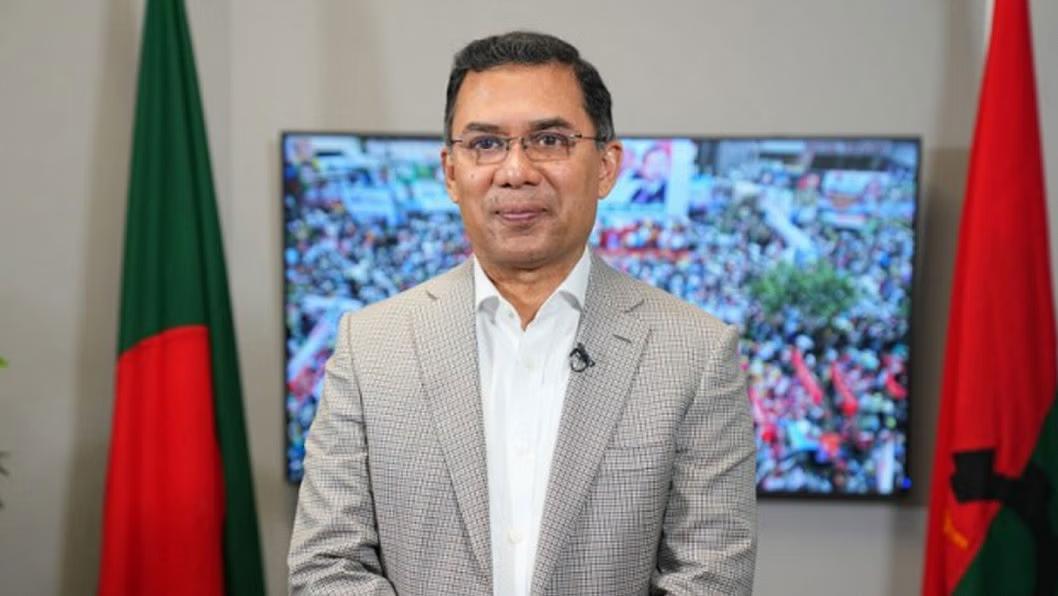
The situation that has arisen regarding BNP acting chairman Tarique Rahman's homecoming or lack of it reminds me of the famous novel 'Putulnacher Itikatha' by Manik Bandyopadhyay. The name of the novel is symbolic. The novelist has arranged the characters in such a way that they all move like puppets pulled by an invisible thread.
Human desires, love, expectations, hatred, the ups and downs of life, happiness and sorrow, union and separation, birth and death, everything is tied to an invisible string, where a person thinks that he is the controller of his own life, but in reality some invisible force is pulling the thread and determining all his movements. Sometimes a person runs, sometimes stops, sometimes squirms and seeks freedom, but in the end, he understands that even the freedom to move his hands and feet is mortgaged to the will of another. In this society, everyone thinks they are free, but they are actually just a character who is being pulled by a thread. The presence of this invisible control cannot be seen, but it can be felt. The control is actually behind every decision, the stagnation of every desire, and the inevitable limitations of every achievement. Therefore, 'Putulnacher Itikatha' is not just a novel; it is a symbolic anecdote of human life, where all human strengths, all weaknesses, all dreams, all pains are ultimately tied to invisible hands like puppets, and life is just his silent performance.
There is a storm of discussion about why BNP acting chairman Tarique Rahman is not returning home. The discussion was not so prominent in the past. However, the serious physical condition of his mother, BNP Chairperson Begum Khaleda Zia, made it so widespread. For the past few days, Begum Khaleda Zia's physical condition has been very critical. The inherent responsibility and duty of a child is to be by his mother's side in such a situation. People of the country desire that at such a time, Tarique will return home and stay by his mother's side. His homecoming has been a topic of discussion since the July uprising. Earlier, the party had announced that he would return to the country by November. Later, the first week of December was mentioned. But suddenly, Tarique Rahman himself announced on his verified Facebook page that his return to the country is not yet certain. This announcement has put all the previous announcements and assurances into question and has taken a new place in the center of discussion in the political arena.
The language used by Tarique Rahman in his Facebook post is very touching. He wrote that he has a deep longing to receive the affection of his mother during such a crisis, but he does not have the power to make this decision completely alone. Although this comment highlights his personal emotions, it also points to a broader political reality, which has been considered as the background to the discussion of his return to the country for many years. He also wrote that the matter is so sensitive that there is limited space to explain it in detail. This naturally raises questions in various circles, Is there a reality that is not allowing him to return to his own country, or is there a force that is influencing his freedom of decision-making?
Various political and institutional realities operate around the return of big political leaders in Bangladesh, this is not a new issue. However, the way Tarique Rahman used the phrase ‘not under sole control’ has added a new dimension to the discussion. Although the idea that there is ‘something else’ beyond the political party, government, or public support that determines his return to the country has been prevalent in political circles for a long time, this time the hint has come directly from Tarique Rahman. BNP has claimed many times that it faces security risks. However, the party has never clearly explained the source or nature of that risk. Whether the threat comes from a political opponent, or from some part of the state’s security structure, or from some unmarked platform in the international context, the party’s statement on this has always been vague. This time, the ambiguity increased further when the country's interim government announced that there was no government obstacle to his return to the country and that he could be given a travel pass within a day if he wanted. If Tarique Rahman cannot return to the country despite the government's clear announcement of no obstacle, the question arises, Who is influencing his decision?
In this situation, a new kind of confusion has emerged in BNP politics. In his absence, the party's organizational structure, movement management, and leadership stability have all been in question for a long time. Khaleda Zia's physical illness has further weakened the party politically. Again, although Tarique Rahman is serving as the acting chairman from outside the country, in reality he has limitations in conducting politics on the ground. Many in the party believe that his return to the country could have given the party new life, especially in terms of ending the stagnation of the leadership and energizing the workers. But when he himself said that his decision was dependent on some other controllable reality, the disappointment and question among the party workers increased further. If the two highest leaders of the party cannot be reached, then in which direction will the party move forward?
Meanwhile, the government and the ruling political arena are naturally considering this issue as a matter of political convenience. The announcement from the government that if Tarique Rahman wants, a travel pass will be given in a day, is also being considered as a political message. Through this, the government wants to show that there is no obstacle from their side; rather, the decision not to return to the country is their own. This creates a kind of political pressure on the BNP, because the situation becomes difficult to explain to the people and supporters.
The 'technical reality' is only the obstacle in the homecoming of the most important leader of the party, but what exactly is that reality? Is he not able to return to the country due to fear of some invisible ghost? But is the country's politics still in the grip of an 'invisible' ghost?
Here comes an unspoken truth of Bangladeshi politics. Many invisible forces influencing our politics have been active in various ways for a long time. National and international military-civilian intelligence agencies, international diplomacy, geopolitical interests of regional powers, strategic advantages of big powers; all in all, a multidimensional pressure has always been working on the country's politics. In this situation, the return of an important member of a large political family, who is active in politics using social media, to the country is not just a 'political decision', but rather it is a multidimensional result of a security, international, strategic, and regional reality.
Although Tarique Rahman's statement does not mention the identity of that controlling group, it is not difficult to understand his indication that the decision is not in the hands of him and his party's hands alone. This complex situation has also made the future political path of BNP uncertain. The party chairperson is seriously ill, the acting chairman is unable to return home, grassroots-level politics is stuck in the limitations of the movement, all in all, the party is currently suffering from a leadership crisis. If Tarique Rahman could return home at this moment, it would not only fulfill his personal desires, but party politics would also be revitalized. But his statement made it clear that the party has to face a reality where the effectiveness of political leadership depends on undeclared forces, whose identities cannot be revealed, but whose influence is clear.
What is clear from Tarique Rahman's statement is that who will do politics in this country, who will not; who will return to the country, who will not be able to come, who will stay in the country, and who will divide, is not decided only by the people, political parties, or the government. There are also forces outside the political structure that exert a significant influence on the decision-making process. The influence of those 'incorporeal' forces is continuously complicating the question of Tarique Rahman's return to the country and at the same time making the invisible side of the political reality of Bangladesh clearer.
The helplessness that Tarique Rahman's statement hints at is not just a longing for the mother, but a reflection of the influence of invisible forces hidden in the outer shell of politics. As long as this reality continues, Tarique Rahman's return to the country will not be just a matter of political decision, it will become a complex result of the equation of various forces. As was depicted in 'Putulnacher Itikatha', the fate of visible characters is determined by invisible destiny. Although this reality has been present in Bangladesh's political arena for a long time, Tarique Rahman's statement has made it even clearer, which may also affect the country's future political trajectory.
Leave A Comment
You need login first to leave a comment