
Teaching of Qurbani: A message of self-purification, sacrifice and social harmony
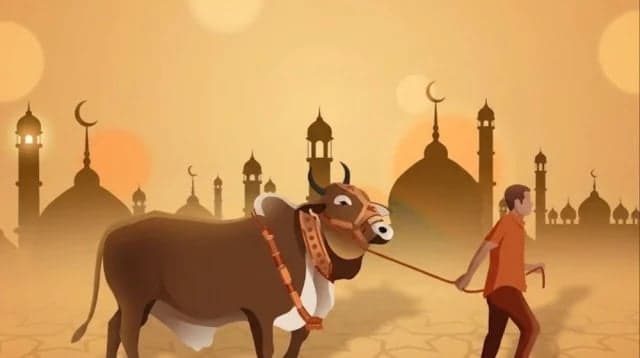

Eid-ul-Azha is among the most significant religious celebrations of the Muslim Ummah. The focal point of this festival is Qurbani, which transcends mere animal slaughter; it serves as a profound symbol of self-sacrifice, self-purification, and reverence for Allah. The essence of Qurbani lies in relinquishing greed, envy, pride, and self-centeredness, thereby awakening human values.
Prophet Muhammad (pbuh) consistently performed sacrifices throughout his life. It is recorded in the hadith – Abdullah Ibn Umar (RA) stated that Rasulullah (SAW) resided in Madinah for ten years and offered sacrifices each year. (Jamee Tirmidhi, Hadith: 1507; Musnad Ahmad) This indicates that Qurbani is a vital act of worship in Islam, which the Prophet (PBUH) demonstrated to the Ummah through his regular observance.
The primary inspiration for Qurbani is the historical self-sacrifice of Hazrat Ibrahim (a.s.) and his son Hazrat Ismail (a.s.). The remarkable obedience and submission of both father and son in adhering to Allah's commands exemplify a unique instance in human history. This event teaches us that genuine faith entails unconditional submission to God's directives.
In contemporary society, there is a gradual increase in consumerism, violence, competition, and self-centeredness. Consequently, human values are deteriorating. In such circumstances, the teachings of sacrifice revive our inner selves.
Through sacrifice, a sense of solidarity is fostered between the affluent and the impoverished within society. The distribution of Qurbani meat among relatives, neighbors, and the needy cultivates a harmonious atmosphere of brotherhood and equality.
Islam is not merely a religion of rituals; it embodies a comprehensive lifestyle. Qurbani imparts the lesson that compassion for others, kindness, and service to humanity represent the true spirit of religion. Supporting the vulnerable, avoiding injustice and immorality, and contributing to the establishment of peace in society are the fundamental teachings inherent in Qurbani.
However, the unfortunate truth is that in numerous instances, sacrifice has transformed into a display of ostentation and rivalry. The act of purchasing large animals or adopting a showy attitude frequently obscures the fundamental purpose of worship.
The essence of Islamic teaching emphasizes that sincerity and humility are paramount, rather than mere outward appearances.
In addition to this, it is crucial to uphold hygiene and cleanliness during the performance of Qurbani. It is essential for everyone to recognize that the joy derived from religious observance should not lead to public distress, environmental degradation, or health risks.
Allah Almighty states in the Holy Qur'an: "Lan Yanalallah Luhumuha Wa La Dimauha Wa Lakin Yanaluhut Taqwa Minkum" This translates to, "It is not the flesh and blood of the sacrifice that reaches Allah, but your piety reaches Him." (Surah Al-Hajj, Verse: 37)
This verse clarifies that the primary aim of sacrifice is not its external manifestation; instead, it is to achieve a pure heart and reverence for God.
Qurbani imparts another significant lesson—no substantial accomplishment can be realized without sacrifice. If individuals apply this principle of sacrifice, compassion, and ethics from their personal lives to the broader society, a peaceful and humane community can be fostered.
Ultimately, the true essence of sacrifice will only be realized when individuals learn to conquer their inner vices—greed, jealousy, arrogance, and wrongful instincts. This embodies the genuine teaching of Qurbani; this is the authentic celebration of humanity.
Leave A Comment