

Terrible transformation of wars as games

War has been a longstanding aspect of human history. Following the use of stones, sticks, swords, and cannons, humanity entered the nuclear age during World War II. Since that time, a solid moral foundation for engaging in mutual warfare has been absent. This is due to the fact that war can now easily escalate on a global scale, with the devastation it causes posing a threat to the survival of any nation, country, and even the entire human race. Despite earnest attempts to establish the United Nations, conflicts have persisted.
In fact, since the dissolution of the Soviet Union, a series of wars have erupted in the centralized world, gradually spreading like an uncontrollable fire across the globe. Consequently, it is essential to comprehend the motivations behind the creation of war situations, the true nature of war, and who stands to gain or lose from it. The history of victorious wars essentially reflects the evolution of technology.
Moreover, technological advancements are often driven by the demands of warfare. With the evolution of military technology and the continuous flow of history, humanity transitioned into a new era around 1750. In his book 'The Killing Age: How Violence Made the Modern World,' Clifton Kreis characterizes the 19th century as the period dominated by gun-related violence. Kreis offers a unique perspective on history, asserting that the industrialization of weaponry in the West instigated a profound transformation in the methods of killing and reshaped the world for its own benefit. Consequently, power and wealth began to be derived not from merit and values, but from the barrel of a gun. (What Was History's Deadliest Era, Michael Ledger-Lomas).
Nevertheless, warfare in the 21st century is no longer confined to the use of firearms. Following the advent of nuclear power in the 20th century, contemporary warfare increasingly relies on artificial intelligence and quantum technology. However, this discussion serves a different purpose, aiming to highlight another dimension of modern warfare. It is not focused on the technical aspects of war, but rather on its characteristics. In this context, war has evolved beyond the traditional understanding, transforming into something far more alarming.
The traditional concept of warfare, which involves the conquest of foreign nations or the appropriation of others' resources, persists. However, it has evolved with the introduction of new complexities. For instance, Trump famously exclaimed 'oil, oil, oil' even in his sleep while engaging in military actions against Venezuela. In the 19th century, there were efforts to conceal the barrel of a gun with the Bible.
In contemporary times, missiles are often cloaked in the guise of democracy or peace, and sometimes even that pretense is deemed unnecessary. The primary advantage of the plunderers lies in their utter shamelessness. Furthermore, warfare has experienced a profound transformation that is far more alarming than in the past.
In today's centralized world, all conflicts resemble a strategic game, a lucrative business venture, a project aimed at generating exorbitant profits at the expense of the lives of ordinary individuals. The transition from a pre-war state to active conflict is meticulously orchestrated. War has become one of the key enterprises for nations that excel in military production, including the United States, Israel, and Russia. There is no product more costly than weaponry.
If the global state of warfare cannot be sustained, the military industry will face collapse. This sector serves as the economic backbone for numerous countries. They are compelled to engage in disputes, often stepping on each other's toes. A comprehension of the interests of arms exporters is essential to grasp the economics of war. It is also important to recognize that the current state of war is not something that can be easily halted; it is an ongoing situation with no defined end. The working class is the most adversely affected group, often serving as the scapegoat.
This pattern is evident from the US invasions of Afghanistan and Iraq to the conflicts in Gaza and Ukraine. Not only are these wars prolonged indefinitely, but new conflict scenarios and battlefronts are also being systematically established. The architects of these plans are primarily the arms dealers from the Western world and their allied state powers. However, before placing blame solely on them, it is crucial for those impacted to engage in self-reflection.
While the primary architects are the arms dealers, it is the citizens of a specific nation who bear the responsibility for situation; they are the ones who exacerbate the tension. In this context, the employment of nationalism serves as a well-established tactic. When nationalism is intertwined with the specter of foreign invasion or religious sentiments, it is destined to falter. Numerous historical instances illustrate such occurrences.
The most recent examples include Gaza and Ukraine. This phenomenon also has historical antecedents. Let us examine the events from two and a half millennia ago, where we can observe how nationalistic fervor has led to the devastation of a nation and its populace. In 700 BC, Lachish, situated 25 miles southwest of Jerusalem, was a fortified mountain city that thrived independently amidst the formidable Assyrian Empire. However, its ruler, King Hezekiah, revolted against the Assyrian monarch Sennacherib. Consequently, Lachish endured unimaginable destruction, the account of which is preserved in the Lachish Relief housed in the British Museum. During this period, the emperor Taharqo of the Kush kingdom in Sudan ascended to rule all of Egypt. His progressive acceptance of contemporary Egyptian culture enabled him to transform a previously weak and marginal state into one of the pharaohs of Egypt. He sought to avoid conflict and fostered harmony between Kushite and Egyptian cultures, as evidenced by the Sphinx of Taharqo, also preserved in the British Museum. Nevertheless, he provided assistance to King Hezekiah in the conflict against the Assyrian Empire at that time. Consequently, he too faced the might of the Assyrian military. After successfully repelling Assyrian assaults multiple times, Taharqo ultimately fled, tragically losing both his wife and son to the adversary. From that point onward, the Middle East became a protracted battleground. (A History of the World in 100 Objects, by Neil McGregor).
However, the war machinery of the past differs significantly from that of the present; it has evolved into a war industry, now recognized as the most lucrative of all sectors. This industry, which manipulates human existence and mortality, cannot thrive without perpetually instigating conflicts across the globe.
Consequently, any distinctions among individuals or between nations are exploited and amplified, fostering an ongoing state of warfare. Ordinary citizens find themselves ensnared in this predicament, suffering the most severe repercussions. A recent glaring illustration of this is Ukraine. Prior to the Berlin Wall's collapse, Reagan assured Gorbachev that NATO would not advance even slightly towards Russia.
However, following the disintegration of the Soviet Union, Western powers began to violate that commitment. They continuously provoke Russia by ensnaring Ukraine in a web of fictitious superpower aspirations and enticing it with the prospect of NATO membership. Ultimately, they are leading Ukraine into a conflict with Russia, observing as it devolves into a tragic spectacle of devastation. Presently, Ukraine is entirely reliant on the goodwill of Western powers. This was evident in the incident involving Trump and JD Vance, who publicly humiliated Ukrainian President Zelensky at the White House early last year. The outcome has been the loss of approximately 500,000 lives in the conflict between the two nations. Now, Ukraine is left with no alternative but to accept relatively unfavorable conditions for a peace agreement with Russia.
Conversely, another sorrowful conflict has persisted in Gaza for seventy-five years, fueled by the incitement of Israeli Zionism. Hamas was established there with financial support from Israel to undermine and isolate the PLO, led by Yasser Arafat, thereby fragmenting the struggle for Palestinian independence. The assault by Hamas on Israel on October 7, 2023, was indiscreet. Israel has now utilized this attack as a pretext to devastate the entire Gaza Strip. They have profited from Hamas's aggression, having awaited such an opportunity to perpetrate genocide in Palestine. The shortsighted leadership of Hamas unwittingly provided Netanyahu with this chance. Although a ceasefire charade is currently in progress, it remains to be seen how it will unfold.
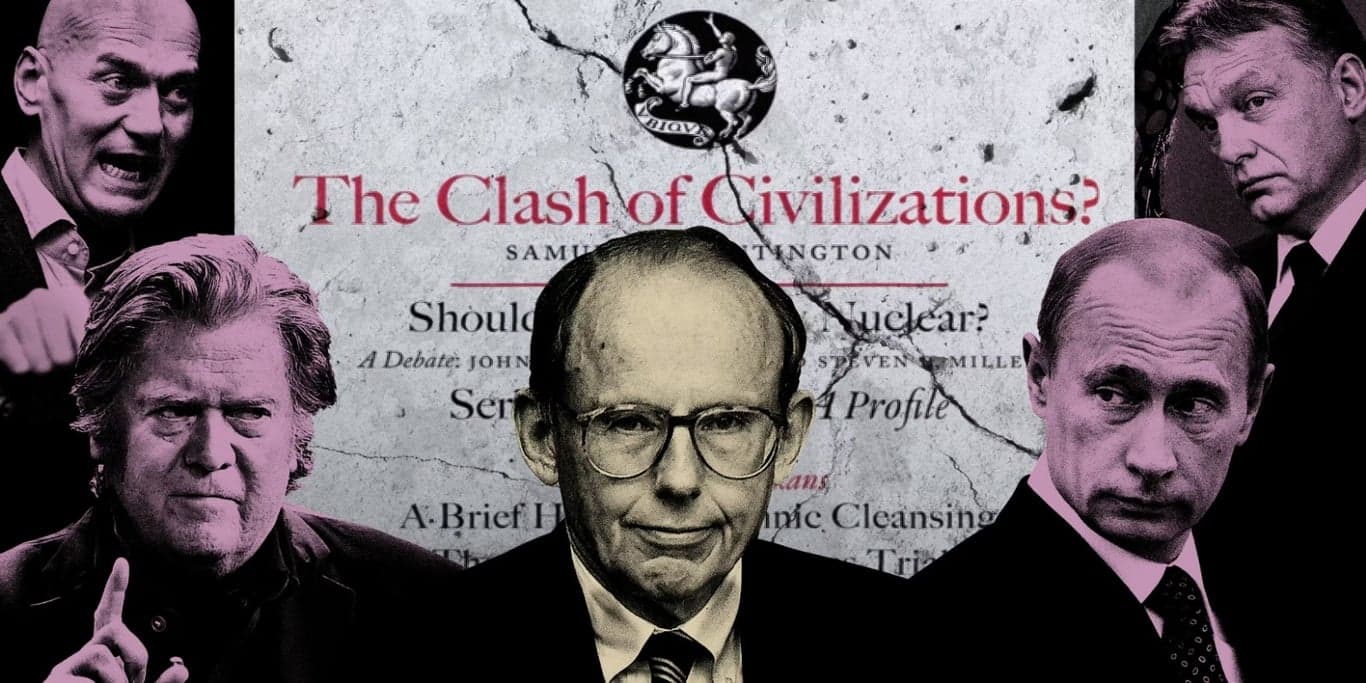
Another game played by the Western empire is also significant in this context. They are attempting to diminish the stigma associated with the atrocious crimes against humanity perpetrated against the Jews by the Christian Western powers by enacting a comparable genocide through Israel. The victims of this Holocaust are the Muslims residing in Palestine. They have successfully managed to impose the stigma of the Holocaust carried out by Hitler during World War II onto the historically oppressed Jewish population. This represents a strategic maneuver within the Western imperialist agenda to label their victims with the sins and stigma they themselves have created. It is a direct manifestation of Huntington's theory regarding the clash of civilizations.
Both of the aforementioned strategies have been and will continue to be replicated globally in the context of warfare, albeit with both minor and major modifications. The timeless words of the renowned author Mark Twain resonate here: 'History does not repeat itself, but it does coincide.' There will undoubtedly be many more observers to such occurrences.
Author: Alamgir Khan, Editor, NEE, a little magazine focused on ethics and morality.
Leave A Comment
You need login first to leave a comment