
The habits behind Japanese longevity
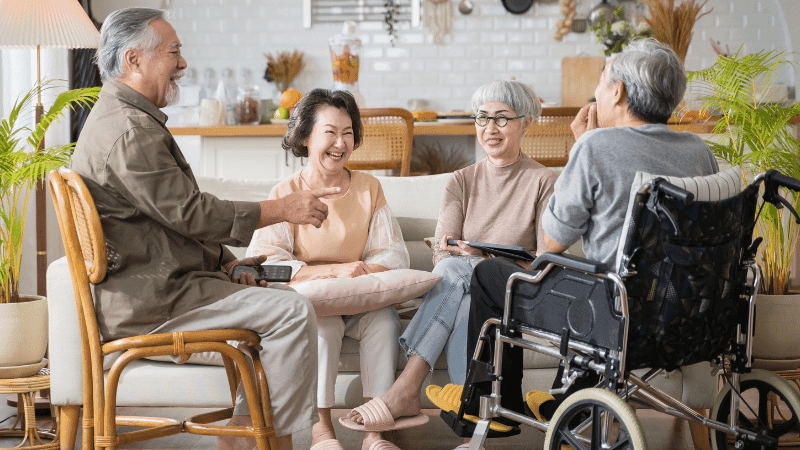

Japan is often cited as an example of longevity and good health in the world. The number of centenarians in the country has also crossed one lakh. But why do Japanese people live comparatively longer? There is no single reason behind this. Their dietary habits, daily physical activities, social life, healthcare and lifestyle—the combined effect of everything plays a role in this.
According to data recently published by Japan's Ministry of Health, the number of people aged 100 or above in the country has reached 107,677. The number of centenarians in the country has been increasing for 56 consecutive years. About 88 percent of them are women.
Healthy food on the plate
Traditional Japanese dietary habits are dominated by foods such as fish, vegetables, soy products—such as tofu and miso—and rice. Omega-3 fatty acids found in sea fish are beneficial for heart health. At the same time, the diet remains balanced due to comparatively lower consumption of highly processed and fatty foods.
A concept called 'Hara Hachi Bu' is also prevalent in Japanese culture. It means stopping eating before the stomach is completely full. However, there is no scope to view this single habit as the sole reason behind longevity.
Ikigai, the purpose of life
'Ikigai' is a well-known concept in the Japanese way of life. Simply put, it relates to the purpose of life or the meaning behind getting up from sleep every day. For someone, it can be family; for someone else, gardening; and for another, a hobby or work.
Staying socially and mentally active even as they age is an important part of the lives of the elderly. They remain active in daily life by spending time with family, keeping in touch with friends or continuing work they enjoy.
Exercise in daily life itself
Many elderly people in Japan remain physically active in daily life even without going to a gym separately. Activities such as walking, going to the market, using public transport or cycling are part of their regular physical activity.
Light exercise called 'Radio Taiso' has also been popular in Japan for a long time. A few minutes of stretching and light exercise to the rhythm of music is part of many people's daily routine.
Easily accessible healthcare
The role of Japan's healthcare system is also important behind longevity. The country has a universal healthcare system, and access to medical treatment and health check-ups is comparatively easy. As a result, opportunities are created to detect various diseases quickly and receive necessary treatment.
The other side of longevity
However, a major social challenge has also emerged alongside Japan's longevity. Alongside the rising number of centenarians, the country's birth rate is falling. As a result, the number of working-age young people to care for the elderly is decreasing. This is also affecting the social security system and pensions.
Therefore, rather than viewing Japanese longevity as the result of any single food, habit or philosophy of life, it is more reasonable to see it as the combined effect of their overall lifestyle, dietary habits, physical activity, social relationships and healthcare.
Source: BBC, CNN, The Japan Times
Leave A Comment