

The political significance of this referendum
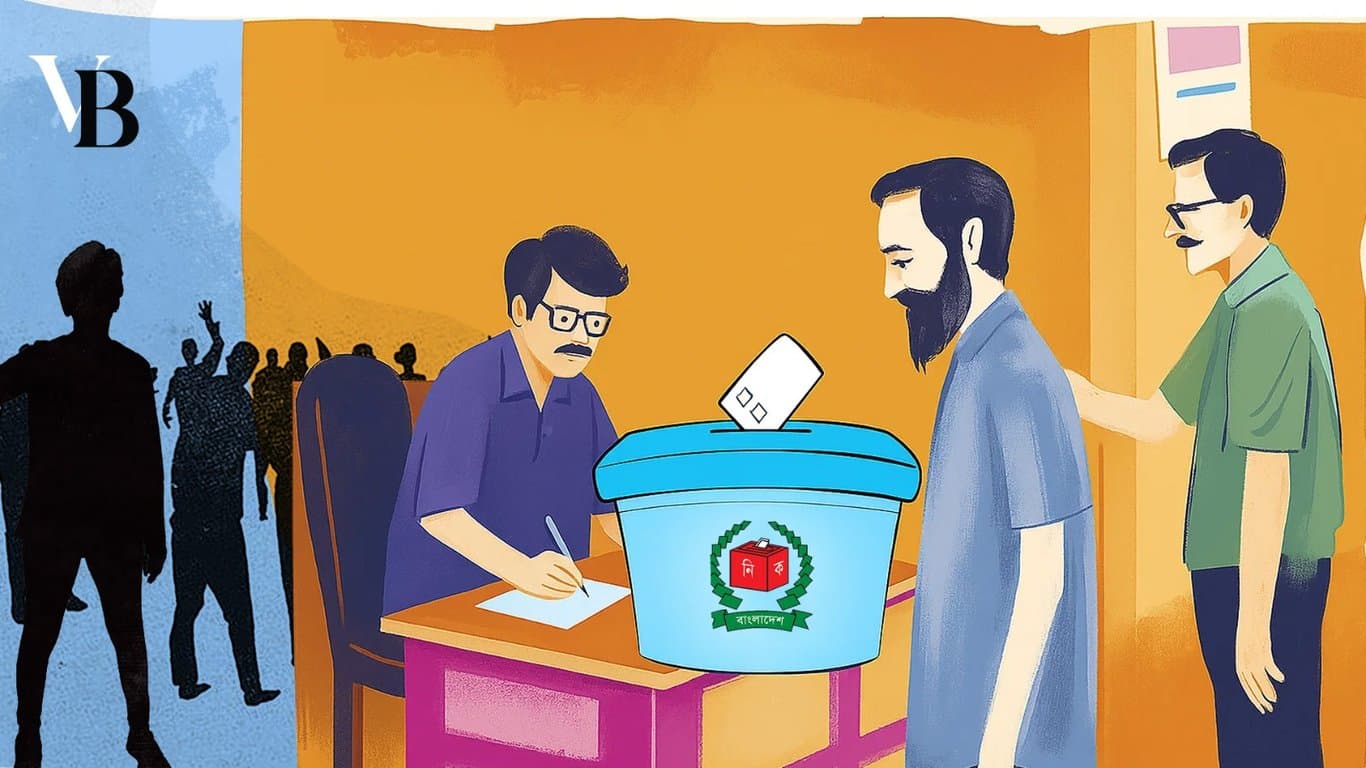

The referendum scheduled to be held on 12 February, the same day as the 13th National Parliamentary Election, has sparked extensive discussion and analysis across the country’s political arena as well as in international circles. In the current political context, the importance of this referendum is multidimensional. According to political analysts, the decision by a major political force to boycott the process has turned the referendum into more than a routine vote, transforming it into a profound and multifaceted test for Bangladesh’s politics.
One of the central issues in this debate is the decision of the Awami League, one of the country’s principal political parties, not to participate in the referendum. The party has stated clearly that it does not consider the referendum—organised within the existing political and constitutional framework—to be legitimate, inclusive, or effective. According to the Awami League, any referendum held without ensuring administrative neutrality, political equality, and freedom of expression cannot genuinely reflect the collective will of the people.
As a result of this stance, while the referendum outcome may reveal the strengths and limitations of the participating political forces, experts remain uncertain about how accurately it will reflect the country’s overall political balance and public opinion, or how much value it will hold in the future.
The Core Arguments Behind the ‘Yes’ and ‘No’ Positions
In this referendum, the ‘Yes’ and ‘No’ camps are advancing distinctly different arguments. Supporters of the ‘Yes’ vote argue that implementing the proposed decision would bring political stability, resolve constitutional uncertainty, and create clarity in future governance. They believe that direct public endorsement would lend greater legitimacy to state decisions.
On the other hand, advocates of the ‘No’ position argue that the proposal could undermine democratic balance, lead to excessive concentration of power, and pose long-term risks to citizens’ rights. They emphasise the need for alternative political solutions rather than endorsing the proposal through a referendum.
An Opportunity—and Its Limits—to Gauge Public
Trust in the Government
Many view the referendum as an important opportunity to assess public confidence in the interim government. The government itself appears keen to present the vote as a reflection of popular will. However, the Awami League’s boycott has naturally complicated this assessment. The party argues that it is impossible to determine genuine public support for the government through any vote that excludes a major political force; instead, such a process risks being perceived as an attempt to establish political legitimacy through limited participation.
Conversely, constitutional expert Dr Shahdeen Malik believes that if voter turnout remains relatively significant despite the Awami League’s absence, it would send an important political message to the government. It would suggest that a segment of the population still trusts the process, even without the participation of a major party. If turnout is low, however, it would not only raise questions about the government’s public support but also demonstrate how effective the Awami League’s boycott strategy has been.
For this reason, beyond the final result, the voting environment, administrative neutrality, and procedural transparency are receiving greater scrutiny than ever before.
Opportunity and Pressure for Opposition Political Forces
The Awami League’s decision not to participate has created a kind of political vacuum for opposition parties—one that presents both opportunity and challenge. According to the Awami League, its boycott is intended to highlight the structural limitations of the referendum process before the public.
As a result, opposition parties now face added responsibility: they must demonstrate that they are not merely an alternative to the government, but capable of emerging as an effective, organised, and credible political force even in the absence of the Awami League.
Senior Supreme Court lawyer Manzil Morshed argues that if opposition parties fail to build strong grassroots organisations, run coherent campaigns, and engage the public effectively, the rationale behind the Awami League’s boycott will gain further credibility. This would indicate that political competition remains insufficiently balanced. However, if opposition forces succeed in mobilising significant public support, it could reshape the country’s political equation and signal the emergence of new political forces in future politics.
Participatory Democracy: Concept and Reality
This referendum is also being seen as a critical test of participatory democracy. Yet the Awami League maintains that no process can be genuinely participatory without the involvement of all major political forces. According to the party, its decision to stay away from the referendum is a form of political protest against these structural shortcomings, aimed at bringing the issue of future reforms to the forefront.
Political analysts note that high voter turnout could challenge this argument, while low participation would reinforce the Awami League’s claim that the crisis of political trust in the country has not yet been fully resolved. Thus, the referendum will simultaneously measure both the strength of democracy and its limitations.
The Politics of Boycott in the Online and Digital Sphere
The Awami League’s boycott narrative has also found strong expression in online and digital spaces. Party leaders and activists are actively questioning the necessity, legitimacy, and effectiveness of the referendum on social media. Meanwhile, participating political parties are portraying the vote as an opportunity for change and political renewal.
Analysts believe this dual digital campaign is creating division and uncertainty among voters. The Awami League’s absence has made boycott politics more visible online, a trend that could have long-term implications for future political movements, campaigns, and strategies of public opinion formation.
International Perspectives and Diplomatic Considerations
International observers and diplomatic circles are also viewing the Awami League’s non-participation as a significant factor. While a transparent, peaceful, and violence-free vote would send a positive message internationally, the boycott by a major political party raises questions about the inclusiveness of the electoral process.
The Awami League claims that by staying away from the referendum, it seeks to draw international attention to the need for structural reforms in democratic processes. This position may also create an opportunity for Bangladesh’s democratic image to be reassessed in the global arena.
A Complex Milestone in Determining the Political Future
Overall, this referendum represents a complex and multidimensional milestone for measuring public opinion as well as demonstrating political strength. The Awami League’s boycott highlights structural limitations in the process while simultaneously influencing future political alignments. The government’s popularity, the capacity of opposition forces, and voter participation will all be interpreted through the lens of this absence.
Although the voting day environment and results will play an important role in shaping Bangladesh’s future political trajectory, the Awami League’s decision not to participate frames this referendum not as a final verdict, but as a reflection of an ongoing political crisis, evolving possibilities, and political realignment. For this reason, the referendum is being widely regarded as a critical test of the country’s democratic strength, limitations, and future potential.
Leave A Comment
You need login first to leave a comment