
The World Cup final: One iconic superstar vs. a masterclass in teamwork
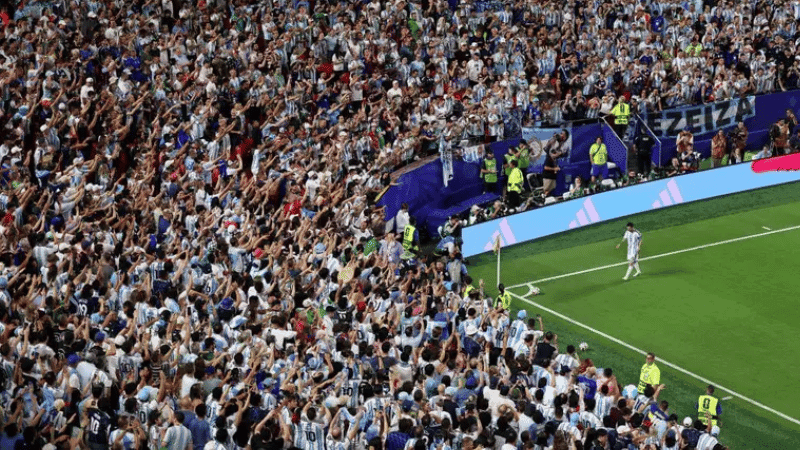

The upcoming World Cup final presents the ultimate modern footballing paradox: a clash between the collective machinery of Spain and the singular, gravitational genius of Argentina's Lionel Messi.
While historical showpieces are routinely framed as star-studded duels—Cruyff versus Beckenbauer in 1974 or Messi against Mbappé in 2022—this final offers a pure ideological divide. It is not Argentina versus Spain; it is Spain versus Messi. The contrast highlights a fascinating tension in football, a sport uniquely caught between rigid structural cohesion and individual wizardry.
Luis de la Fuente’s Spain represents the absolute triumph of the system. La Roja have marched to the final on a 37-game unbeaten streak without relying on a solitary superstar to carry the goalscoring burden. Lamine Yamal, despite flashes of brilliance, has had a relatively quiet tournament, while fellow forwards Álex Baena and Mikel Oyarzabal operate as disciplined cogs in a larger machine rather than traditional world-class mavericks.
Spain’s impressive 2-0 semi-final victory over tournament favorites France perfectly illustrated this collective ethos. While the disjointed French attack looked for moments of individual magic, the Spaniards executed a flawless, egalitarian blueprint. Their forwards treated overlapping full-backs as absolute equals, culminating in right-back Pedro Porro scoring the decisive goal after a slick give-and-go with Dani Olmo.
The statistical disparity between the two finalists lays bare this philosophical chasm. Spain’s attacking metrics are evenly distributed across their front three: Oyarzabal leads in shots on target (11), Yamal in attempted dribbles (49), and Baena in chances created (10). Conversely, Argentina’s leader in every single one of those categories is just one man: Messi, who tops his squad with 18 shots on target, 41 dribbles, and 25 chances created.
This systemic reliance on an individual marks a massive shift from Messi’s early career. When he arrived at Barcelona's La Masia academy as a teenager, his desire to play as a traditional Argentine enganche (No. 10) clashed with the club’s strict passing philosophy. While Barcelona eventually adjusted their shape to accommodate his transcendent dribbling, the prime Messi of 2010 still aggressively pressed and fulfilled defensive duties within a balanced framework.
At 39 years old, however, Messi no longer possesses the physical engine of his youth. The current iteration of the Albiceleste is explicitly engineered to shield their captain from defensive labor. Striker Julián Álvarez routinely drops deep into midfield to shadow opposition anchors, allowing a jogging Messi to conserve energy and linger in technically offside positions. In possession, the entire Argentine team actively defers to him, often bypassing high-percentage shooting opportunities just to funnel the ball to their talisman.
This hero-centric approach is deeply woven into the fabric of Argentine football history, where World Cup triumphs are explicitly tied to solitary icons: Mario Kempes in 1978, Diego Maradona in 1986, and Messi in 2022.
In an era where the sport has become increasingly collectivized, Spain’s harmonious teamwork represents the logical, sustainable future of football. Yet, as the reigning South American and world champions prepare to face the European champions, Argentina proves that logic matters very little when the individual in question is the greatest to ever play the game.
Leave A Comment