
Third Terminal: An Unnecessary Tk48 crore project for 'Two-a-penny'?
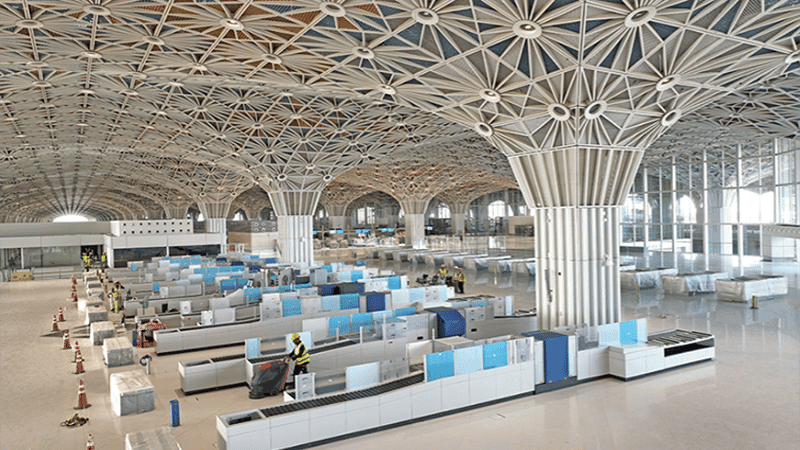

Given that the Civil Aviation Authority of Bangladesh (CAAB) is responsible for Hazrat Shahjalal International Airport and the management of the Third Terminal project, their involvement has garnered significant media attention.
However, prior to this, the authorities overseeing various mega projects have often feigned ignorance, only to become aware of critical issues at the last moment due to stringent government directives. This time, however, there is a slight deviation from this pattern. The Posts and Telecommunications Department has allocated Tk48 crore to ensure that CAAB officials are adequately informed!
Now, let us focus on the primary issue. It is imperative to guarantee mobile network connectivity and high-speed internet services at the Third Terminal of Hazrat Shahjalal International Airport. In Bangladesh, mobile operators, licensed by the Telecommunication Regulatory Commission (BTRC) in accordance with current legislation, provide mobile network services, while ISP companies and broadband internet services are also available.
Consequently, the BTRC will play a crucial role as the licensing authority in the original plan for the construction of the third terminal at the nation’s principal airport, ensuring that uninterrupted telecommunication network services are available in the terminal area, with necessary measures implemented accordingly.
However, the reality is that in previous projects such as the Padma Bridge and Metrorail, the relevant authorities initially overlooked the importance of ensuring continuous telecommunication networks within the project areas. It was only later, when the situation became apparent, that they made an unusual request that could be deemed foolish or an act of feigned ignorance.
CAAB has made a similar request regarding the implementation of the third terminal at Hazrat Shahjalal International Airport, which entails the installation of an internal BTS (IBS) to secure mobile network coverage in the project area, with operators required to either share revenue with CAAB or pay a one-time fee upfront!
All organizations licensed by BTRC are required to share revenue with the government in accordance with established regulations, remit VAT taxes, and pay fees for the renewal of their licenses.
Under the terms of their licenses, mobile operators are obligated to deliver mobile network services to every area of the country. Consequently, this also defines their licensed jurisdiction—wherever there is a necessity to set up a network, either the main Base Transceiver Station (BTS) or an internal BTS will be installed. Regardless of the jurisdiction of the authority overseeing the installation, it remains their duty to ensure that mobile operators receive the necessary support. In this context, the recent demand for revenue sharing resembles extortion by local power brokers!
For instance, when mobile towers are erected within various housing societies in Dhaka, even when Internet Service Providers (ISPs) attempt to establish connections, the authorities of these housing societies directly request a fee under the guise of a service charge!
Regrettably, just as the authorities responsible for the Padma Bridge and Metrorail previously failed to grasp this simple truth, the astute have also overlooked it this time. The officials overseeing these authorities should possess adequate knowledge of their respective fields. It would be inappropriate to label them as foolish. Thus, we may characterize this as a feigned ignorance on their part. This could potentially stem from a covert aspiration to generate additional income!
The previously concealed aspiration has now been made quite evident in relation to the third terminal of Hazrat Shahjalal International Airport.
Nevertheless, Teletalk Bangladesh Limited, along with the Department of Posts and Telecommunications, which is the ministry responsible for this initiative, has stepped forward as the executing agency for this public undertaking. Recently, the Department of Posts and Telecommunications submitted a project proposal amounting to Tk48 crore to the Ministry of Planning for the establishment of a high-speed mobile network within the third terminal. This initiative will be funded entirely by the government, meaning it will utilize public funds. However, from the outset of the project, mobile operators have been requesting authorization to establish a network in the designated area.
Should they receive this authorization, they would have installed In-Building Solutions (IBS) at their own expense as required. Additionally, high-speed WiFi hubs could have been established in the project area with assistance from Internet Service Providers (ISPs). In this scenario, BTCL also had the potential to play a significant role. There is no necessity to initiate a separate project at the expense of the government.
However, the company initially requested a revenue-sharing agreement for the installation of network infrastructure, and correspondence was exchanged with the Bangladesh Telecommunication Regulatory Commission (BTRC) regarding this matter. Now, at the eleventh hour, Teletalk is undertaking a six-month project valued at Tk48 crore for network infrastructure, primarily for the acquisition of IBS. The practice of earning 'Two-a-penny' in government procurement projects is a well-known fact in this nation. It is possible that this Tk48 crore project is yet another instance of such a phenomenon!
Teletalk is set to install equipment in this location, which will be utilized by everyone. A fee will certainly be imposed for its usage! This situation is both unreasonable and unethical! Will other mobile operators consent to this? If they do not, what will be the consequences? Is it feasible to operate a terminal without a mobile network?
Imagine if CAAB considered running the network with complimentary WiFi; however, many users of that WiFi terminal may refrain from using it due to significant security risks associated with open WiFi networks.
Furthermore, what implications arise for direct voice calls? Relatives residing in rural areas still rely on direct voice calls; how will they receive these services? Why are the authorities not addressing these concerns? The government still has the opportunity to make a sound decision.
As per regulations, mobile operators are permitted to receive directives from BTRC to install IBS in the third terminal project area. Mobile operators can also set up ABS and other essential equipment based on their requirements. The device will be installed.
Teletalk will proceed with the installation according to its specifications. Consequently, there will be no necessity to undertake an unnecessary project costing Tk48 crore, and no new complications will arise.
Rased Mehedi, Editor, View Bangladesh
Leave A Comment