
Thousands of families face drinking water crisis in coastal Gabura
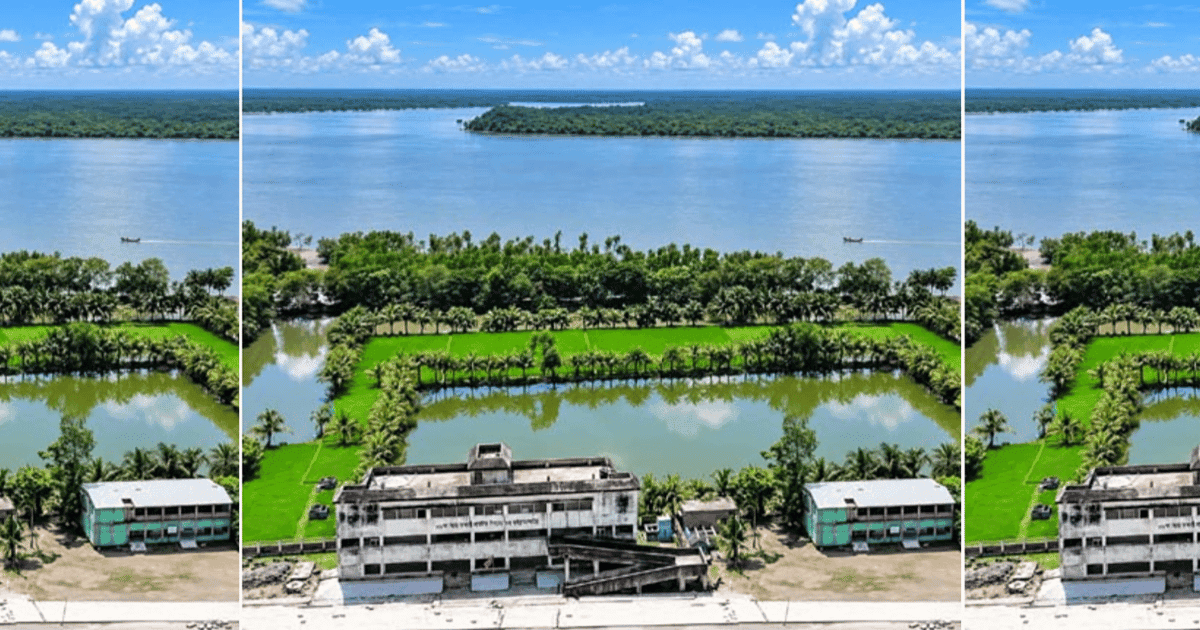

A government-built scenic complex that serves as a vital source of safe drinking water for thousands of people in Gabura Union, Shyamnagar upazila, Satkhira, is at risk of being lost to river erosion and saltwater intrusion because of years of neglect.
The facility is located on the banks of the Kholpetua River in Soray, Ward 9 of Gabura Union, near the Sundarbans. Its drinking-water pond, surrounding government canals, trees, primary school, mosque and other educational institutions are all under threat from river erosion and salinity. Local residents fear that thousands of people could lose one of their most important sources of safe drinking water.
The complex was built in 2003, during the tenure of the four-party alliance government, under a project known as Drishtinandan, modelled on an ecopark. Its aim was to address the drinking-water shortage in Gabura and promote green cover. Over time, the site became a local attraction in the southern coastal region. Residents, however, allege that despite the passage of 23 years since its establishment, no significant renovation work has been carried out.
Although improved roads have been built in various parts of Gabura under major development projects, the facility on the Kholpetua River bank remains vulnerable. Years of erosion have weakened the earthen embankments around the site, increasing the risk of further riverbank collapse. There are also concerns that saline tidal water could enter the complex.
The banks of the drinking-water pond have deteriorated, leaving it vulnerable to flooding during the monsoon. Residents fear that floodwater could contaminate the pond and make its water unsafe to drink.
According to local sources, when Cyclone Sidr struck in 2007 and Cyclone Aila hit in 2009, flooding inundated Gabura and damaged most of the area's drinking-water ponds. The pond at the Drishtinandan complex subsequently became one of the community's main sources of safe drinking water. For a long time after the disasters, many families relied on it for their daily water needs.
That source is now under threat because of the deteriorating pond banks, inadequate maintenance and the risk of saline water entering the facility.
Access to safe drinking water has long been a challenge in coastal Gabura. Salinity, river erosion and natural disasters repeatedly damage local water supplies, leaving residents struggling to secure safe water. Protecting the pond and surrounding infrastructure at the government complex has therefore become increasingly urgent. If the facility is lost, thousands of people could face even greater difficulties in obtaining drinking water.
Residents are calling on the relevant authorities to repair the damaged embankments and pond banks, prevent saline water from entering the site, re-excavate the government canals and protect the trees and other infrastructure. They have also urged the authorities to introduce a long-term maintenance plan for the complex.
Local people fear that without timely repairs and conservation measures, the area could lose not only a government-built scenic complex but also a crucial source of safe drinking water for thousands of coastal residents. They are urging the authorities to take immediate and effective steps to address the risks posed by river erosion and salinity.
Leave A Comment