
Three Bangladeshis in groundbreaking research on rapid disease detection using light technology
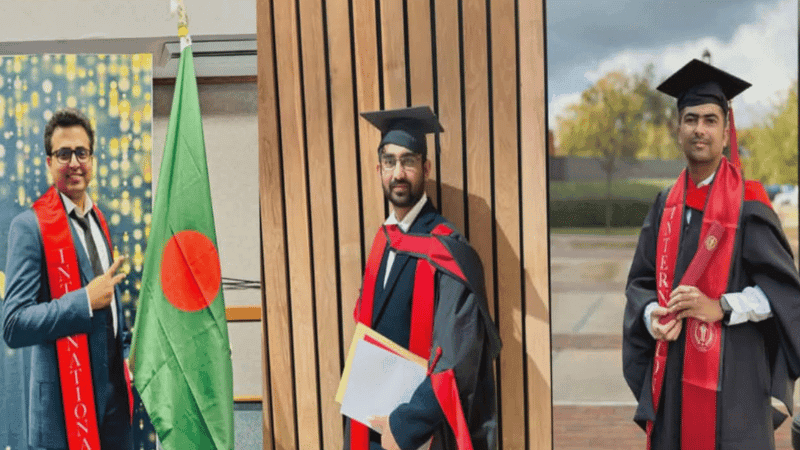

Three young Bangladeshi researchers are working on a new method to detect chronic diseases such as cancer and diabetes at an early stage using advanced light technology. The research is being conducted in collaboration with international partners, including Lamar University in Texas, with key contributions from S M Rakibul Islam, Mohammad Rubayet Islam and Mohammad Sabuj Mia.
According to the researchers, highly sensitive sensors developed using light can detect even the smallest changes in blood or cells. This could enable early diagnosis of complex diseases and significantly transform future healthcare systems.
The research focuses on optical biosensors based on photonic crystal fibre (PCF) technology. These specialised fibres contain microscopic air-hole structures that create strong interactions between light and biological materials, allowing even the tiniest variations in human cells or blood samples to be detected with high precision.
To further enhance sensitivity, the team is incorporating Surface Plasmon Resonance (SPR) technology, which involves coating the fibre with a thin metallic layer such as gold. When biological samples come into contact with the sensor, subtle changes occur in the behaviour of light, which can then be analysed to identify potential diseases.
This technology enables the detection of key blood components such as glucose, haemoglobin, albumin and urea. Changes in these indicators can signal the early stages of conditions like diabetes, kidney disease, liver disorders and other chronic illnesses. Research has also shown that the optical properties of cancer cells differ from normal cells, particularly in the refractive index, which could allow early cancer detection.
Researcher S M Rakibul Islam said photonic crystal fibre technology provides a new opportunity to detect extremely small biological changes using light, and the team aims to develop sensors capable of identifying cancer, diabetes and other chronic diseases at their earliest stages. Mohammad Rubayet Islam said improving the design of the fibres can significantly increase sensor sensitivity, making them highly valuable for biomedical diagnostics. Mohammad Sabuj Mia said their goal is to develop an optical sensing system that is simple, fast and reliable, which could enable rapid health testing outside hospitals and laboratories.
If successfully implemented, the researchers hope to create small, portable diagnostic devices that could be used in remote areas for quick health screening and early detection of many diseases.
Leave A Comment