

'Thrifting': Gen Z style revolution in Bangladesh
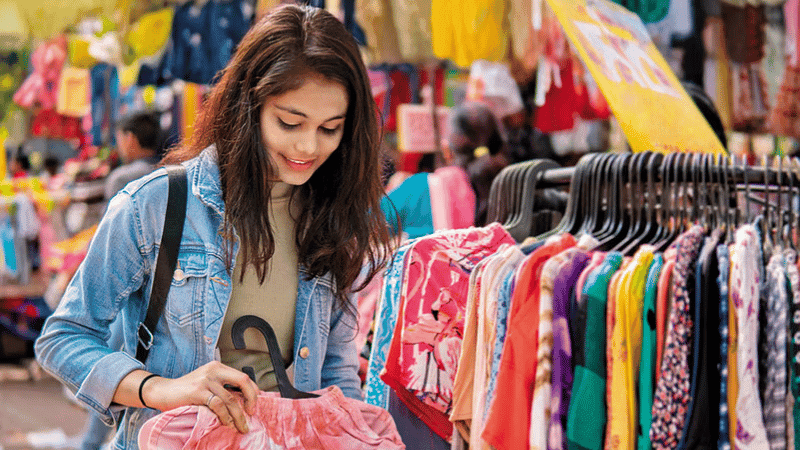

It was 11:00 pm. Tisha sent a photo on Messenger — a black oversized shirt, slightly faded near the chest, priced at just Tk 200. "Nibi?" (Will you take it?) The reply came instantly: "Keep it for me. I'll pick it up tomorrow."
This scene is familiar to many young women in Dhaka today — buying a friend's old clothes, selling on Facebook pre-loved clothing groups, or spending hours hunting for that perfect vintage piece in New Market. This practice has a name: thrifting. And it is being called both frugality and conscious consumerism. But at its heart, it is a quiet but growing fashion movement.
From store to group
A few years ago, buying second-hand clothes was somewhat discreet. No one wanted to admit that an outfit wasn't new. Now, the opposite is true. Many young women in Dhaka proudly say, "I got this blazer for just Tk 300 from a Facebook group."
These buy-and-sell groups now have thousands of members. A virtual marketplace has developed, but its rules are different. It is built on trust and a sense of shared community.
More than just saving money
Many think thrifting is just about saving money. That is partly true, but not the whole story.
"Shopping at malls feels like pressure," said Rifa, a university student in Dhaka. "There's a new collection every month, and if you don't buy it, you feel you're falling behind. Thrifting doesn't have that vibe. Here, you can search at your own pace."
"There is a story behind a piece of clothing. Someone bought it ten years ago. Now it has come to you. That story is what attracts me," added another thrifter.
Micro-influencers and sustainability
Beyond affordability, thrifting aligns with global conversations on sustainability. The fast-fashion industry is one of the world's largest polluters. For many Gen Z consumers, buying second-hand is a tangible way to reduce their carbon footprint.
Minimalist fashion vlogger Samia Ahmed said, "I can't claim to be a hardcore environmental activist overnight. But thrifting lets me be part of a circular economy in my own small way."
The community aspect is crucial. Online thrift stores, which primarily operate on Instagram and Facebook, have sprung up across Dhaka. Owner of 'Threads and Tags', Umme Salma, said she has never counted her total customers but the engagement is massive. "Our Instagram stories get hundreds of views, and the polls on which items to stock next get thousands of votes," she said.
A quieter rebellion
Sharmin Sultana, a sociologist at Dhaka University, said thrifting is more than a consumer choice. "Young women are constantly under pressure to conform to idealised images online. Thrifting becomes a way to cultivate an identity that feels authentic to them. It rejects the 'shopping list' uniformity of fast fashion."
Even outside the digital space, a trip to New Market's fixed-price sections for pre-loved clothes has become a regular activity. "You need an eye for it, patience. It's a skill," said Shahana, who was browsing a stack of denim jackets.
For every 'fit check' post with a unique thrifted item, young women are asserting control over their personal style. They are curating, not just consuming. And in doing so, they are slowly, surely, rewriting the rules of fashion in Dhaka, one second-hand garment at a time.
Leave A Comment
You need login first to leave a comment