
‘Thucydides Trap’: Fall of United States and rise of China
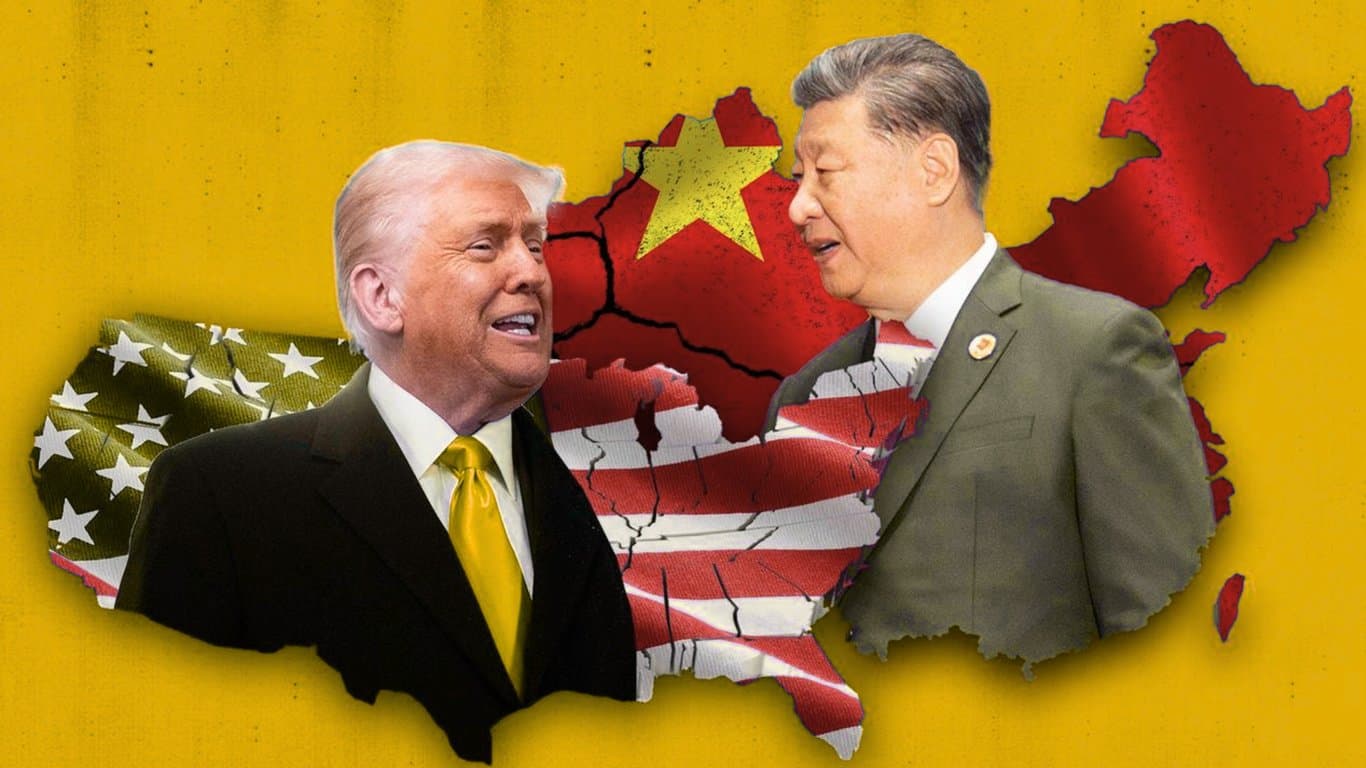

Ultimately, Trump was compelled to travel to Beijing. The US president, who was consistently losing allies in the realm of global politics, found himself with no alternative. The shadows of the new moon had started to envelop the economy of the dream nation, the United States, since Joe Biden's administration.
Most recently, as that darkness thickened over Washington following the Iran war, the light of a new dawn was observed emanating from Beijing, the largest bastion of ancient civilization in the East. Consequently, Trump hurried there to preserve the monument of the pride of the US empire, eager to embrace that light! Meanwhile, Chinese President Xi Jinping confidently articulated the widely discussed theory of contemporary world politics, known as the 'Thucydides Trap', which signifies 'the profound fear of annihilation in the presence of established imperialist powers, alongside the global acknowledgment of the emergence of new powers.'
The 'Thucydides Trap' theory was introduced in 2012 by American political scientist Graham Allison. His renowned book 'Destined for War', which elaborates on this theory, was published in 2017. In reminding Trump of this theory, Xi Jinping stated, 'If the United States wishes to evade the Thucydides Trap, it must adhere to the policy of peaceful coexistence.' No other leader has been observed to issue such stern directives to the US president post-World War II, maintaining direct eye contact.
Since the 1990s, opposing the policy of the United States, which has effectively established itself as the sole empire in global politics, has resulted in consequences akin to those faced by ‘President Saddam Hussein of Iraq and President Gaddafi of Libya’; thus, we awaited the US president's outcry. However, this time, President Trump refrained from raising his voice against Xi Jinping following their meeting in Beijing. Instead, he posted on Truth Social, ‘Xi referred to America as a declining nation; indeed, he commented on Biden’s four-year losses, and this is 100% accurate.’
No other leader of a state or government has been observed to provide such stringent directives to the US president following World War II, making direct eye contact. Since the 1990s, opposing the policies of the United States, which has effectively established itself as the dominant power in global politics, has resulted in repercussions akin to those faced by ‘President Saddam Hussein of Iraq and President Gaddafi of Libya’. Consequently, we had to wait until the US president raised his voice. However, this time, President Trump refrained from shouting at Xi Jinping after their meeting in Beijing. Instead, he posted on Truth Social, stating, ‘Xi referred to America as a declining nation; indeed, he commented on Biden’s four years of losses, and this is 100% accurate.’
In essence, Trump acknowledged the decline of the United States, albeit attributing the blame to his political opponent, Biden. The concept of ‘mutual tear gas’ in US politics was also introduced by Trump during his previous term, which visibly disrupted the internal political cohesion of the United States. During his first term in office (2017-2021), Trump initiated a severance of ties with European allies by distancing the United States from NATO, the World Trade Organization, and the World Health Organization. By rejecting the Paris Agreement and the Iran nuclear deal, he inadvertently facilitated the expansion of China's influence in global politics.
China did not hesitate to capitalize on this opportunity. Xi Jinping swiftly took action to enhance China's presence in international organizations, aiming to dismantle the 'American order' that had been established in the global political framework post-World War II. Germany, France, Russia, and Iran provided indirect support for his endeavors. Trump departed during that term, leaving the decision to withdraw US troops from Afghanistan unexecuted.
Upon assuming office, Biden ordered the withdrawal of troops from Afghanistan, leading to the collapse of the US-supported government there.
This marked the resurgence of the former fundamentalist Taliban regime. Consequently, the US's influence in Central Asia and South Asia significantly diminished. While there appears to be a partnership with the Azerbaijani government in Central Asia, the depth of this alliance is questionable due to the region's 'multi-vector foreign policy'.
This uncertainty also extends to Pakistan to a certain degree. Pakistan essentially pursues a dual foreign policy approach. The two strategies are 'geostrategic' and 'pivot to geoeconomics'. The 'geostrategic' approach focuses on fostering a special military cooperation with the United States, whereas the 'pivot to geoeconomics' aims to enhance trade and strategic ties with China. Consequently, after Pakistan officially declared in 2022 its intention to prioritize the 'pivot to geoeconomics' over 'geostrategy', the United States lost its exclusive influence over Pakistan.
It is evident that Pakistan's significant shift in foreign policy in 2022 was influenced by the withdrawal of US troops from Afghanistan. The prolonged presence of troops in Afghanistan had been escalating a substantial financial burden, as Afghanistan served as the primary hub of US military power in both Central Asia and South Asia. With the United States removing that pivotal center, a considerable opportunity emerged for China.
The initiative that China embarked upon in 1998 to establish a global commercial empire had expanded to South Asia, Central Asia, the Middle East, and a significant portion of Africa by 2016. Even in Europe and the United States, China's commercial supremacy was steadily solidifying. In 2009, following his inauguration, President Barack Obama made his first attempt to obstruct China's commercial endeavors.
He created difficulties for Chinese firms operating in the United States and much of Europe. Under the influence of the United States, Chinese companies began to reduce their operational scope in Asia and Africa. Simultaneously, Barack Obama was closely monitoring the influence of India and China in the expansive Indian Ocean region.
This was particularly evident when Chinese President Xi Jinping unveiled the 'Belt and Road Initiative' in 2013, which contrasted with the US's 'IPS or Indo-Pacific Strategy' concerning the Indian Ocean. In response, President Obama adopted a cautious approach to uphold US military supremacy in the region. Rather than directly expanding military installations, he prioritized joint military exercises and training with regional nations, effectively implementing a strategy of supportive engagement in the face of pressure. Concurrently, he focused significant attention on the Middle East. In those countries where US intervention had previously established and maintained power, he undertook the task of removing the increasingly weak leaders who were beginning to align with China.
The momentum of the 'Arab Spring', which was backed by the United States, further accelerated China's advancement. At the same time, Obama demonstrated the United States' global superiority by normalizing relations with neighboring Cuba, finalizing the landmark Iran nuclear agreement, and pursuing a policy aimed at establishing peace by curbing Israeli aggression in Palestine. In other words, Obama was able to successfully confront China and maintain the dominance of the United States.
However, following Obama, Trump assumed office and opted to withdraw from the Iran nuclear agreement, which resulted in new challenges. Conversely, he engaged with the North Korean leader to send a message to China. After his first year in office, he declared that the United States would exit NATO and the World Trade Organization.
These peculiar actions diminished the United States' standing in global politics. Joe Biden is arguably the least qualified leader in the annals of United States history. He has failed to address the detrimental actions taken by Trump against the United States, while simultaneously making the nation exceedingly uncomfortable with its European allies by unnecessarily provoking conflict in Ukraine, all the while disregarding the fragile economy in the aftermath of the COVID-19 pandemic. His misguided policies have precipitated a new crisis in Palestine, allowing Israel to execute unprecedented acts of genocide in Gaza. Furthermore, Joe Biden's overt support for the genocide in Gaza has rendered the United States exceedingly unpopular domestically.
I have previously highlighted the flawed policy of troop withdrawal from Afghanistan. Additionally, Biden committed another error by instigating the collapse of governments he opposes in certain nations, reminiscent of Barack Obama's approach. While Obama successfully formulated a plausible rationale in support of the Arab Spring, Biden has failed to do so regarding the downfall of governments he disapproves of. Consequently, the confidential details of his 'meticulous design' to topple governments during Biden's administration were swiftly leaked, forcing the United States to face scrutiny as a mere conspirator. The operations of US diplomatic missions globally have also been shrouded in a cycle of profound suspicion.
The most significant collective error made by Trump and Biden is that, at a time when China has nearly established a stronghold in information technology, they have intensified sanctions against Chinese technology firms and heightened concerns about a potential division of the global Internet system. In stark contrast to this misguided approach, China has quietly consolidated its dominance in the realm of information technology, presenting a formidable challenge to the United States' supremacy that has persisted for the last four decades.
Indeed, Joe Biden has been a U.S. president who has consistently pursued a series of erroneous policies over the past four years. His missteps have primarily expedited the decline of the United States' singular dominance in global politics. Following Joe Biden's tenure, Trump became increasingly proactive in executing his favored 'Iran containment policy.' Ultimately, this led to the initiation of a conflict with Iran.
The outcome of this war was that he found himself nearly devoid of allies in Europe, lost influence in the Middle East, and consequently diminished the United States' standing on the global stage. Trump perceived himself as quite successful for having engaged with the president of Venezuela. However, it was not apparent at that time that 'President Maduro' would evolve into a significant strategic asset for Trump's adversary. Trump grew overly confident in China's ambiguous response to the elevation of Maduro and subsequently launched an attack on Iran. He began to view himself as the epitome of success after the assassination of Ayatollah Ali Khomeini on the very first day.
Yet, Donald Trump, recognized as the world's most powerful leader, failed to comprehend the substantial protective barrier that China had established around Iran. Consequently, the conflict with Iran effectively transformed into a U.S.-China confrontation, making the United States' defeat in that war all but certain.
The current impotence of the United States in the global landscape has been starkly highlighted by Trump's visit to Beijing alongside the nation's leading businessmen, coupled with Xi Jinping's reference to the 'Thucydides Trap' immediately following the conclusion of the Iran War. In other words, it can be assumed that the new rise of China or the journey of the Chinese empire has begun since the Xi Jinping-Trump meeting.
From World War II to the present, the most troubling aspect of the US empire has been its persistent state of war in various parts of the world, resulting in the deaths of numerous innocent individuals due to misleading information. The narrative surrounding the fictitious chemical weapons in Iraq has raised significant concerns, and we are all aware of the incidents that led to the loss of many lives. Since World War II, the United States has been directly or indirectly involved in nearly all fatalities resulting from wars and conflicts globally. Another significant error committed by the United States is the fostering and support of religious fundamentalism and militancy in several nations, particularly in the Middle East, to sustain its hegemony.
This fundamentalism has led to widespread discrimination across the globe. While Europe has ascended to the forefront of modern knowledge and scientific practices, enjoying a peaceful existence due to effective governance and a robust education system, many regions from the Middle East to South Asia and Africa have developed regressive social structures influenced by religious fundamentalism, resulting in rampant poverty.
In stark contrast to the pursuit of knowledge and science, these societies have been engulfed by conflict, cruelty, and barbarism. Even Europe and America have not remained immune to its repercussions. China represents a distinctive and fertile ground for global civilization. It boasts a rich history from the Tang, Ming, and Qing dynasties, alongside a significant history of warfare. However, unlike the United States, Chinese warfare history does not document indiscriminate civilian casualties.
Chinese historical accounts and legends indicate that warfare has been largely controlled, with a greater emphasis on self-defense strategies rather than aggressive retaliatory policies.
Indeed, all forms of imperialism ultimately appear similar. Nevertheless, we choose to remain hopeful, as China is currently observing the waning of US supremacy in contemporary times. Consequently, they must exercise caution in their policy decisions if they are to emerge as the new leaders in global politics. They will undoubtedly avoid rendering themselves unacceptable by submerging one faction in superstition, fundamentalism, and militancy, while simultaneously implementing a federalist approach that results in the deaths of countless innocent individuals on the opposing side. China's stance on the 'Thucydides Trap' policy has been further refined to date. Political scientist Graham Allison notes that in ancient Greece, in 431 BC, the historian Thucydides, while examining the causes of the Peloponnesian War, stated, 'The rising power of Athens and the fear of decline in Sparta rendered the war unavoidable.'
He utilized this analysis to illustrate the apprehension or potential for conflict and fluctuations between the United States and China in the present global context. The Chinese President has underscored the current implications of the 'Thucydides Trap' policy and has urged the United States to embrace a more tolerant approach. This is a very encouraging development. Xi Jinping has made a historic appeal to avert disaster for today's civilization. The actions of US policymakers will now dictate the trajectory of global civilization. We advocate for peace, not conflict.
Rased Mehdi, editor, Views Bangladesh
Leave A Comment